Introduction to Telemetry in Sanitation
How do modern cities manage their water and sewage systems so effectively? What technologies help identify problems before they become major disruptions for residents? And most importantly, how is it possible to save money while improving sanitation quality? These are some of the questions that telemetry in urban sanitation seeks to answer, bringing greater control and efficiency to water resource management.
In this article, you'll discover how telemetry is transforming the sanitation sector, enabling real-time monitoring of critical components such as reservoirs and pumping stations. We'll explore the benefits of storing historical data, receiving leak alerts, and having efficient centralized management. Additionally, you'll see how specific tools and technologies are being deployed to address challenges and ensure systems operate without interruption, minimizing losses and improving energy efficiency. If you want to understand how these practices connect with the DROME project's objectives, keep reading and discover how innovation can transform the management of essential resources.
What Are the Main Benefits of Telemetry?
Let's discuss how telemetry can transform basic sanitation management and deliver real benefits for everyone. First, think of telemetry as electronic eyes and ears that monitor everything in real time. This means that if there's a leak or failure, you can act quickly, conserving water and preventing waste. In times of scarcity, every drop of water counts, and telemetry ensures that none is wasted.
Another important point is energy savings and cost reduction. With telemetry, you can better control pumps and distribution systems. Some companies have already managed to reduce their energy bills by up to 30%! This translates not only into financial savings, but also into more sustainable resource use, which is always good news for the environment.
Service quality also improves significantly. With continuous monitoring, you can ensure that treated water reaches every home without interruptions. This means problems are resolved before they even affect people, as if the city had an invisible superhero working 24 hours a day.
- Loss reduction: Telemetry helps identify leaks quickly, preventing waste.
- Energy savings: Optimization of pump and system use leads to lower energy bills.
- Quality service: Continuous monitoring ensures that interruptions are resolved before affecting the population.
- Leak alerts: Instant notifications enable rapid and efficient responses.
- Historical data: Storing data helps better plan the future and predict problems.
Additionally, receiving leak alerts is like having an alarm that triggers as soon as something goes wrong. This gives us the chance to act quickly, preventing greater damage and ensuring that environmental impact is minimized. And we can't forget about historical data storage, which is a true treasure for managers. With it, you can detect patterns, predict problems, and plan future actions based on solid information.
With telemetry, sanitation becomes more efficient and reliable, providing not only cost savings but also superior service quality for the population.
How Does the Telemetry System Work?
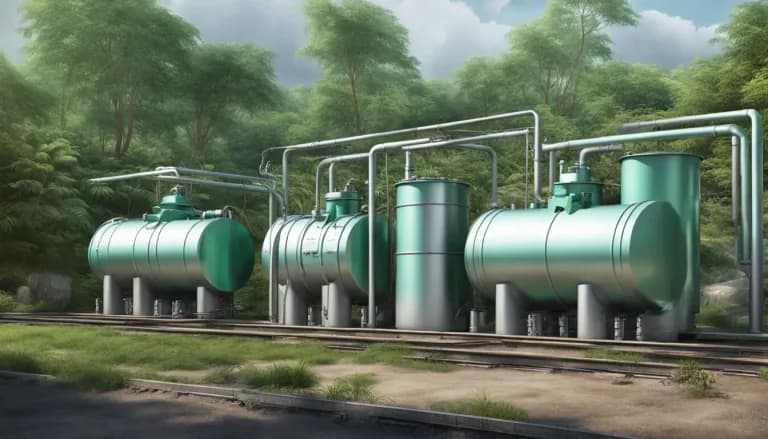
Telemetry in sanitation is a technology that helps remotely monitor water systems, such as reservoirs and pumping stations. Imagine being able to know, in real time, the water level or if there's a problem in the network. This is possible thanks to sensors that send data directly to a control center.
One of the greatest benefits of telemetry is the efficiency it brings. With this information, sanitation companies can adjust pump operation according to water demand, saving energy and preventing waste. For example, if water demand drops at night, the system can automatically reduce pump usage.
Additionally, telemetry is valuable for detecting problems before they become major headaches. Let's say a leak occurs. Without monitoring, it could take time before someone notices. However, with telemetry, any change in water flow triggers an alert for the responsible team. This enables quick action, preventing water shortages for the population.
The data collected is not only useful at the moment it's generated. It's stored and analyzed to understand consumption patterns. With this information, companies can plan system improvements and ensure they're prepared for high-demand days, such as weekends or special events.
For all this to work, equipment such as radios and programmable controllers are used. These devices ensure that information reaches the control center quickly and accurately. Thus, even if something fails, such as a power outage, the system continues operating safely.
In summary, telemetry is essential for efficient sanitation service management. It not only helps save money but also improves service quality for everyone. Additionally, by optimizing water resource use, it contributes to a more sustainable environment.
Final Considerations and Connection with DROME
In this article, you discovered how telemetry is changing the way we care for basic sanitation. With technologies that monitor everything in real time, we can save more and improve the quality of water and sewage services. This helps greatly in using water more efficiently in cities.
DROME is on the same path, bringing solutions that go beyond sanitation. They use IoT technology to monitor and identify problems in real time, not only in water, but also in critical areas such as medicine and vaccine storage. This makes a huge difference in the safety and efficiency of these processes.
Think about it: how can you use telemetry and monitoring in your daily life? What steps can you take to improve resource use in your area? Take advantage of what you've learned here and see how technology can transform not only sanitation, but various sectors. Let's make a difference together!
What Tools Are Used in Automation?
Automation in the sanitation system is essential to ensure that everything works well, without interruptions. Let's talk about two tools that help greatly in this process: the programmable logic controller and the radio modem.
- Programmable logic controller: This device is like the brain of sanitation systems. It automatically controls pumps and valves. If something fails, it adjusts everything to keep functioning, without stopping water supply.
- Radio modem: It's like the system's messenger. This modem sends important information between components, even over long distances or difficult locations. It ensures that information reaches the control center quickly, so problems can be resolved rapidly.
- Power sources and surge protectors: These are like insurance for the system. Even if power is lost, they ensure that the controller and modem continue operating, preventing loss of important data.
Imagine if something fails in the water system. It could cause water shortages or even environmental damage. That's why having tools like these is so important. They help identify problems before they happen, keeping everything running efficiently and safely.
Final Considerations and Connection with the DROME Project
With everything you've learned about telemetry and sanitation, it's time to think about how this can impact your daily life. These technologies aren't just about saving money — they're about improving everyone's life. Imagine cities using water efficiently and safely. That's how the future can be.
The DROME project takes this even further. They're showing that IoT technology can solve problems in real time, not only in water, but also in medicine and vaccine storage. It's an idea that brings safety and efficiency to areas that are vital to us.
Think about it: how can you apply telemetry to make your environment better? What simple steps can you take to use resources more efficiently in your life? Use what you've learned here to inspire changes, not only in sanitation, but in everything around you. Let's transform these ideas into reality together!