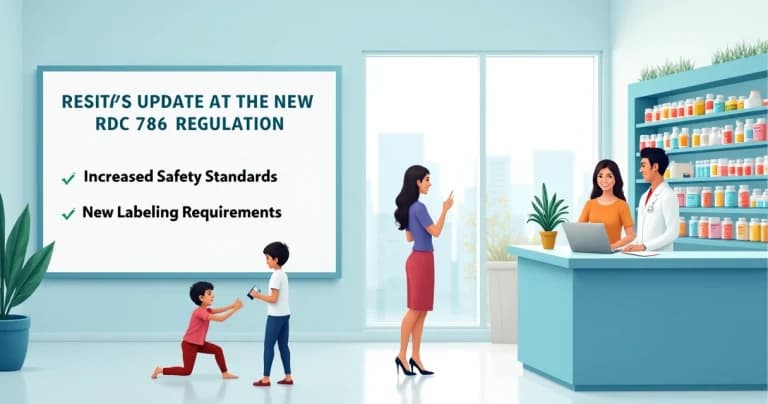
Understand the changes brought by RDC 786 from Anvisa
The new RDC 786, launched by Anvisa in 2023, allows pharmacies to perform health exams. This means you can now check your health in a more practical and accessible way. Imagine being able to perform a simple exam at your trusted pharmacy instead of facing long commutes. However, pharmacies must follow strict rules to ensure the quality and safety of these services. With proper compliance, you can be confident you're receiving excellent care. This change is great, but it's crucial that pharmacies do everything correctly to protect your health.

What is RDC 786 and why is it important?
RDC 786, created by Anvisa in 2023, brings a major innovation: pharmacies can now perform clinical laboratory exams. This means that if you need an exam, you can do it without leaving your neighborhood. It's a convenience that makes healthcare more accessible. Imagine instead of facing long lines at laboratories, you can go to the corner near your home. However, it's fundamental that pharmacies maintain a high quality standard. This is where technological solutions, such as those offered by DROME, become essential, as they help constantly monitor the safety and quality of these services. This way, you can feel confident and well-served, taking care of your health with greater ease.
Clinical Laboratory Exams: What can pharmacies offer?
With the new rules, pharmacies can offer simple exams that facilitate your health. It's a practical way to perform tests like glucose and cholesterol without leaving home. Imagine: you can do this while buying your medication! This greatly helps in detecting health problems early on.
But before going to the pharmacy, it's good to know which exams are available. Check them out:
- Rapid tests: such as glucose and cholesterol measurement, which use a drop of blood.
- Blood pressure measurement: crucial for knowing how your heart health is.
- Pregnancy tests: quick and reliable, to care for your reproductive health.
Take advantage of this convenience! Pharmacies have become allies in your health, making everything a little easier.
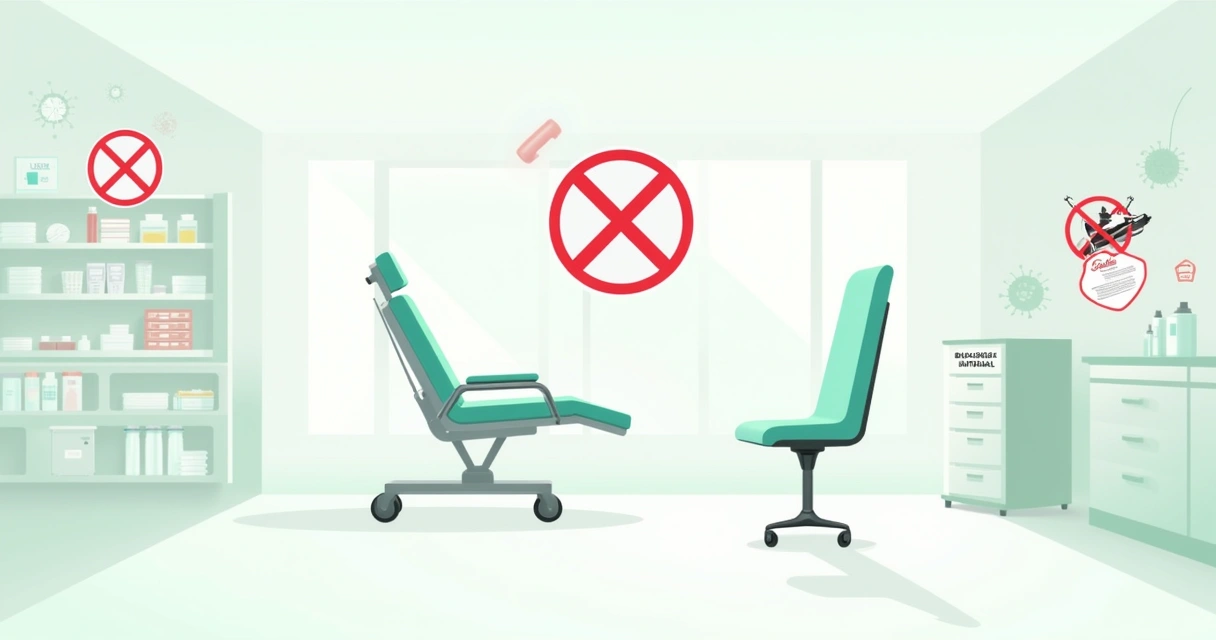
Restrictions and prohibitions: what cannot be done
There are some important rules you should know about exams performed in pharmacies. These measures help ensure your health and safety. See what pharmacies cannot do:
- Collect venous blood: This type of collection is not permitted in pharmacies, so don't worry about seeking this service.
- Transport samples: Pharmacies are not authorized to transport biological materials, avoiding contamination risks.
- Store inadequately: Any biological material must be stored correctly, with proper conditions to maintain quality.
When choosing where to have your exams, verify that the pharmacy is respecting these rules. This is fundamental for your health!
Responsibilities of qualified pharmacists
Pharmacists are fundamental when it comes to clinical laboratory exams. They ensure that everything functions properly, guaranteeing the quality of exams. This involves signing the Pharmaceutical Service Declaration and issuing accurate reports. Just imagine the importance of having a professional who supervises teams, ensuring that all steps are completed correctly. To maintain excellent service, it's vital that these professionals continue learning. The use of technology, such as solutions offered by DROME, can be a great help in ensuring that all processes are in order. Investing in training is a sure path to stand out.

Structures and requirements for performing exams
If you're thinking about having exams at a pharmacy, it's good to understand how these facilities are structured. To offer quality service, pharmacies must follow some important rules. See some of the main ones:
- Separate areas: it's essential that the pharmacy has distinct locations for reception and exam performance, ensuring patient privacy.
- Temperature control: environments and equipment must be maintained at appropriate temperatures to preserve test quality.
- Good ventilation: rooms should be well-ventilated to ensure comfort and safety during exams.
The adoption of technology, such as that offered by DROME, helps monitor these conditions. This way, the pharmacy can maintain service quality and patient confidence.
The importance of Quality Management in pharmacies
Quality Management is essential for your pharmacy's operation. Imagine performing an exam and realizing it didn't follow proper standards. This could affect your health, right? That's why each process needs to be followed carefully. A well-trained team, monitoring the temperature of medications and supplies, all of this is part of safe service. DROME, for example, helps maintain this control, ensuring that exams and treatments are safe. When you know everything is well cared for, you can trust your health more. It's not just about following rules, but about offering a service that truly matters to each person who enters the pharmacy.

Technology in favor of compliance and safety
Technology can be a great ally for pharmacies, especially with the new RDC 786 rules. It's important that these establishments adopt solutions that ensure service safety and quality. See how this can be done:
- Temperature monitoring: Systems that ensure medications and sensitive products remain in ideal conditions.
- Risk management: Software that helps identify problems in real time, protecting patients.
- Digital documentation: Facilitates auditing and record control, making everything more organized and accessible.
Adopting these innovations not only meets requirements but also increases customer confidence, creating a safer and more efficient environment.
Challenges and opportunities with the new regulation
RDC 786 brings new rules that may seem complicated, but they also offer opportunities. Complying with all requirements is essential, as ensuring your pharmacy is in compliance avoids future problems. For example, you might ask yourself: "How can I ensure everything is correct?" One solution is to seek information and training. Additionally, the permission to perform health exams transforms your pharmacy into an even more important place for the community. This not only attracts more customers but also generates a new revenue source. With the help of technologies and partnerships, you can facilitate organization and service, improving everyone's health.
Conclusion on RDC 786 and its impact on pharmacies
The new RDC 786 from Anvisa brings important changes for pharmacies, which can now offer health exams. This facilitates access to essential services, making pharmacies even more relevant in the community's life. However, it's crucial that these businesses follow strict rules to ensure safety and quality. The use of technology, such as DROME, helps monitor medication storage and service quality. Thus, by respecting these guidelines, pharmacies not only protect customer health but can also take advantage of new business opportunities.