
I have frequently questioned, in recent years, how it would be possible to prevent so many losses during outbreaks and pandemics. After all, anyone who dealt with the logistical challenges of COVID-19 felt firsthand the pressure for control, security, and rapid response. Monitoring, especially of temperature-sensitive supplies, stopped being a detail and became central to any public health strategy.
Today, I want to share my perspective on how automated monitoring via SaaS systems revolutionized our response to health emergencies.
The Challenge of Monitoring During Pandemics
In pandemic or outbreak situations, everything intensifies. The flow of medications, vaccines, and food increases drastically. Often, the physical infrastructure cannot keep pace with demand, and the risk of losses from human or mechanical failures grows.
I have witnessed countless real stories: vaccines rendered unusable by minimal temperature variation, food expired due to poor storage, and even medications discarded prematurely due to imprecise controls. This is not just about financial loss, but also serious health risks.
Slow responses can cost lives.
That is why having reliable, real-time information makes all the difference.
What Is a SaaS Monitoring System?
Many still ask me what characterizes a SaaS environmental monitoring system. In a nutshell, it is a cloud-based platform, accessible from anywhere, that connects IoT sensors to continuously collect and analyze data.
These systems eliminate the need for manual monitoring and spreadsheet entries, automating everything from data collection to irregularity alerts.
It works like this:
- Sensors capture data such as temperature, humidity, and any unintended door openings;
- Data goes directly to the cloud, without manual intervention;
- The SaaS platform analyzes in real time what is happening;
- If something deviates from the standard, an instant alert appears for those responsible.
In my experience, this entire digital workflow drastically reduces the chance of human error. And, compared with more traditional competitors, SaaS stands out for being more flexible and scalable even during peak demand periods.
The Importance of Anticipatory Response
Pandemics give no warning. When an outbreak occurs, rapid cold chain control becomes a requirement, not a luxury. Advanced SaaS systems, like DROME, go beyond simple monitoring. They bring embedded predictive intelligence.
In this sense, I have already seen firsthand the role of data analysis and artificial intelligence. They anticipate failures, preventing losses. For example: if a sensor detects that a refrigerator is gradually warming, the alert occurs before total damage.
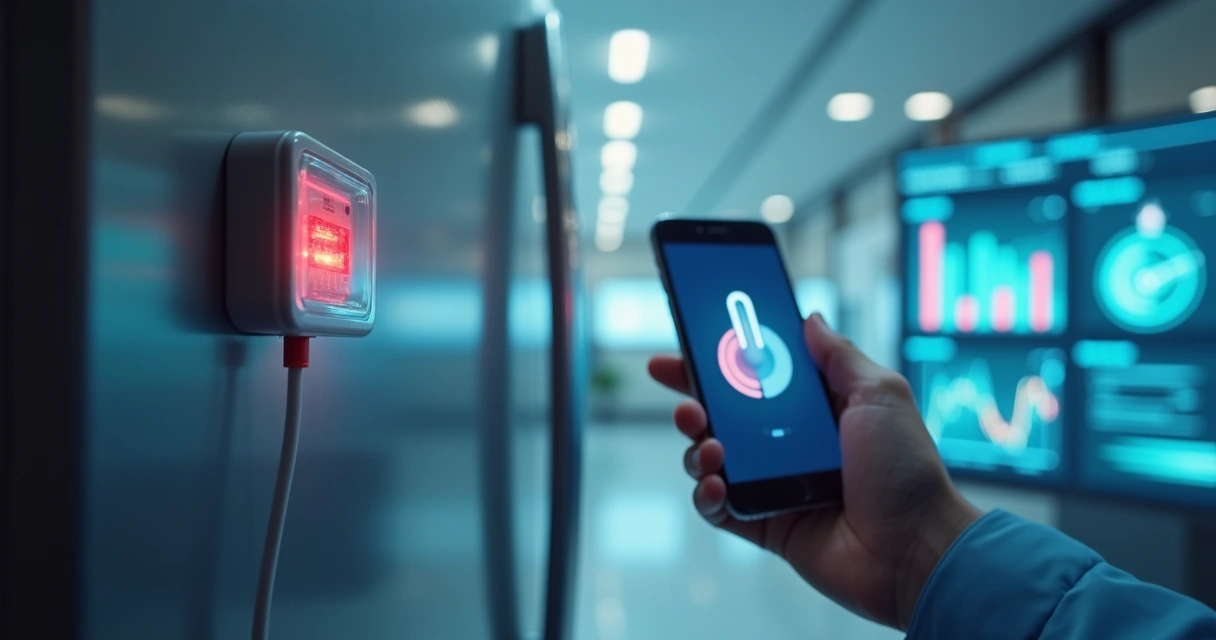 This allows teams to take corrective measures quickly, protecting valuable vaccines or medications from any loss, often before it becomes an emergency.
Why Manual and Conventional Systems Don't Work in Pandemics
I have experienced, at different times, the inefficiency of manual controls: handwritten records, spreadsheets that disappear, measurements taken only in certain shifts. None of this was sufficient during peak demand periods, whether in hospitals or distribution centers.
In a pandemic scenario, when everything changes overnight, automatic systems provide stability and speed. DROME, for example, integrates information from different environments, standardizes control, and delivers detailed reports for audits in just a few clicks.
Competitors that rely on isolated equipment without cloud integration lose in agility and security. I have observed structures struggling because they cannot issue auditable reports instantly. The scenario changes completely when intelligent SaaS is adopted.
How Predictive Analysis Makes a Difference
I cannot fail to highlight the power of predictive analysis in SaaS systems. By gathering failure histories, temperature patterns, and usage cycles, artificial intelligence estimates when equipment is close to presenting a problem.
The DROME platform alerts about the risk of failure before the event occurs, strengthening prevention processes and decision-making.
- Prevents waste of valuable supplies;
- Prevents contamination risk from inadequate storage;
- Reduces operational costs by decreasing unnecessary discards;
- Provides peace of mind for public health teams.
This differentiator in DROME's SaaS is more robust than the current market standard. Other vendors may offer alerts, but typically lack continuous machine learning and such detailed reports for audit and public verification.
Continuous Monitoring and Automation: Immediate Impact
What impressed me most when I began working with intelligent monitoring platforms, like DROME, was the immediate transformation in daily operations: teams stop wasting time manually checking data and start acting, in fact, only when necessary.

Automation creates a culture of prevention, not just response.
Furthermore, this completely changes the focus of the management team: from solving problems to planning how to avoid them.
Reports, Traceability, and Simplified Auditing
I have always maintained that in a pandemic, it is not enough to act; you must prove every action. DROME's automatic and detailed reports were fundamental in audits during the health crisis. Every step, every piece of data, and every decision is recorded and can be accessed quickly by whoever needs it, whether regulatory body, public manager, or independent auditor.
Automatic reports provide transparency and confidence in times of health crisis.
This traceability meets requirements of health sector legislation and standards, something that frequently creates difficulties for structures using disconnected or manual systems.
For those who want to better understand monitoring of the cold chain for vaccines and medications, I recommend this detailed content on how each step can impact the final result.
The Role of Sensor Calibration and Intelligent Management
I see that many forget one detail: monitoring is useless if sensors are not calibrated. DROME differentiates itself because it offers integrated management for sensor calibration, ensuring continuous accuracy.
This control reduces hidden failures, which often only appear in audits or in the worst scenario, with losses already incurred.
Integration with Public Health Policies
The use of SaaS in the context of public health is strengthened because it expands the capacity for coordinated reactions. Platforms like DROME allow different managers to see the same dashboard, detect bottlenecks, and plan joint responses.
In my practical experience, this means efficiency in logistics, correct prioritization of resources, and transparent communication between hospitals, distribution centers, clinics, and authorities.
I address more topics related to this in discussions about safety in public health. The connection of technological tools with national guidelines and policies makes all the difference.
DROME: Technology and Intelligence at the Service of Loss Prevention
Comparing with older solutions or competitors that do not use artificial intelligence, I see in DROME an evolution: the union of IoT, predictive analysis, and automation in a single system, with auditable reports and complete sensor management. This means fewer losses, more transparency, and better health for the entire population, especially during moments of global crisis.
In content such as how information technology transforms monitoring with data analysis, it is possible to see in detail the advantages of this integration expanded by SaaS platforms.
Best Practices and Trends for the Future
I see that the future of monitoring necessarily passes through automation and applied intelligence. For those who wish to improve processes, it makes sense to learn about best practices for real-time tracking of supplies.
I also frequently share discussions on how AI improves safe disposal of sensitive materials, showing the central role of artificial intelligence in making the system safer and more sustainable.
Conclusion: Transform Your Monitoring in Times of Crisis
As someone who has experienced the difficulties of manual monitoring during pandemics, I can affirm: SaaS technology changed the game. DROME leads this transformation with automation, predictive intelligence, and reports capable of supporting serious audits. In unstable times, transparency and rapid response are the best weapons to protect lives and resources.
If you seek to protect your operation against losses and ensure cold chain security in any scenario, discover DROME and prepare yourself for a safer and more dynamic future.