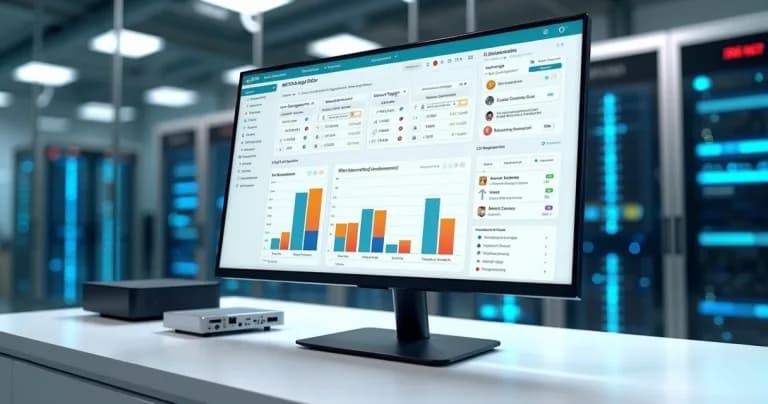
I have witnessed firsthand how the advancement of the Internet of Things (IoT) is changing the way companies manage temperature-sensitive supplies, such as vaccines, medications, and food products. When I think about waste caused by equipment failures, I immediately recall the impact on daily operations and the risk to public health. That's why integrating IoT monitoring into your ERP system can be the answer for many managers concerned with preventing losses and ensuring quality.
Why combine IoT with ERP makes such a difference?
Let me start by stating the obvious, but it's necessary: the integration between IoT monitoring and ERP is what transforms sensor data into practical decisions. Monitoring temperature, humidity, and location without that information automatically reaching the ERP is, in my view, wasting time and opportunities.
When I worked on monitoring projects with DROME, I saw firsthand that capturing real-time data only makes sense if the information reaches the management system and feeds processes, routines, and automatic alerts. I have witnessed companies lose entire inventories because the sensor alert didn't reach the manager in time. The ERP, integrated with continuous monitoring, eliminates this type of failure.
Steps I follow to integrate IoT into ERP
To share my experience, I list below the main steps I usually follow to ensure efficient integration, considering security, information availability, and ease of use:
- Needs analysis: understanding which environmental variables should be monitored (temperature, humidity, location, etc.) and how they impact the ERP process;
- Mapping of collection points and internal processes, to know where IoT will add the most value;
- Evaluation of technical compatibility between IoT devices and the adopted ERP;
- Configuration of APIs and data connectors, so that information flow occurs securely and in real-time;
- Creation of personalized dashboards within the ERP, showing main readings and equipment status;
- Definition of alerts and automations, such as blocking inventory release if a supply was not at the recommended temperature;
- Testing, validation, and training with teams, essential to ensure solution adoption;
- Continuous monitoring of integration functionality, for fine adjustments whenever necessary.
Describing these steps this way may seem simple, but each stage demands attention. The technical support that DROME offers during this process makes a difference, and I can affirm from personal experience that many platforms don't deliver such service.
How integration works in practice
I imagine you want to visualize the integrated process functioning objectively. I'll provide a summary:
Sensors send data to the cloud. The ERP receives and responds automatically.
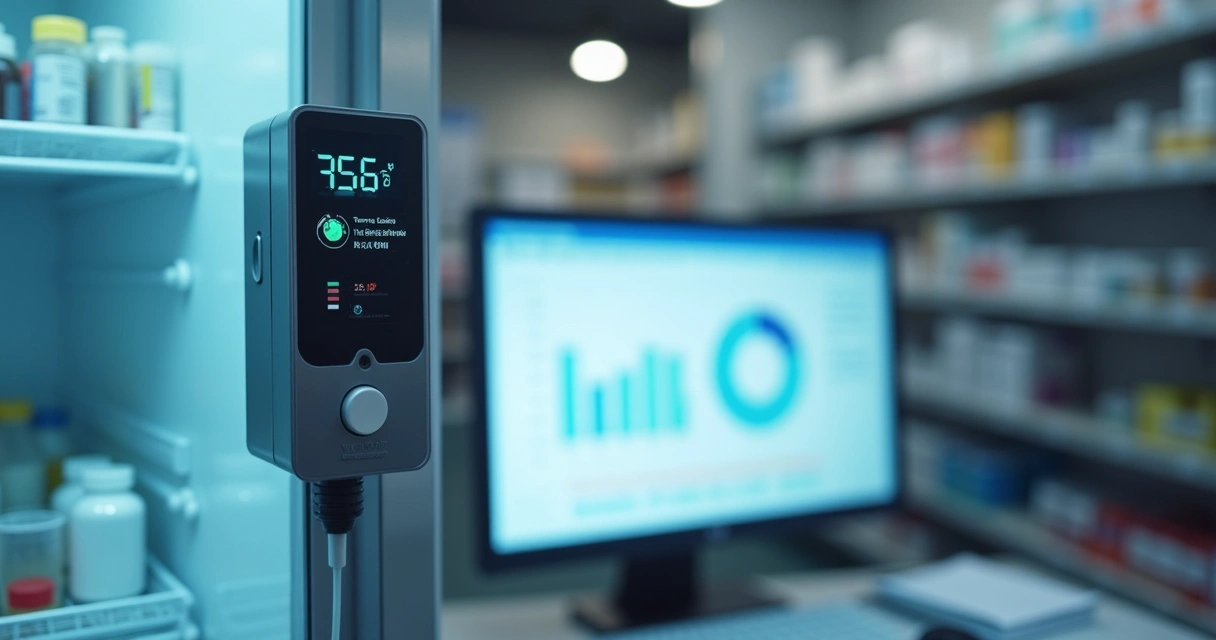
IoT sensors monitor refrigerators, freezers, and cold rooms. If any parameter goes outside the safe range, the system sends an instant notification through the ERP. It can be via email, SMS, or even integration with messaging applications. With DROME, these alerts are customizable and adaptable to your business rules, a differentiator that not all competitors possess.
Additionally, integration enables automatic report generation, exports for auditing, and complete traceability of monitored supplies. This makes life easier for those who need documentation compliant with health surveillance standards and quality audits.
What are the biggest challenges?
Despite all advances, I still perceive that the main difficulties are related to system compatibility and user training. Some older ERPs don't accept robust integrations, and that's why I choose, whenever possible, flexible SaaS platforms, like the one offered by DROME. Constant updates ensure quick adaptations to new needs that emerge.
Another recurring challenge is the resistance from teams not accustomed to trusting automated systems. It's necessary to demonstrate, through training and real results, how continuous monitoring reduces human errors and frees the team for strategic tasks. Integrated artificial intelligence assists in this process, learning patterns and anticipating possible failures, a striking advantage over competitors.
Benefits I observe in IoT to ERP integration
After implementing projects with various systems and companies, I can guarantee that the gains are tangible:
- Reduction of losses from inadequate storage;
- Automatic alerts, preventing risk situations and waste;
- Ability to manage multiple locations and equipment simultaneously;
- Ease in generating reports for regulatory and audit purposes;
- Complete supply traceability;
- Agility in decision-making based on reliable data.
If you want to know how to implement a continuous monitoring project with IoT, I recommend accessing detailed content on the topic at continuous monitoring with IoT, which can further expand your understanding.
How to choose the right monitoring solution?
I have seen different alternatives in the market, and I have tested some. What catches my attention about DROME is the concern with integration ease, flexibility in report creation, and dedicated support, something that was lacking in other experiences with competitors. While some suppliers focus only on sensor delivery, DROME proposes to accompany from planning through post-implementation, favoring a smooth transition without headaches.
For example, some rival platforms even offer APIs for integration, but they don't have technical support in Portuguese or complete documentation, which stalls the project in initial phases. Another point: DROME delivers customizable dashboards within the ERP, while others leave everything outside the system, forcing the manager to access multiple platforms. I have already written about operational process improvements in this context in this article: IoT + ERP Integration: practical process improvements.
Which integrations make the most sense in daily operations?
I like to cite some practical examples of recurring integrations that help in managers' routines:
- Automatic refrigerated inventory systems;
- Predictive equipment maintenance modules based on sensor alerts;
- Sensor calibration management linked to the ERP calendar;
- Automatic reports sent by email or available for export;
- Automatic blocking or release of batches according to environmental compliance;
- Internal location tracking of supplies and equipment, which can be explored further in internal location monitoring.

How do I prepare my company before integrating?
Before starting a project like this, I always suggest conducting a diagnosis of the technology infrastructure and identifying any limitations of the legacy ERP. I have seen cases where it was necessary to update the management system before integrating new sensors. I have also addressed, step by step, how to implement intelligent monitoring in pharmacies, but the process applies to various sectors. You can check a detailed guide at how to implement IoT monitoring in pharmacies.
Knowledge is never too much at this moment. Recently I followed discussions and news in the sector in articles and cases about IoT, which helped me anticipate trends and better leverage available integrations.
Why DROME is the solution I recommend?
Based on my experience, I can affirm: DROME delivers what it promises by combining innovation and simplicity, allowing ERP integration to be fluid, technological, and secure. Frequent updates, dedicated support, and flexibility to customize automations make DROME a differentiated choice. I see that while other solutions stop at sensor supply, DROME is focused on generating operational intelligence, supporting waste reduction and increasing health safety.
Protected data, quick alerts, and less waste.
Ready to take the next step?
My experience shows that integrating IoT monitoring into your ERP is a key piece for those who want to prevent losses and demonstrate commitment to quality and safety. If you want to transform your operation and ensure better results, I recommend learning about DROME's solutions. Request a demonstration and see firsthand how the platform can change your business's future.