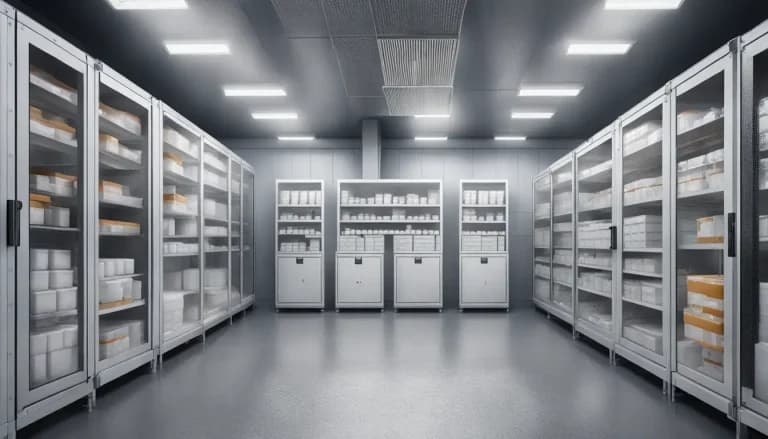
Introduction to Humidity in the Cold Chain
Did you know that humidity can alter product quality in the cold chain? What consequences can arise from ignoring humidity control in refrigerated warehouses and chambers? How do you deal with ice and condensation that threaten product integrity and equipment efficiency?
In this article, we'll show you why controlling humidity in the cold chain is crucial, from carcass cooling to storage. Discover practical solutions to avoid humidity problems while maintaining product quality and a safe environment. If you want to improve environmental control of your inputs, keep reading and see how DROME can be your strategic ally.
Why is Humidity Control Essential?
Controlling humidity in the cold chain is crucial for maintaining product quality. When we talk about perishable foods like meat and dairy products, humidity can be a silent villain. Imagine you're cooling a carcass: cold air causes environmental humidity to condense on surfaces, and this can be a breeding ground for bacteria.
In refrigerated facilities, this control is vital. If the environment becomes too humid, we can have problems such as condensation on walls and ceilings. This not only compromises food quality but can also cause damage to refrigeration equipment. And let's be honest, nobody wants a compressor burned out because of humidity, right?
A common scenario is the formation of ice and mist in freezing chambers. These signs clearly show that humidity is not under control. When products enter and exit during shipping, it's inevitable that humid air enters along with them. This can affect product preservation, which ends up not meeting required quality standards.
To avoid these problems, using dehumidification systems is an effective solution. They remove humid air and leave dry air. This way, you keep everything in order and ensure that products remain fresh and safe. Tools like DROME are great because they monitor humidity in real time, helping prevent problems before they appear. With IoT technology and artificial intelligence, it's possible to keep the environment always in ideal conditions.
Controlling humidity is not just a matter of operational efficiency, but also of ensuring that consumers receive quality products. After all, everyone wants health and safety in the food they consume.
Impacts of Humidity in Refrigerated Facilities
Humidity is an extremely important factor in refrigerated facilities, directly influencing product quality. From the moment of slaughter, through evisceration and cooling, humidity control is crucial. When carcasses are taken to cold environments, they release a lot of moisture, which causes condensation on cold surfaces like ceilings and walls. This not only makes the environment uncomfortable for workers but also increases the risk of food contamination.
In the cutting and deboning sector, the presence of workers and the constant need to renew air increase environmental humidity. Outside air, which is often humid, enters and mixes with indoor air, generating more condensation. In freezing tunnels, humidity control is fundamental to prevent ice and mist formation on equipment.
Let's look at some examples of how humidity affects different processes and how we can solve them:
- Condensation during cooling: When air humidity comes into contact with cold surfaces, condensation occurs. This can be prevented with the use of dehumidifiers.
- Challenges in reversible chambers: In places where freezing and cooling alternate, it's vital to monitor humidity to preserve product integrity, such as with cod.
- Shipping and humid air entry: Frequent movement in shipping areas allows humid air to enter, leading to ice formation. Air curtains can help minimize this moisture entry.
Modern dehumidifiers are a practical and efficient solution. Besides being easy to install, they operate continuously, ensuring precise humidity control. With appropriate systems, such as those offered by DROME, companies can optimize their operations and guarantee internationally quality products. In a world where food safety is a priority, having the right technology makes all the difference.
Challenges in Processing and Storage
In refrigerated facilities, dealing with humidity is a constant challenge. When humid air encounters cold surfaces, such as walls and equipment, something called condensation happens. This is a problem because it can lead to bacterial growth and food deterioration.
After slaughter, carcasses release a lot of moisture. This moisture accumulates in undesirable places and creates an uncomfortable environment for those working there. Humid outside air enters these areas and makes the situation worse.
A clear example of this problem is in freezing tunnels. Ice and mist that form on equipment can cause failures, such as compressor burnout, which are essential for effective refrigeration system operation. So, how do you avoid these inconveniences?
One solution is the installation of dehumidification systems. They help remove humid air, replacing it with dry air. Additionally, air curtains in freezing tunnels create barriers that prevent moisture entry.
Another useful tool is DROME, which constantly monitors humidity. It uses cutting-edge technology to detect problems before they become serious. With DROME, companies can maintain product quality and process efficiency.
Dealing with humidity effectively is crucial to ensure food quality and safety. With the right solutions, we can transform product storage and handling, ensuring they reach consumers in the best possible condition.
How to Minimize Condensation and Ice Formation?
Preventing condensation and ice formation in freezing tunnels is fundamental to maintain food quality. Let's explore some practical tips to help with this process.
- Use of Dehumidifiers: Installing dehumidifiers is an effective solution. These devices remove moisture from the air, replacing it with dry air. This prevents ice accumulation while improving environmental conditions. Think of dehumidifiers as guardians of your storage space.
- Air Curtains: Air curtains form a barrier that helps block humid air entry when doors are opened. They are essential in places with high merchandise movement, reducing humidity and ice risk.
- Adequate Ventilation: Ensuring good ventilation is crucial. A well-designed system will keep air circulating, helping to regulate temperature and reduce condensation. This can be a game-changer for keeping your products in perfect condition.
- Constant Maintenance: Performing regular maintenance on refrigeration equipment helps prevent failures. Well-maintained equipment works better, allowing you to maintain control over your freezing tunnel environment.
These strategies can improve the efficiency and safety of your frozen products. Remember that controlling humidity is crucial for ensuring food quality and safety. With these practices, you can be sure you're doing everything to protect your products and consumers.
Effective Dehumidification Solutions
To maintain product quality in the cold chain, it's essential to control humidity. This is not just a technical detail but also a way to ensure that food remains safe and fresh. Let's explore some effective solutions for this challenge.
Modern dehumidifiers are a popular choice. They work by removing humid air and replacing it with dry air. This helps prevent problems such as ice formation and condensation, which can damage both products and equipment. Imagine, for example, that unwanted ice that accumulates around packages in the freezer. With a good dehumidifier, this situation can be avoided.
Another practical solution is air curtains. They create an invisible barrier when refrigerated environment doors are opened. Thus, they prevent humid air from entering the environment, protecting what is stored inside. In places with high movement, such as loading and unloading areas, air curtains are essential for keeping humidity under control.
Finally, adequate ventilation is crucial. With a good ventilation system, air circulates better, helping to control both temperature and humidity. This can prevent problems before they even happen. Think of a warehouse where air is always fresh and dry, avoiding the risk of mold and other damage.
These solutions, when combined, ensure that products in the cold chain are always in perfect condition. With modern control and monitoring tools, such as those from DROME, it's possible to track everything in real time. This way, you protect your products and meet the quality standards the market demands.
Sectors Impacted by Humidity Control
Controlling humidity is crucial in the food industry, especially when we talk about the cold chain. Let's think about the sectors of meat, seafood, bakery products, and dairy. All of them are very sensitive to humidity changes, which can affect both food quality and safety.
In the meat sector, for example, while carcasses are being cooled, humidity can condense on cold surfaces. This creates a perfect environment for contamination. In seafood, maintaining freshness is essential. If humidity is high, fish can spoil faster, affecting its flavor and quality.
Now, imagine the bread from your favorite bakery. Humidity can alter the texture and flavor of that bread. Nobody wants soft or moldy bread, right? Keeping humidity controlled during storage is important to ensure it arrives fresh at your table. And speaking of mold, excessive humidity can lead to that, plus deterioration.
In cheeses and yogurts, care is even greater. Too humid, the environment can cause cheese to ferment undesirably, putting food safety at risk. Technology is there to help! Solutions like DROME allow companies to monitor and control humidity in real time. This means fewer problems and better quality products for you.
In the end, humidity can greatly impact food integrity. Using effective monitoring and control systems is a smart move to minimize losses and ensure that you, the consumer, always receive the best.
How Can DROME Help?
DROME is an incredible tool for those dealing with products that need humidity control in the cold chain. Using advanced technology, it monitors and manages humidity effectively, helping keep products in ideal conditions.
Imagine a refrigerated facility. During carcass cooling, humidity can accumulate and cause problems, such as contamination. With DROME, you receive automatic alerts when humidity levels are out of normal range, allowing you to act quickly to resolve any issue.
The system also generates detailed reports, great for analysis and auditing. This is super important in sectors like seafood and dairy, where quality is essential. Beyond monitoring, DROME performs predictive analysis to predict refrigeration system failures, avoiding losses and health risks.
Think about having the certainty that all your products are stored in the correct conditions, without unpleasant surprises. With DROME, that's the reality. Integrating this technology into your operation improves efficiency and guarantees consumer satisfaction, delivering a quality product.
Therefore, if humidity control is important for your operation, DROME is an essential tool. With it, you transform the way you manage temperature-sensitive products, investing in quality and food safety.
Conclusion
Now that you understand the importance of controlling humidity in the cold chain, it's time to think about how to apply this in your daily routine. What can you do today to ensure your products remain safe and fresh?
Investing in technology like DROME can be the key. It helps monitor and predict conditions, keeping everything under control. This way, you avoid waste and guarantee quality products for your customers.
The decision is in your hands. Are you ready to take the next step and implement solutions that will improve your operations? Remember, quality starts with good storage practices. What will you do differently now?