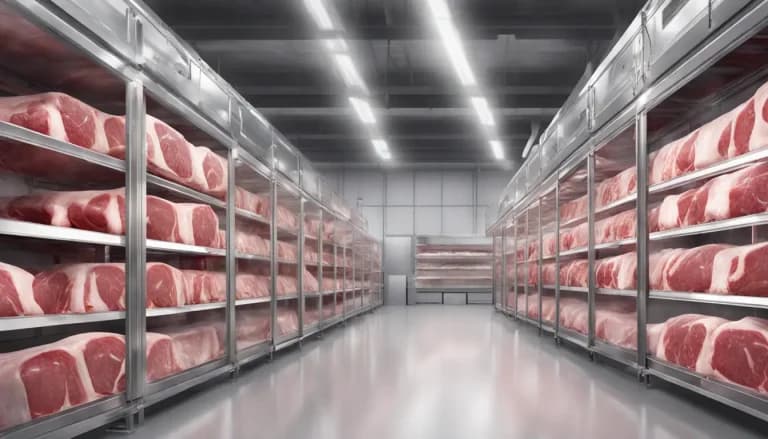
Introduction to Cold Chain
Have you ever stopped to think about how the food we consume daily manages to maintain its quality and safety during long journeys? Or why it's so important to maintain the correct temperature at each stage of this process? The answer lies in the cold chain, a crucial phase, especially when we talk about meat. A small variation in temperature can affect both the flavor and the safety of the food.
In this article, we'll uncover how this chain works from the moment of slaughter until the meat reaches your table. We'll talk about the importance of each stage, such as refrigeration and transportation, to ensure that everything is perfect when you consume it. Additionally, innovative technologies, like DROME, are revolutionizing temperature monitoring, helping to prevent waste and ensuring greater transparency for you, the consumer.
Introduction to Cold Chain and Meat Quality
Have you ever stopped to think about why temperature is so important for meat quality? Or how small changes can affect the safety of what you eat? And more, how can you ensure that the meat that reaches your table is always perfect? These are questions that make the cold chain such a fascinating topic and drive us to always seek the best solutions.
In this article, we'll dive into the importance of the cold chain in meat preservation, from slaughter to your refrigerator. We'll see how temperature can change everything and why monitoring it constantly can make all the difference. And, of course, how technology, like what DROME offers, is key to this puzzle. You're about to discover something that can transform the way you see the meat you consume.
Why Is Temperature So Important?
The correct temperature is fundamental to keeping meat fresh and safe for consumption. As soon as the animal is slaughtered, the meat needs to be cooled quickly to approximately 7 degrees Celsius. This is important to preserve the flavor, texture, and safety of the meat.
Let's better understand why this is essential:
- Flavor quality: The wrong temperature can alter the flavor of the meat, making it less pleasant.
- Ideal texture: Keeping meat at the right temperature helps preserve its juicy and tender texture.
- Food safety: Low temperature prevents bacterial growth on meat, ensuring it's safe to eat.
The entire process, from cooling to distribution, must follow the cold chain. This means that meat needs to be stored and transported under appropriate conditions to preserve its quality. When you get home, the consumer must also ensure that the meat is kept in the refrigerator.
Brazil, one of the world's largest meat exporters, follows rigorous standards to ensure that meat arrives fresh and safe to all markets. Companies invest in monitoring technologies, like DROME, to prevent problems and ensure that meat is delivered in excellent condition.
In summary, temperature makes all the difference in meat quality, and following the right practices is essential for everyone's safety and satisfaction.
How Does Automated Monitoring Improve the Cold Chain?
In the transportation and storage of meat, it's essential to ensure that temperature is always correct. And that's where automated temperature monitoring comes in. Unlike manual methods, which can be slow and fail, automation brings many benefits.
Imagine you have a system that checks the temperature at all times. If something goes wrong, you receive an alert immediately. This can be vital, for example, if a refrigerated truck has problems during transport. With a quick notification, you can act to correct the problem before the meat spoils.
Beyond preventing losses, this technology brings more confidence to the consumer. When we buy meat, we want to be sure it was well cared for throughout the journey. This is important, especially for Brazil, which is one of the world's largest meat exporters.
Using systems like DROME in the cold chain not only prevents waste but also protects people's health and ensures we receive quality products. Automation greatly improves efficiency and sets a new standard of responsibility in food care. Thus, it's not just an advantage, but a necessity to always ensure fresh and safe meat.
Conclusion and Connection with DROME
In this article, you discovered how the cold chain is vital to keep meat fresh and safe for consumption. Maintaining the correct temperature prevents losses and maintains flavor and quality until it reaches your table.
With DROME, temperature monitoring is done automatically and constantly. This means that problems are identified quickly, ensuring that meat remains in ideal conditions until it's purchased.
Now, think about your food choices. Are you confident in the quality of the products you consume? Solutions like DROME can help you or your business offer fresher and safer food. Keep exploring topics about food safety and discover innovations that can change the way you consume!
What Practices Ensure Food Safety?
Ensuring that meat reaches your table safely is work that begins well before the supermarket. Several steps are fundamental to assuring the quality and safety of the product we consume. Let's explore some essential practices:
- Careful animal selection: Choosing healthy animals is the first crucial step. This is important because sick animals can affect meat quality. Imagine choosing fresh ingredients for a recipe. With meat, the logic is the same: the better the source, the more flavorful and safe the dish will be.
- Rapid cooling after slaughter: As soon as the animal is slaughtered, the meat needs to be cooled quickly, usually to about 7 degrees Celsius. This helps prevent bacterial growth and other invisible threats. Think of it as keeping your food fresh in the refrigerator at home, just on a larger scale.
- Refrigerated transportation: Moving meat from one place to another requires care. Trucks need to be refrigerated to maintain the ideal temperature. It's like transporting ice cream: if the truck isn't cold, everything melts and is lost.
- Adequate storage: Upon arrival at the destination, meat should be stored in cold chambers. This is crucial to preserve quality until it reaches the consumer. And, of course, when you buy meat, it should also be kept in your home refrigerator to ensure it stays safe for consumption.
- Staff training: Everyone who handles meat, from the slaughterhouse to the point of sale, needs to be well trained. By knowing how to handle it correctly, they help ensure that meat remains safe and of quality until it reaches your table.
These practices are essential to ensure that the meat we buy is safe. Maintaining the correct temperature is one of the most important points. And with technology, like automated monitoring systems, it becomes even easier to ensure that everything is working as it should. Remember: food safety begins long before we reach the kitchen.
Conclusion and Connection with DROME
You've seen how the cold chain is essential to keep meat always fresh and safe. Adequate temperature prevents losses and maintains flavor and quality until it reaches your table.
With DROME, temperature monitoring occurs automatically and constantly. This means that if something goes wrong, it's fixed quickly, ensuring that meat arrives in excellent condition to you.
Now, reflect on your food choices. Do you feel confident in the quality of the products you consume? Solutions like DROME can help you or your business offer fresher and safer food. Keep exploring topics about food safety and discover innovations that can make a difference in your daily life!