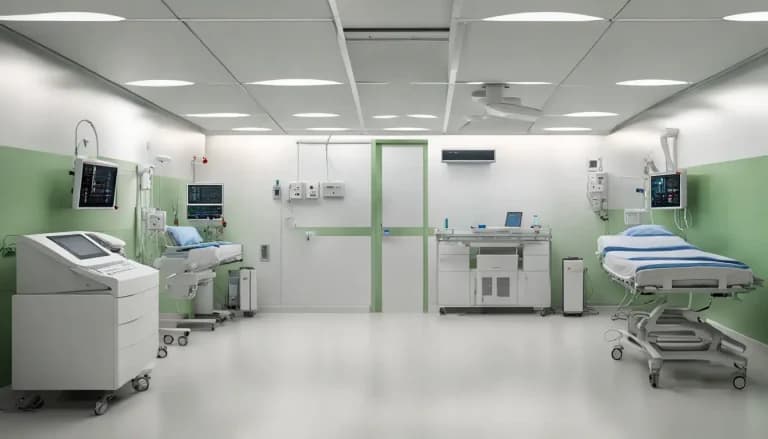
Introduction to Hospital Climate Control
Have you ever stopped to think about how climate control in hospitals can affect patient safety and care efficiency? Did you know that temperature or humidity outside the ideal range can compromise the health of those undergoing treatment? Hospital climate control is not just a matter of comfort, but rather ensuring safety and compliance with strict regulations to prevent infections. These details make a difference and prompt us to reflect on the importance of well-designed and maintained systems.
Here, you will discover the importance of chillers and fancoils in hospital climate control, essential components for keeping everything under control. We will show you how automation and monitoring are allies in preventing failures and ensuring regulatory compliance. Curious to understand how DROME integrates into all of this via MODBUS? Keep reading and dive into this universe where every detail counts for the safety and well-being of everyone.
Why Climate Control Hospital Environments?
Climate control in hospitals is more important than many people realize. It not only brings comfort to patients but also helps maintain a safer and healthier environment. In a hospital, where there is always a risk of infections, having climate control is essential.
Maintaining adequate temperature and humidity can prevent infections. For example, if the air is too humid, it can facilitate the growth of mold and bacteria. However, humidity between 40% and 60%, as recommended by ABNT standard NBR nº 7256, is ideal for avoiding these problems. This is especially important in critical areas where patients are more vulnerable.
Additionally, a good climate control system can be more economical. With advanced technologies, it is possible to use energy more efficiently, reducing costs. This is vital for hospitals that need to manage their resources carefully. For example, systems that use automation can adjust temperature and humidity automatically, saving energy.
Thinking about hospital climate control is thinking about the health and well-being of each patient. A more comfortable and safe environment makes all the difference in recovery. Have you noticed how you feel more protected when you are in a well-climate-controlled place? That is the feeling we want for everyone in hospitals.
The Role of Chillers in Climate Control
Chillers are fundamental components in hospitals, ensuring that the environment is always at the ideal temperature. Imagine a hot day, and you need the operating room to be nice and cool. That is where the chiller comes in!
It works something like this: it removes heat from the water, leaving it very cold. Then, this cooled water circulates through the system, lowering the air temperature. This is essential in critical hospital areas, such as ICUs and operating rooms.
- Controlled Temperature: Maintaining the correct temperature is crucial to prevent the proliferation of germs. In sensitive areas like the ICU, this makes all the difference for patient health.
- Energy Efficiency: Modern chillers are designed to save energy. With automated systems, like DROME, you can monitor and adjust operation as needed, avoiding waste.
- Rules and Standards: Hospitals must follow strict temperature and humidity standards, such as those from ABNT. Chillers help comply with these regulations, preventing infections and promoting safety.
- Automation and Monitoring: With automation, chillers communicate with systems like DROME, which detects problems before they happen, ensuring everything works perfectly.
These points make clear how important it is to choose and maintain chillers well. They are essential for patient safety and comfort, directly impacting the quality of hospital care. Therefore, it is vital to reflect on the effectiveness of these systems and invest in adequate monitoring so that each hospital environment offers a safe environment for patient recovery.
Fancoils: How Do They Work?
Fancoils are key components when we talk about climate control in hospitals. They work together with chillers to maintain the ideal temperature in environments. But what are fancoils? They are units that use cold or hot water to adjust air temperature.
Here is how it works: the fancoil has a fan that makes air pass through coils with cold or hot water. This changes the air temperature to make the environment more pleasant. In hospitals, where temperature control is vital, this makes all the difference.
Fancoils and chillers work together. While the chiller cools the water, the fancoil uses that water to cool or heat the air. This cooperation is fundamental in places like operating rooms and ICUs, where a correct temperature can directly impact patient health.
Effective automation, such as that offered by DROME, keeps everything running smoothly. With MODBUS technology, DROME communicates directly with equipment. It detects problems before they happen, ensuring everything works without failures. This is important to ensure that safety standards, such as those from ABNT, are followed, creating a safe and controlled environment.
Understanding the role of fancoils is recognizing how each part of the climate control system contributes to patient comfort and safety. Fancoils are more than a complement; they are essential for creating a safe and comfortable hospital environment.
Automation in Climate Control Systems
Automation in climate control systems is more important than ever in hospitals. A hospital environment must be controlled in the smallest details to protect patient health. Let us think together: how many times could a serious problem have been prevented with the use of advanced technology? Automation is not just a trend, but a practical solution.
A crucial point is the maintenance of ideal environmental conditions. Temperature and humidity must always be under control to prevent the proliferation of microorganisms. Imagine if a sensor detects that humidity is high. An automated system can adjust this instantly, avoiding risks. It is like having an invisible bodyguard, always ready to protect.
- Energy Efficiency: With automation, energy use is optimized. Systems adjust the operation of equipment like chillers and fancoils as needed. This means less waste and lower electricity bills, while also helping the environment. A hospital that cares for health and the planet? That is innovation!
- Reduction of Human Error: Automation minimizes human failures. Imagine a technician who forgets to adjust the temperature before surgery. With automatic systems, everything is monitored and adjusted without needing someone there. Safety is guaranteed, and patients are more protected.
- Regulatory Compliance: There are strict regulations to follow in hospitals. Automation ensures they are met. Modern systems issue reports and alerts when something deviates from standard. This makes life easier for those responsible for maintenance and ensures that everything is safe and in order.
Investing in automation in hospital climate control is betting on efficiency and safety. Technologies such as advanced systems are not a luxury, but a necessity to provide the best care to patients. Have you ever stopped to think about how this can transform hospital care?
What Is the Importance of Continuous Monitoring?
In hospitals, maintaining a safe and controlled environment is fundamental for patient health. Have you ever stopped to think about what can happen if the temperature in an operating room gets too high or too low? This may seem like just a detail, but it makes a big difference. When temperature is not correct, there is a greater risk of infections, as unwanted microorganisms can proliferate.
That is why continuous monitoring of chillers and fancoils is so important. Imagine that you have a system that alerts you whenever something is not working as it should. With this, it is possible to correct problems before they cause damage. These systems use advanced technology, such as MODBUS, to communicate and ensure that everything is working well.
In addition to maintaining safety, these measures help comply with ABNT standards. For example, humidity in certain hospital areas should be between 40% and 60% to prevent mold growth. With effective monitoring, it is possible to maintain these standards and thus guarantee a safer environment.
Investing in continuous monitoring is investing in patient health. It is also a way to protect the hospital's reputation. After all, you need to always be one step ahead to ensure that health care is the best possible. Are you prepared to adopt these measures and make a difference in hospital care?
How Does DROME Communicate with Chillers and Fancoils?
DROME is an essential tool in hospitals, as it uses MODBUS technology to communicate with chillers and fancoils. This system ensures that temperature and humidity are always at adequate levels, in accordance with strict ABNT regulations. Maintaining these conditions is crucial to prevent infections and ensure patient safety.
MODBUS functions as a common language between different electronic devices. In hospitals, this means that DROME can collect real-time data on the performance of climate control equipment. For example, if humidity in an operating room increases beyond the recommended level, DROME issues an alert, allowing quick adjustments that prevent larger problems.
Automation is another important advantage. DROME can automatically adjust climate control systems if it detects temperature variations. This not only keeps the environment safe but also reduces the need for manual interventions, decreasing the risk of human error.
This technology also helps with energy savings. By optimizing the operation of chillers and fancoils, DROME ensures that resources are used more efficiently and sustainably. This means less waste, while always maintaining adequate air quality and temperature.
In summary, DROME's efficient communication with hospital climate control systems not only protects patient health but also improves resource management. It is an advancement that transforms hospital operations, ensuring comfort and safety for everyone. Can you imagine how this technology can positively impact health care?
The Future of Hospital Climate Control
The future of hospital climate control promises great innovations. These changes aim not only at safety but also at efficiency in patient care. As technology advances, new solutions emerge to face hospital challenges, mainly in environment control. Have you thought about how these innovations can change the patient experience and improve hospital operations?
One of the main advances is the automation of climate control systems. This ensures that temperature and humidity are always ideal. For example, DROME uses cutting-edge technology to communicate with systems like chillers, adjusting everything automatically. This means that standards are maintained, ensuring a safe and comfortable environment for patients and professionals.
Additionally, air dehumidifiers are in high demand. They help maintain humidity between 40% and 60%, which is crucial for preventing germs and protecting hospital equipment. When climate control and air purification work together, the environment becomes much safer, especially for more fragile patients.
Automation and continuous monitoring gain increasing importance. Systems like DROME send automatic alerts if something goes wrong, allowing hospitals to take quick action. This not only increases safety but also improves the institution's image, which is essential for gaining patient trust.
Therefore, when thinking about the future of hospital climate control, it becomes clear that adopting innovative technologies and automated systems is not just an option, but a necessity. These advances protect patient health and promote the sustainability of hospital resources. Are you ready for this transformation in health care?
Conclusion and Next Steps
Now that you better understand the importance of chillers and fancoils in hospital climate control, it is time to reflect on how we can use this information in practice. A well-controlled climate control system not only ensures comfort but also safety and infection prevention. This is essential for providing quality care in hospitals.
The DROME project emerges as an innovative solution, offering continuous monitoring of chillers and fancoils through MODBUS technology. With it, it is possible to monitor environmental conditions in real time, receive alerts, and adjust systems automatically. This ensures that the hospital environment is always in accordance with ABNT standards, prioritizing patient safety.
Think about how hospital climate control impacts patient health and well-being. How can you put these ideas into practice? Are you ready to adopt solutions that improve safety and efficiency in hospitals? This is an opportunity to learn more and implement significant changes in health care.