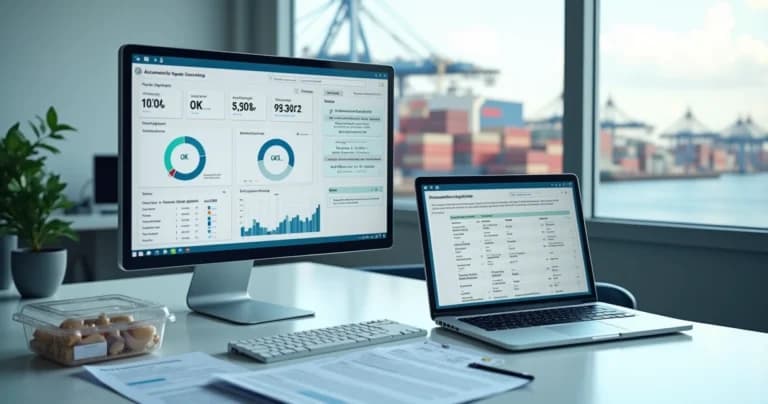
In my experience working with the food sector, I've observed that cold food export has always presented unique challenges for Brazilian companies. Recording, proving, and monitoring rigorous transport and storage conditions has become more than a regulatory requirement: it is now a matter of survival in the global market. I've faced the challenge of manually gathering temperature, humidity, and critical point data, and I'll admit, it's exhausting, prone to errors, and highly inefficient.
Data Control Challenges in Export Operations
In cold food exports—such as dairy, meat, or certain vegetables—maintaining detailed records is not just best practice: it's mandatory. Agencies like ANVISA, MAPA, and demanding international importers scrutinize every detail meticulously. It's not enough to keep food cold; you must prove it stayed at the correct temperature from start to finish.
A small error, a major loss.
But how do you ensure report accuracy, especially in scenarios where hundreds of sensors collect data continuously and decisions must be made quickly? It was precisely in this context that I began studying report automation, and how solutions like DROME changed the game.
Why Such Stringent Cold Food Monitoring Requirements?
Data from the FAO indicates that between one-quarter and one-third of food produced for human consumption is lost or wasted. For cold foods, much of this loss relates to conservation failures. Causes range from technical failures in refrigeration units to incorrect transport records and even a distraction at a truck door. That's why oversight has evolved to require auditable reports with real evidence, traceability, and quick information access.

How Does Automated Reporting for Export Work?
At first, I'll admit I thought automation was complex, perhaps beyond the reach of small and medium enterprises. But my perception changed when I learned about platforms like DROME, which transforms a tedious process into something accessible, even for those who've never operated large ERPs.
The system works by connecting smart sensors (IoT) directly to monitoring software. With each sensor reading—whether temperature, humidity, or vibration—data is sent to the cloud. The system analyzes potential deviations, generates automatic alerts, and most practically, creates real-time reports ready for audit or submission to regulatory agencies.
-
Automatic collection: Sensors capture data continuously, without manual intervention.
-
Real-time validation: Software cross-references data, identifies inconsistencies, and highlights out-of-standard points.
-
Automatic report generation: Just a few clicks to access complete, configurable reports per different country requirements.
-
Simplified tracking and auditing: Reports can be saved in batches, linked to shipment numbers, certificates of origin, and more.
I've used competitor solutions on some projects, but the truth is few offer such fluid integration and customization capability as DROME, without requiring large IT teams or external consultants.
Loss Reduction and Environmental Gains
Automating reports not only reduces financial risk but also brings environmental impact. Reducing food waste directly reflects lower greenhouse gas emissions contributing to climate change. Data from the European Parliament shows that about 16% of total food emissions come from food waste.
By adopting automation, I've found we can both stop financial losses and deliver environmental value. Knowing the location and condition of food every minute allows quick action and prevents unnecessary disposal.
Key Benefits of Automated Reporting in Cold Food Export
In every project where I've tracked implementation of these solutions, I've seen real changes in daily team operations. To summarize visually:
-
Reduced time spent on reports: From hours to just minutes, even for shipments with dozens of destinations.
-
Improved information reliability: Automatic data prevents undue manipulation and common human errors.
-
Faster responses to deviations: Automatic alerts act before causing losses.
-
Leveraging cold chain metrics: Indicators help identify bottlenecks and opportunities.
-
Easy integration: For those already using an ERP or other systems, solutions like DROME facilitate integration, as I detail in this guide on IoT and ERP integration.
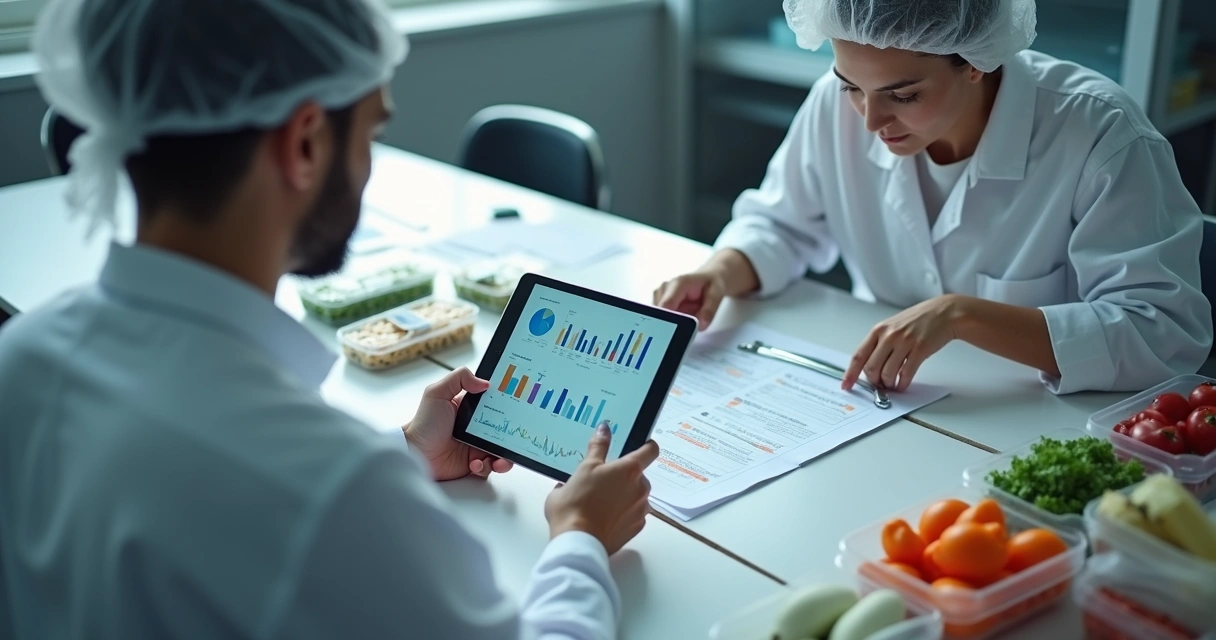
Automation Versus Traditional Processes: Is It Really Worth Changing?
Initially, many managers still hesitate to move away from Excel or manual records. I myself once hesitated, wanting to avoid additional costs. However, I learned three key lessons:
-
Manual processes fail in traceability. Often, information disappears or becomes illegible.
-
Audits become true nightmares, with paper searches and duplicate data entry.
-
Automated reports enable proactive management. If there's risk of loss during a shipment, we act immediately rather than only after damage occurs.
I experimented with systems from other national providers that promised automation. However, I faced limitations in customization, delays in integration, and especially high costs for small companies. That's when DROME became the reference: automated reports adapted to formats required by importers, without headaches.
Intelligent Solutions: Where DROME Stands Out
What truly differentiates a good solution is the combination of precise sensors, artificial intelligence, and customer support. In my research on predictive failure analysis, I found that only modern tools can anticipate risks and prevent problems before they happen.
Additionally, I highlight DROME's ability to issue reports ready for ANVISA inspection or international audits, generating digital files, record chronology, and sensor calibration certificates. This drastically reduces time needed to respond to inspections and, of course, improves relationships with international customers.
If you want to learn more about this reporting topic for inspection, I recommend this content: How to Generate Automated Reports for ANVISA Inspection.
The Future of Export Relies on Automation
I believe international shipments will increasingly require proof and real-time traceability. And those who don't automate their reports run a serious risk of falling behind. Automation doesn't just eliminate bureaucracy: it protects reputation, customers, and ultimately the planet, because it combats waste and reduces environmental impact.
Automating reports is a market differentiator.
If you're looking to export more, lose less, and protect your brand, I strongly recommend learning about DROME and experiencing the difference firsthand. Get in touch and see how we can make your processes more reliable and competitive!
Frequently Asked Questions
What is report automation?
Report automation is a process in which digital systems automatically collect, analyze, and organize data, reducing the need for manual information entry. This ensures greater agility and accuracy in records, facilitating audits and decision-making in processes like cold food export.
How do you automate export reports?
To automate cold food export reports, install IoT sensors at production, storage, and transport stages. Then connect these devices to specialized software, like DROME, which will collect, validate, and organize information in a structured and auditable manner. It's possible to customize report templates already suited to destination country requirements and regulatory standards.
Is it worth automating cold food reports?
In my assessment, yes. Automation reduces errors, provides quick response to temperature deviations, and decreases time spent on audits or inspections. Additionally, it helps control waste and facilitates expansion into international markets, where compliance demands are quite rigorous.
What are the benefits of automation?
The main benefits are:
- Speed in report generation.
- Greater data reliability, since it eliminates manual work.
- Automatic alerts to act before losing shipments.
- Easy access to complete histories of each shipment.
- Reduced waste and emissions linked to discarded food.
Which software should I use for report automation?
There are some options on the market, but I recommend DROME for its advantages in integration, support, and report customization. Other software may offer basic automation, but in my experience, none combines predictive intelligence, ease of use, and dedicated support like DROME.