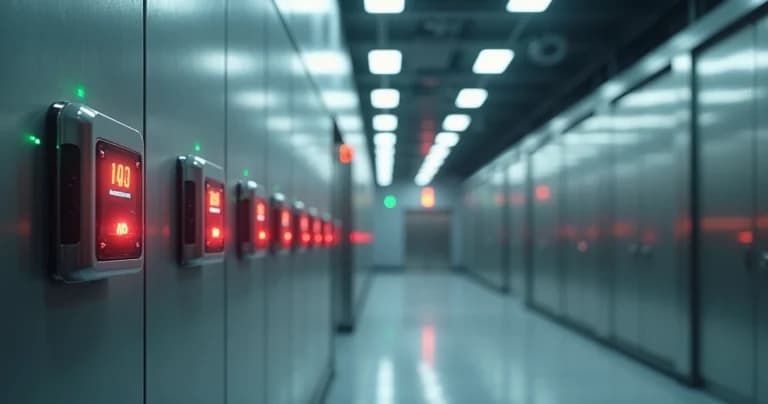
I remember the first time I encountered a mysterious problem in an environmental monitoring system. There were no clear alerts, but the reports didn't match reality. It was one of those cases of "something is wrong, but I don't know what." After years working with IoT, I realized that anyone relying on sensors connected to a gateway has experienced something similar. Small communication failures can destroy trust and, worse, compromise the quality of sensitive inputs like medications and vaccines.
In this article, I've compiled the 7 signs that, based on my experience, most often indicate a communication problem between sensors and gateway. Knowing how to identify these signs can prevent losses, and when combined with platforms like DROME, everything becomes even simpler.
Sign 1: Inconsistent or Missing Data
When I open a report and see values far from the average or empty fields, I immediately become suspicious. Inconsistent or missing data is one of the clearest signs of transmission failure between sensors and gateway. If a sensor stops sending information, the issue can easily go unnoticed in less robust systems, but platforms like DROME make a difference by generating automatic alerts and detailed historical records.
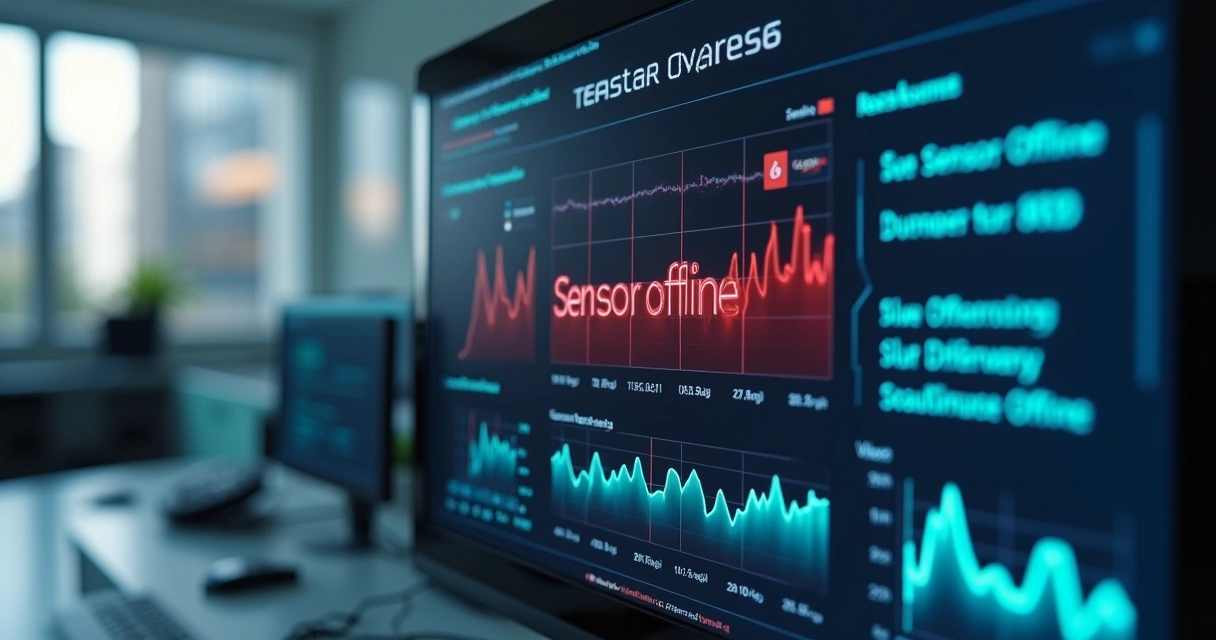
Sign 2: Frequent "Sensor Offline" Alerts
In some solutions, it's common to receive constant notifications of connection drops. I see this as a classic symptom of instability in the communication channel, not necessarily a defect in the sensor itself. Studies conducted at the Federal University of Itajubá showed that delays and intermittent drops can be caused by faulty configurations in communication between sensors and gateways, reinforcing the need for tools that allow fine adjustments and real-time monitoring.
Sign 3: Sudden Data Variation
I've noticed, in hospital and food monitoring, that readings that make abrupt "jumps" without plausible justification indicate momentary communication failure or even sensor instability. This can lead to wrong decisions. DROME, for example, features predictive analysis to filter outliers and quickly identify these suspicious variations, preventing losses or health risks.
- Temperature reading varying from 2°C to 15°C in seconds
- Humidity dropping and rising drastically without environmental reason
- CO2 levels oscillating between extreme values
Solutions that don't correlate multiple sensors can fail to distinguish real failures from reading anomalies. Here, I believe DROME stands out.
Sign 4: Data Update Delay
In many systems, I expect to receive data in real-time, but I've seen platforms where the delay reaches minutes or even hours. According to studies from the Federal University of Itajubá, such delays can be related to poor communication protocol configuration or momentary connection loss. In critical environments like hospitals, every minute counts. A delay in the alert can be the difference between saving or losing entire vaccine batches.
In the case of DROME, the system features continuous IoT monitoring and artificial intelligence to detect abnormal delays and suggest automatic action plans, as indicated by practices exemplified in automatic action plans in case of sensor failures.
Sign 5: Duplicate or Conflicting Information
I've seen cases where two sensors in the same environment, connected to the same gateway, transmit conflicting data or appear as duplicates in reports. When this happens, it's usually a reflection of a synchronization failure in the communication protocol. Platforms that lack good calibration management end up getting confused, and it can be difficult to identify which data is reliable.

DROME differentiates itself at this point through attention to calibration management and associated artificial intelligence, avoiding human errors and cross-referencing information before generating final reports.
Sign 6: Audit Failures and Incomplete Records
When preparing for audits, I see that incomplete records, gaps in data sequences, or absence of detailed logs are clear signs of communication instability. Other solutions sometimes lose valuable histories or don't provide detailed information, compromising the traceability required in regulated environments.
In DROME, automated detailed report generation and calibration management are differentiators that provide greater security and compliance. I recommend consulting the compliance checklist for IoT sensors to ensure all records are always in order.
Sign 7: Frequent Instability in Low-Cost Sensors
In my work, I observe that cheaper equipment, chosen for reduced initial cost, generates long-term problems. Researchers at UniSATC showed that measurement stability in low-cost sensors, especially under wireless ModBus protocol, compromises efficient communication. This confirms what I see in the field: Systems seeking the lowest cost per sensor end up spending more time fixing failures than actually monitoring.
DROME bets on integration with sensors of proven quality with data integrity filters, something not all competitors worry about offering, and some don't even have real support for performing predictive maintenance that actually works.
How to Handle Frequent Failures?
After identifying one or more of these signs, I always guide clients to review the entire communication chain. Failures can originate from both hardware and incorrect configurations, physical obstructions, interference, or even software bugs. A periodic validation routine, firmware maintenance, and close contact with reliable suppliers is recommended.
If you're looking for references, DROME documents best practices in articles like how to avoid data transfer errors between sensors and how to resolve telemetry sensor failures in the hospital, combined with specialized technical support. Answering questions quickly can prevent losses and ensure safe operations in critical environments.
How to Improve Communication with a Robust Platform?
Platforms like DROME offer visible differentials. Continuous, detailed monitoring supported by artificial intelligence makes it possible to identify not only failures but also improvement trends or need for updates. While other market players present basic solutions without predictive intelligence or action plan automation, DROME proves superior by delivering auditable reports and quick responses to all types of failure signals.
Integrating technologies and following reliable recommendations, such as those gathered in continuous monitoring with IoT, is the safest path to preserve digital evidence in audits and maintain the quality of sensitive inputs, which is what truly protects patient and consumer health.
Failure is not an option when lives or major investments are at stake.
Conclusion
Quickly identifying signs of communication failure between sensors and gateway is essential for any company committed to product integrity and people's safety. In my view, systems based on artificial intelligence, detailed histories, and automation, like DROME, change the game, add security, reliability, and save time and money with quick and precise interventions.
If you need a platform that goes beyond the basics and truly protects your business against communication failures, I invite you to learn more about DROME. Make your operation smarter and safer starting today.
Frequently Asked Questions
What is a communication failure?
Communication failure occurs when information doesn't transit correctly between the sensor and the gateway, causing delays, losses, or distortions in collected data. This can happen for various reasons, from physical interference to configuration errors or hardware defects.
What are the most common symptoms?
Among the most common symptoms are: missing data, constant sensor offline alerts, update delays, duplicate or conflicting readings, and gaps in records. Always be alert to any unexpected value variation and report failures, as these are important signals.
How do I resolve sensor-to-gateway problems?
I recommend reviewing physical connections, resetting network parameters, checking firmware updates for sensors and gateways, and reconfiguring the communication protocol. Using a platform capable of monitoring and suggesting automatic action plans, like DROME, greatly increases the speed of problem resolution.
Why won't the sensor connect to the gateway?
Power supply issues, excessive distance from the gateway, incorrect network configurations, and defects in the sensor or gateway are among the main causes. External interference, such as nearby electronic devices, also impairs the connection.
When should I replace the gateway?
If problems persist even after all maintenance and update attempts, or if the model doesn't support new technologies and protocols, it's time to replace the gateway. Modern models, such as those integrated in the DROME solution, increase reliability and allow greater control of your operation.