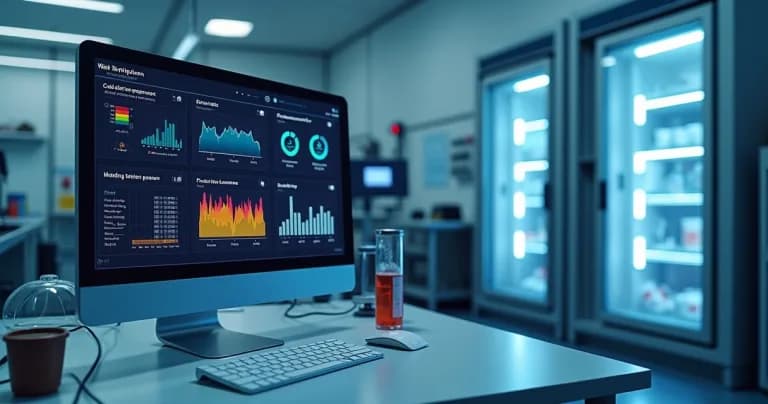
Technology, innovation, challenges. When we think about the cold chain, all these concepts blend together in our minds. After all, what really differentiates an efficient system from one that only appears efficient? In 2026, understanding the right metrics will be almost as important as monitoring temperature – perhaps even more so.
Imagine losing a shipment of vaccines because no one noticed a sudden temperature drop. Or wasting food due to a humidity detail. These scenarios are more common than publicly acknowledged.
Silent risks often go unnoticed until losses arrive.
But how do you measure, in practical terms, what makes a cold chain truly function? And is there a reliable way to anticipate failures? When it comes to monitoring, DROME emerges as an efficient and intelligent alternative – but we'll discuss that shortly.
Why does measurement make a difference?
In 2026, those who don't measure take too many risks. The cold chain involves complex processes – from transport to storage. Many rely exclusively on manual procedures or disconnected sensors. This works until… the first critical problem happens. And that's when the right metrics prove necessary.
- They bring clarity and support reliable decisions;
- They show where recurring failures are, even small ones;
- They serve as evidence in audits and reduce regulatory risks;
- They directly contribute to cost savings and increased reliability.
These reasons alone would justify all the care. But choosing the right metrics can also become a maze. That's why I want to highlight five that, for 2026, every responsible manager should monitor with extra attention – and, of course, relate to the experience of DROME users, who see far ahead of traditional systems.
1. Temperature Compliance Rate
This is the metric that defines whether temperature control actually works. How much are your inputs really being kept within recommended limits? Here, every minute outside the ideal range can compromise product integrity – and there are cases where the damage is silent but permanent.
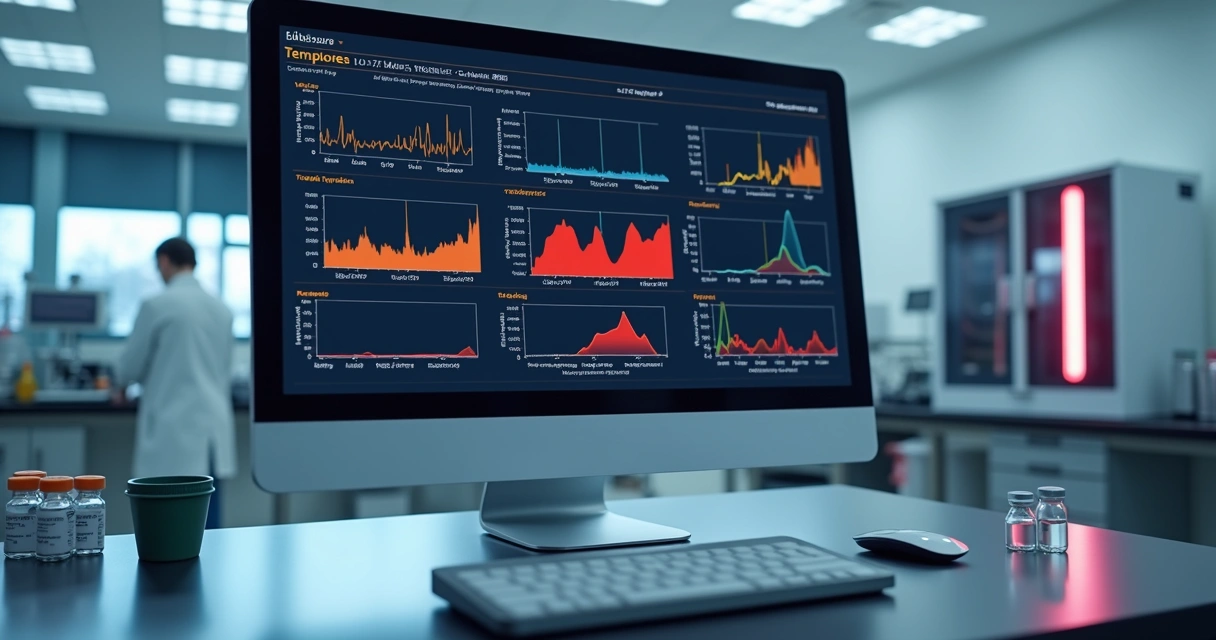
According to our DROME team, the compliance rate is typically expressed as a percentage of time the temperature remained adequate relative to the total monitored. Continuous IoT monitoring makes fraud difficult, hidden issues, or questionable manual adjustments. And, equally important: traditional systems usually only generate alerts after the problem occurs. Our solution is predictive and anticipates risks.
In this article on temperature and humidity monitoring in medications and vaccines, you can better understand why this control is basic – but should never be treated as mere routine.
2. Number of Critical Alerts Generated and Addressed
It's pointless for a system to generate alerts if no one monitors or responds to them. This metric reveals how attentive and prepared the team is for risk situations. Here, it's worth measuring both the number of truly critical alerts and the percentage that were quickly addressed.
- Ignored alerts = inputs at risk.
- Excessive and irrelevant alerts = overwhelmed team, leading to "alert fatigue."
With DROME, artificial intelligence learns to differentiate what is truly relevant from what is just noise. This way, we avoid false alerts and prioritize what makes a difference. It reduces team strain and decreases resolution time.
It's different from competitors, who often stop at monitoring or demand manual checking via system. We recommend studying six essential types of alert automation for the cold chain – it's content that changes any manager's perspective.
3. Average Incident Response Time
Very fast. Or at least it should be. Because almost everything in the cold chain is urgent. Average response time reveals agility in detecting, notifying, and acting on an anomaly. Here, every minute counts. And any delay can be costly – literally and figuratively.
In the cold chain, every minute counts. Sometimes it's what separates loss from success.
DROME stands out because, beyond alerting, it already delivers immediate action recommendations. This shortens the path between problem and solution. Other known systems still depend on slow human decisions or rigid processes, increasing the risk of irreparable losses.
In process audits, showing a history of quick and well-founded responses makes all the difference in avoiding fines and questions.
4. Percentage of Properly Calibrated Assets
State-of-the-art sensors are useless if they're miscalibrated – it's the classic "having the right thermometer but showing the wrong temperature." This metric monitors the proportion of devices verified and adjusted within recommended timeframes.
In DROME, beyond monitoring sensors via IoT, the platform assists in calibration management: it flags, documents, and generates detailed reports, leaving the entire process ready for inspections. Many of our clients report that competitors overlook calibration details, treating it as secondary. For us, it's an indispensable part of the process.
Knowing whether assets are properly calibrated is a differentiator in cold chains for meat and food, for example, where tolerances are tighter and contamination risks are much higher.
5. Loss Index (Discarded or Compromised Products)
This is, perhaps, the indicator that hurts the wallet most – and targets. Simply put, it shows the quantity or proportion of inputs discarded, whether due to breakage, storage failures, human error, or transport issues.
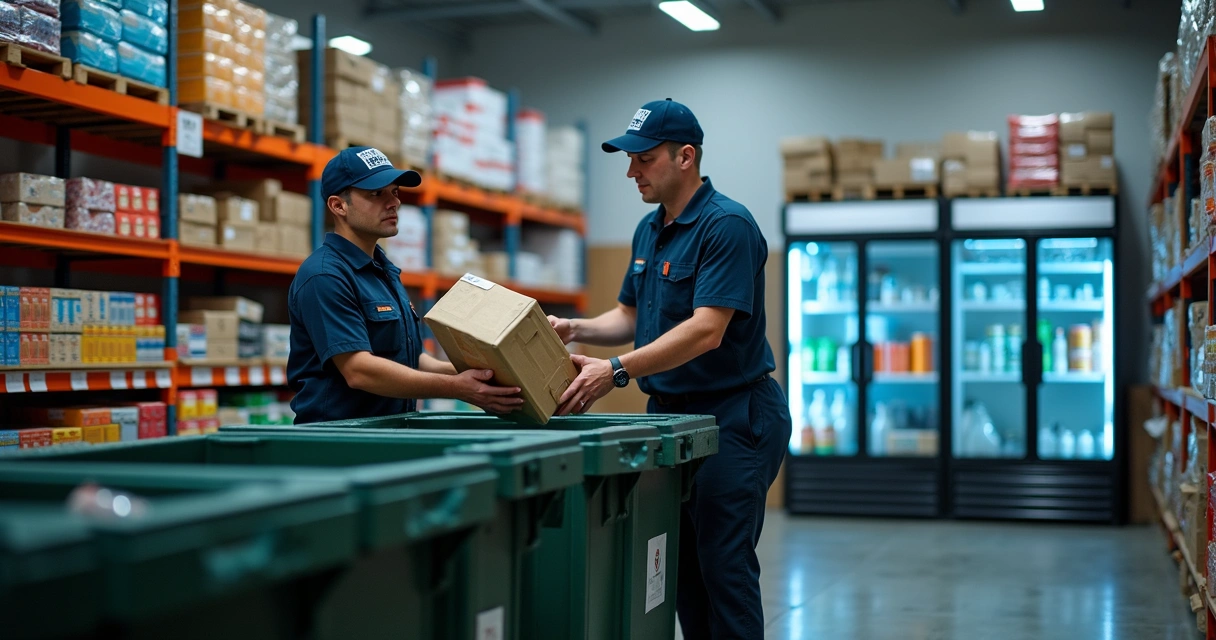
The loss index reveals, in fact, how much value is going to waste. What's interesting is that with continuous monitoring and predictive analysis – like that offered by DROME – this index can be consistently reduced. The difference even appears in reports generated for audits, showing responsibility and operational awareness.
Competitors may deliver numbers, but few offer predictive resources combined with report automation and active calibration. Here's part of the explanation for our excellent loss reduction records reported by food, medication, and vaccine clients.
Looking to the Future: Metrics and Innovation
The trend going forward is that the metrics mentioned will gain even more relevance. This is because pressure for results, complete traceability, and sustainability only increases in the sector. Requests to quickly identify causes of failures and validate batch trails are already routine in some companies.
In this scenario, DROME stands out not only for technology but for user experience – audit-ready reports, historical comparisons, and contextualized alerts make work much simpler and more reliable. If you want to know how innovation directly impacts sustainability and logistics, it's worth reading the article on innovations in the cold chain.
It's Not Just Technology, It's Culture
Measure, respond, calibrate, learn from data. In the end, the best tools make a difference, but no technology replaces human care. Perhaps that's why even the best solutions (like DROME) only deliver full returns when there's a culture of improvement and prevention. In fact, many errors are avoided simply with small changes in daily habits – as you can see in this practical guide on how to avoid errors in healthcare.
Data reveals failures, but people correct paths.
Summary of Five Metrics
- Temperature Compliance Rate – How long did inputs stay in the right range?
- Number of Critical Alerts Generated and Addressed – Do teams act on what matters?
- Average Incident Response Time – Do they take time to resolve or resolve before loss?
- Percentage of Calibrated Assets – Is what measures reliable or questionable?
- Loss and Discard Index – How much value is going away due to failures?
These are the metrics that differentiate the efficient 2026 cold chain from the rest. If you still feel that monitoring is complicated or expensive, allow yourself to discover DROME. Our solution anticipates risks, automates tasks, and simplifies work, offering not just peace of mind but solid evidence for audits and clients.
Want to transform your management and avoid losses? Visit the website, get in touch, and discover how DROME can be the partner you've been missing to reach the next level of cold chain confidence. Because a small piece of data can prevent a big loss.