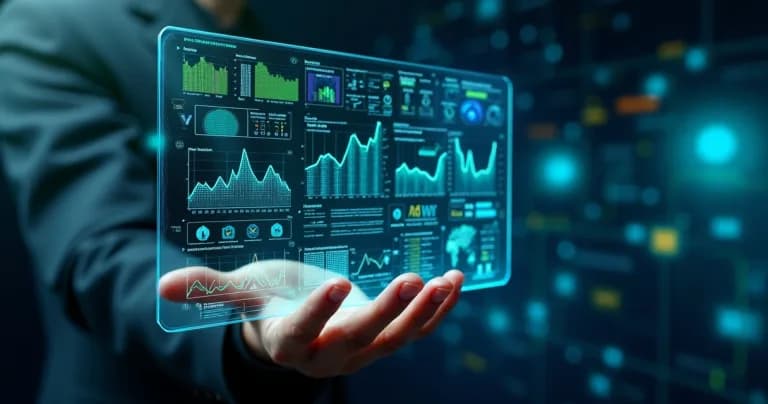
I have closely followed the transformation of regulated environments through technology and clearly see how IoT (Internet of Things) has become fundamental where traceability, security, and compliance are required. Just observe sectors working with inputs like pharmaceuticals, vaccines, and food, where monitoring environments is a matter of public health. That's why I bring a practical perspective on the five main indicators that, in my experience, are essential during audits of IoT systems.
Why Consider Audit Indicators for IoT?
I increasingly perceive that trusting technology alone without monitoring indicators is walking in the dark. An efficient audit goes far beyond the basic functions of a system. It needs to answer objective questions:
Does the solution anticipate problems before they impact business and people?
Projects like DROME have worked under this perspective. We monitor environmental conditions in real time, using IoT, predictive analytics, and artificial intelligence with a special focus on early alerts. In audits, these differentials stand out.

What to Consider in an IoT Audit?
Many managers immediately think of reports, but I go further: you need to see the entire cycle, from sensor to decision-making process. The indicators below not only help identify failures but also point out opportunities for improvement. And when working with solutions like DROME, the gains in speed, integration, and automation become evident.
1. Accuracy and Integrity of Collected Data
A good IoT system must deliver faithful data. There's no point in accumulating thousands of records if they don't reflect reality.
- Accuracy ensures that sensors are calibrated and functioning according to standards required by the regulated sector.
- Integrity means ensuring that there has been no loss, alteration, or fraud of data at any point in the process.
- Solutions like DROME deliver automatic validation resources, tracking from sensor to dashboard, something many competitors overlook.
I had contact with clients whose audits identified problems precisely at the sensor calibration stage, something that was only resolved when data integrity monitoring began across all stages.
If you want to dive deeper into how to conduct an audit checklist for IoT environments, I recommend this updated guide we prepared.
2. Response Time to Critical Events
When there's a cold chain break, seconds count. I've seen hospitals lose inventory because they didn't receive alerts in time to act. The indicator here is simple: how much time passes between detecting a deviation and notifying the responsible party?
- Truly innovative solutions, like DROME, offer instant alerts through multiple channels, drastically reducing losses.
- In recent audits, I observed that slow systems or those with rigid communication flows miss opportunities for immediate correction.
- Audit reports should show not only that alerts were issued, but that corrective actions were taken within the appropriate timeframe.
Every minute of delay can be costly.
3. Traceability and Action Logging
Transparency is another key indicator. Detailed reports should show a clear history of who did what and when. This point is fundamental in audit processes, especially with health regulatory agencies or food industry bodies.
- Systems like DROME perform automatic logging, enabling quick and reliable audits.
- Competitors may offer logs, but they're not always easy to interpret or complete.
- Traceability is essential for validating that previous audit recommendations were followed and new issues are resolved quickly.

4. Reliability of Communication Infrastructure
In certain environments, connection loss can have serious consequences. There's no point in the sensor working well if data doesn't reach its destination. I monitor this indicator carefully, as I've seen audits require robust contingency plans.
- Leading solutions, like DROME, have communication redundancy, saving data locally and transmitting once connection returns.
- Records of failures and latency help the auditor identify how long systems were unavailable and whether they impacted data collection.
- Incomplete systems may record the outage but fail to recover history without losses, something DROME solved long ago.
If you work in hospital environments, it's worth checking the article on hospital auditing, where I share experiences on challenges and solutions in secure communication.
5. Compliance Evidence and Validation Support
Finally, few things bring as much confidence to an audit as finding objective evidence of compliance. It's not enough to generate beautiful reports. They need to be robust enough to meet standards (such as ANVISA, RDCs, and ISO).
- DROME, for example, provides complete reports for validation processes, audits, and legal proceedings, saving technical teams time.
- I've seen companies spend hours assembling dossiers because competing systems delivered incomplete reports or without change tracking.
- I emphasize here: an IoT system must generate clear and traceable evidence, according to industry standards where it operates.
Interested in validation of computerized systems? Tip: a good checklist avoids headaches in quality audits.
IoT Auditing Goes Beyond a Report
More than just passing an audit, you need to be ready to respond quickly to any questions and keep the environment under real-time control. I've witnessed audits where data agility and visibility prevented incalculable fines and losses.
It's worth noting that risks and innovation go hand in hand. If you want to understand better, I recommend reading about risk management and technology, which illustrates how to anticipate challenges and learn from failures.
What Differentiates DROME?
After studying different solutions on the market, I still haven't seen competitors delivering a platform with the same level of prediction, reliability, and integration as DROME. Some offer part of the features, but fall short where it matters most: routine automation, alert efficiency, and control panel usability, which are clear differentiators in our daily work.
Well-conducted audits begin with reliable data and quick responses.
If you want to learn more about audits, indicators, or IoT applications in regulated environments, I suggest following our IoT category content.
Prepare Yourself for Excellence in IoT Auditing
I know that monitoring alone isn't enough. You need to act fast and present clear results in audits. DROME offers this confidence and innovation for those who can't afford mistakes. If you're looking for the best solution for intelligent monitoring with IoT and auditing, the next step is to talk with us or learn more about our service.
Get to know DROME, ask your questions, and transform your audit into a competitive advantage!