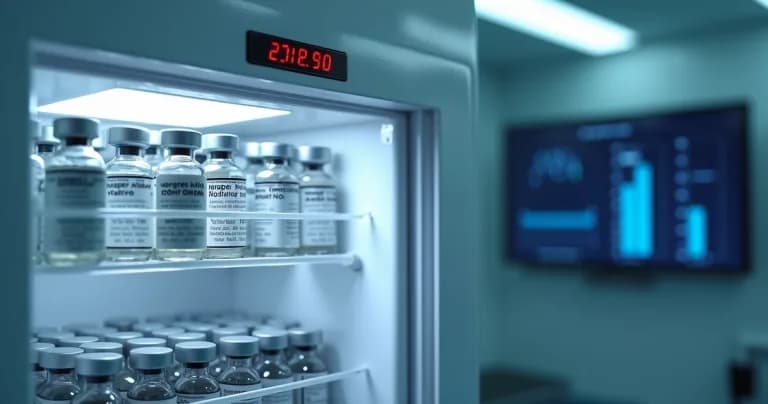
Of all the things I've experienced in the world of technology and healthcare, nothing troubles me more than vaccine waste due to temperature fluctuations. It seems simple, but I've seen entire stockpiles discarded because they sat in a refrigerator that nobody noticed had failed. It's not just money wasted—it's public health at risk. And through it all, I keep thinking: how do we solve this problem once and for all?
The challenges of temperature control for vaccines
Whenever I dive into the routines of clinics, pharmacies, and health centers, I see how delicate vaccines are. A small oversight in storage can compromise an entire campaign. Shelf life, efficacy, everything can be lost in minutes if the environment exceeds, even slightly, the recommended range.
The most common challenges I see are:
- Refrigeration equipment failures
- Power grid fluctuations
- Improperly closed refrigerator doors
- Manual temperature recording errors
- Oversight or underestimation of risks by staff
These errors are human, technical, everyday. Precisely because of this, they repeat so often. And that's when I realized the solution isn't purely in better training, but in automating surveillance over every detail of storage.
The role of IoT in vaccine monitoring
The concept of IoT (Internet of Things) is fascinating in theory, but in practice, it's even more useful. In vaccine storage, connected sensors collect data every second, 24 hours a day. They measure temperature, humidity, door openings, and send this to the cloud, nearly in real time.
I always emphasize how the difference IoT provides is more than technological—it's psychological. When you have the assurance that each refrigerator is being monitored, the anxiety of losing a batch decreases radically.
Confidence in inventory. Sleep without fear of surprises the next day.
With IoT, there's no longer that culture of "I forgot to check the thermometer today." Every variation outside the expected range generates an alert. And when that's not enough, detailed history allows investigation and prevents repetition.
Why automated monitoring surpasses manual control
I still see places insisting on spreadsheets and manual records. It seems sufficient, until someone, on a distracted day, forgets to write it down. I've been there. Manual monitoring is useful, but it doesn't come close to the reliability of IoT automation.
- Sensors don't forget to record
- Alerts are instantaneous. Danger is detected before it becomes loss.
- Detailed reports can be generated automatically
- Audits become less traumatic and more transparent
The problem with manual monitoring, beyond human error, is the slowness in correcting deviations. By the time the problem is identified, many vaccines may have already lost their stability.
Predictive analysis: anticipating failures before they become critical
Here I must confess: I'm an enthusiast for the possibilities that artificial intelligence brings. Continuous monitoring is excellent, but with predictive analysis, we move from reactive to proactive. That's what truly reduces losses. This is the point where DROME is absolutely superior in my view.
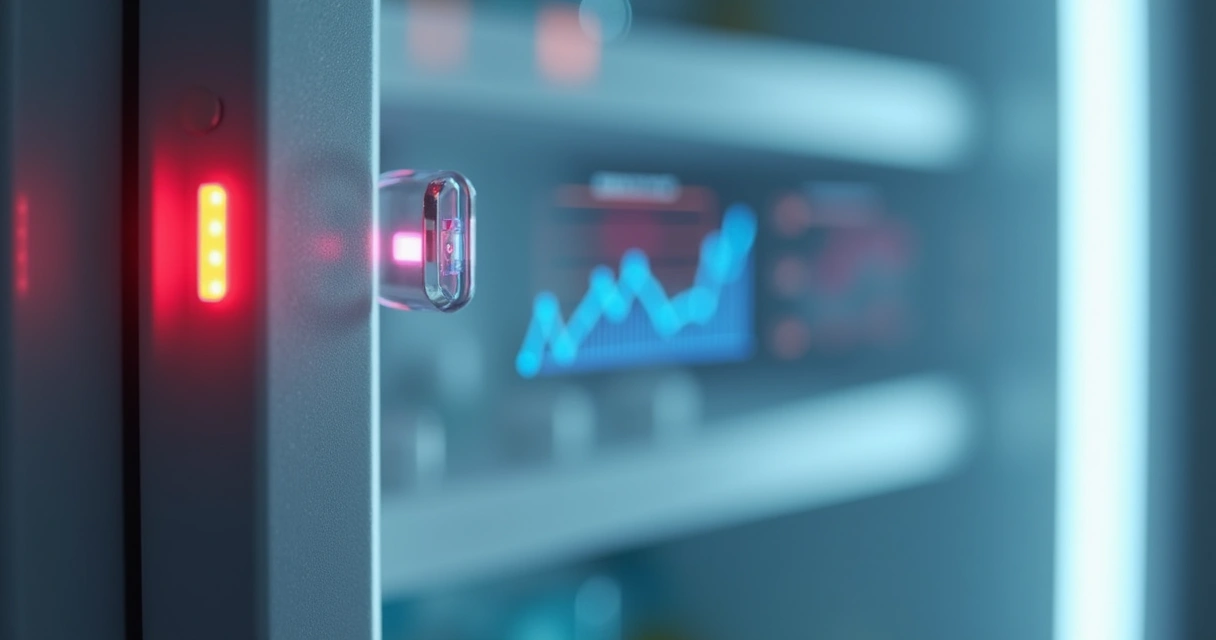
For example, sensors go beyond measuring temperature. They learn the operating patterns of machines, identify small fluctuations, and warn that a particular piece of equipment "is heading in the wrong direction," even before showing a serious failure.
I've seen platforms promising this, but few truly deliver the level of precision and reliability that DROME achieves. The differentiator lies precisely in integrating artificial intelligence with a user-friendly and clear dashboard.
What changes for the manager with intelligent monitoring?
When I talk with healthcare managers about platforms like DROME, I notice a certain relief. It's not hard to understand why. Everything becomes simpler:
- Early alerts save resources, time, and headaches
- Detailed reports assist in audits and accountability
- Sensor calibration is managed automatically
- Temperature and event history is available in just a few clicks
The point I most like to highlight: no technical expertise is needed to use these systems. Interfaces are designed for anyone to understand and act quickly.
Impact on public health
For me, the real benefit is collective. When the vaccine storage network is protected by connected sensors and predictive analysis, it's not just the facility that benefits, but the entire population.
I've written about this before, and I reinforce: vaccines with compromised efficacy put entire campaigns at risk and can reignite eradicated diseases. Public health depends entirely on thermal stability throughout the conservation chain.
Automated care, collective confidence.
Why other methods no longer work?
There are those who still defend outdated alternatives, like paper records or spot checks. Even some smaller competitors only offer point monitoring, without prediction or instant alerts. In my experience, these methods fail in speed, precision, and historical integrity. In comparison, features like DROME's surpass these limitations effortlessly.
I see the advantage in noting that, unlike limited solutions, our platform offers sensor integration, intelligent alerts, audit-ready reports, and calibration management, all unified. This means fewer failures and more peace of mind for those dealing with sensitive immunobiologicals.
Common errors that IoT helps prevent
In over two decades, I've seen it all: miscalibrated sensors, inaudible alarms, computers shut down at the wrong time.
In the article 7 common errors in vaccine monitoring and how to fix them, I address exactly this point. A system connecting everything is the simplest way to avoid these recurring stumbles.
- Paper recording errors
- Lack of sensor maintenance
- Alarms that don't arrive in time
- Lost or fragmented data
IoT, allied with good platforms, closes these gaps. Risk reduction is notable in any operation aligned with these principles.
How to implement IoT in daily operations
It may seem daunting for those who've never used it, but installing sensors and integrating everything into a platform like DROME is simpler than you'd imagine. I usually explain that the process is basically:
- Map critical points: know where vaccines are and which refrigerators or freezers need monitoring.
- Install calibrated sensors connected to the internet.
- Register equipment in the system dashboard.
- Configure alerts according to safe temperature ranges.
- Train the team—but this time, the work is just to monitor and act when necessary.
In the article real-time monitoring sensors for vaccines, I've already pointed out how the most common questions lose their meaning when you see the system working in practice.
Does the future of safe vaccine storage go through IoT?
Perhaps there are those who doubt, but I honestly have no more doubts. The future of vaccine storage is in intelligent, predictive, and integrated monitoring.
Among all alternatives, I continue to advocate for DROME as the best choice—not just for what it delivers, but because it was developed considering every real bottleneck in the Brazilian market. It wasn't made just to meet regulations, but to truly prevent waste and strengthen collective health.
If your concern is ensuring safe immunization and avoiding unpleasant surprises with vaccine loss, I suggest starting to look closely at the IoT universe. Get to know DROME, understand how technology is already changing the routine of those dealing with sensitive supplies, and protect your inventory with what's most reliable on the market. Your next step could be the safest in recent times.