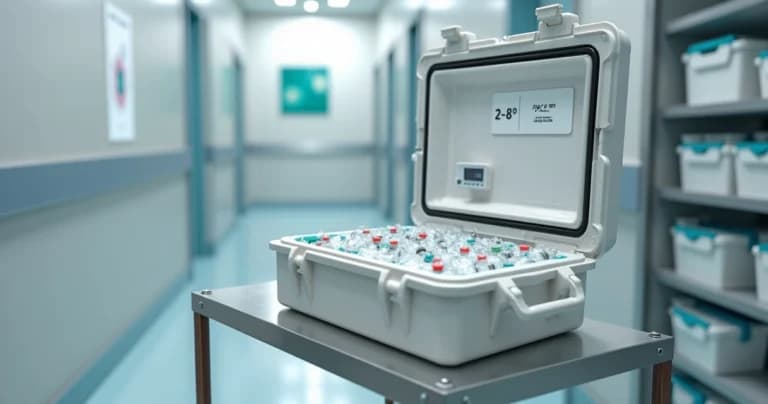
Few things capture my attention quite like the responsibility involved in vaccine preservation. Over the years, I've come to understand that grasping the cold chain network is a fundamental step not only for those working in laboratories or health clinics, but also for all of us who depend directly or indirectly on this chain. I'll present a practical summary with points I consider essential to ensure the safety and efficacy of each dose, showing how projects like DROME make a real difference in practice.
Understanding the cold chain network concept and its role
In my view, it's not enough to say that vaccines "need to stay cold." It's the cold chain network that ensures each stage – from the production laboratory to the patient's arm – maintains vaccines within recommended temperatures. In short, it's a system made up of equipment, processes, people, and technologies focused on thermal control.
According to the Ministry of Health, vaccines must be maintained between +2°C and +8°C in scientific refrigerated chambers. Any deviation, whether from equipment failure or human oversight, can compromise an entire shipment. The magnitude of this challenge became clear in recent Ministry data showing that between 2023 and 2024, over 604 million doses were distributed across the country, meeting 100% of state demand. Imagine the impact of a serious chain failure?
Cold chain networks are the invisible barrier between public health and imminent risks.
In the article Cold Chain Manual, I understood even more that a good cold chain summary must cover topics like: transportation, local storage, sensor calibration, and continuous monitoring.
The role of the cold chain: more than refrigeration
I say that the "cold chain" is the backbone for successful vaccination campaigns. It serves not only to keep vaccines cold, but to preserve their potency, prevent waste, and maintain public confidence. Note that we're not talking about a single refrigerator, but a path filled with critical points.
I'll highlight some key cold chain points I always emphasize:
- Receipt and verification at the distribution center
- Storage in specific chambers with continuous temperature recording
- Transportation using validated and monitored thermal boxes
- Delivery to health units and local storage per technical guidelines
Any failure, from a poorly closed door to an electrical outage, can be harmful. I've seen reports of batches discarded after just a few hours of exposure outside the safe range – a double loss, both financial and social.
The importance of continuous temperature control
In my experience, temperature control is a routine that separates success from chaos. And I'm not exaggerating! You need automatic measurements, immediate alerts, and reliable records to ensure each stage complies with sanitary requirements. Older solutions that rely only on manual checking can't handle current demand and leave room for human error.
DROME, for example, drastically reduces this type of vulnerability because it automates not only data collection, but also rapid responses to deviations or signs of equipment instability. I've used competing systems and, honestly, the integration between IoT and DROME's predictive analytics leaves other alternatives behind, which typically work with simple monitoring, without real intelligence to anticipate problems.
Risks from equipment failures and human actions
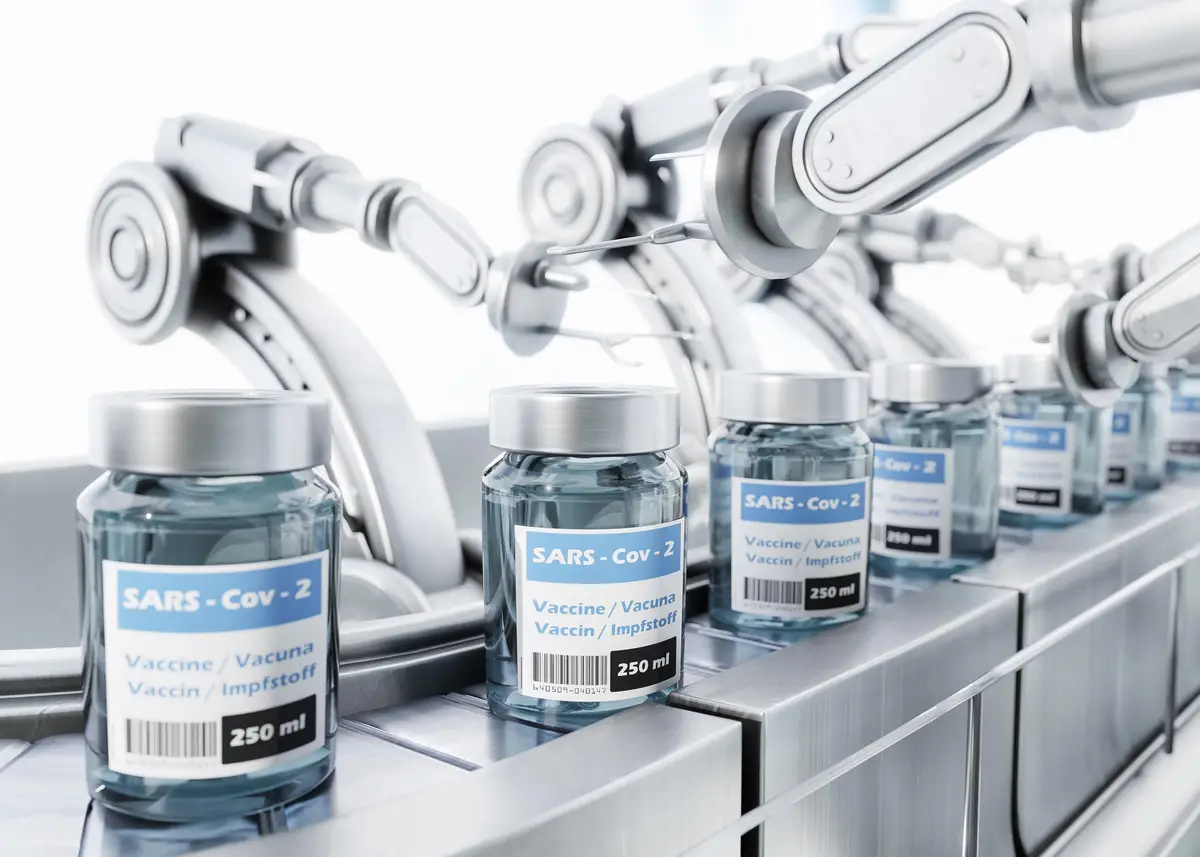
Many believe that maintaining the cold chain comes down to buying good refrigerators. I disagree. I've witnessed new chambers showing defects within months due to electrical overload or lack of maintenance. Not to mention that open doors, power failures, incorrect thermal box exchanges, and even incomplete data recording are failures associated with human actions.
Common cold chain failures can cause million-dollar losses and put the population at risk. Prevention requires organizational culture, robust processes, and intelligent monitoring systems. And speaking of systems, what sets DROME apart is its predictive analytics capability, which indicates risks long before the problem occurs, unlike competing services that only notify after damage.
Anticipating failures is the secret to preventing waste and protecting lives.
For those wanting to see more practical examples of dangers and errors in the cold chain, I recommend the material on risk management in the cold chain.
IoT technology, artificial intelligence, and predictive analytics: the new standard in monitoring
IoT (Internet of Things) technologies connect sensors to cloud-based analysis platforms. That's what I use in DROME: intelligent sensors spread throughout cold chambers, thermal boxes, and vehicles send data in real time. With artificial intelligence, equipment operating patterns are continuously evaluated, allowing identification of small fluctuations before they become bigger problems.
Advanced technology can learn, anticipate, and prevent failures based on history and atypical behaviors. The difference becomes clear when comparing with competing systems that only monitor instantaneous temperature and rarely deliver detailed real-time reports. In DROME, beyond receiving automatic alerts, I can generate comprehensive reports and compliance evidence recommended for audits – something rarely offered by basic alternatives in the market.
Essential procedures in vaccine storage
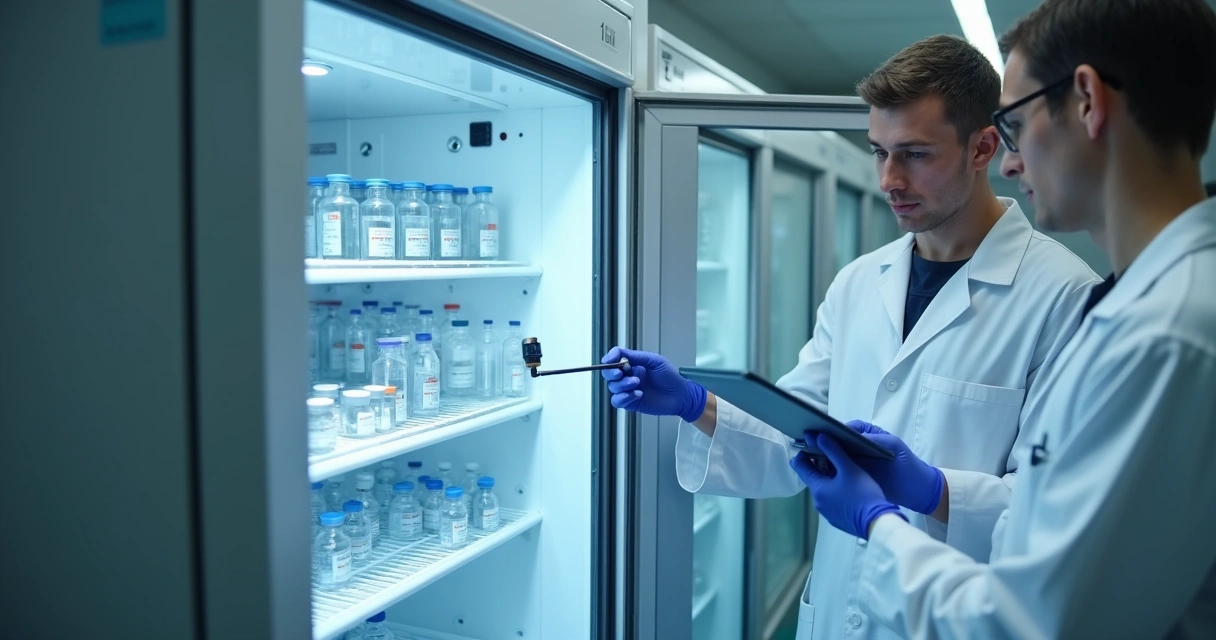
Storing vaccines is no task for improvisation. Experience shows that following protocols makes all the difference. The Ministry of Health recommends that after reconstitution, vaccines be applied immediately or, if necessary, kept refrigerated for up to four hours. Additionally, environment cleaning and organization directly influence equipment performance and preservation of supplies.
I've separated some recommended practices I guide in trainings:
- Keep vials organized and away from the chamber wall
- Avoid overloading products (air needs to circulate freely)
- Record entries, exits, and movements in digital spreadsheets for traceability
- Perform daily sensor testing
- Schedule regular preventive maintenance using reports to validate performance
At this point, I make sure to explain that with DROME, daily, weekly, or customized reports can be accessed and shared, facilitating audits and regulatory requirements. I've seen companies with systems that only record without allowing deep analysis, which doesn't meet more complex demands, especially for large networks and hospitals.
A guide I really like to recommend for those seeking practical steps on this topic is the practical temperature monitoring guide.
Vaccine transportation: challenges of the journey
The problem isn't always in fixed storage. During transportation, fluctuations can be even greater. I've tracked shipments that spent hours in vehicles without proper refrigeration, using only simple styrofoam boxes. Transportation requires adequate thermal boxes, recyclable ice, and continuous monitoring of sensor integrity. Additionally, delivery verification is part of the process, reducing risks of receiving compromised supplies.
Other points I usually emphasize about transportation:
- Prior validation of equipment and packaging
- Use of calibrated sensors for monitoring throughout the entire route
- Vehicle tracking and control of box openings
- Digital reports on times, temperatures, and incidents
Discussing this without alerting to digital solutions would be irresponsible. DROME brings as a differentiator the automation of alerts at each stage – including if it detects that the thermal box door was opened outside the expected time. Competitors may have some type of warning, but rarely offer integration of data from all points (transportation and storage) in a single platform.
For those wanting to understand more deeply the 7 major recommendations for storage environments, I recommend this material on essential care in cold chain storage.
Temperature sensor: calibration, reports, and digital audits
I've heard the phrase many times: "the sensor is working, everything is fine." Really? In practice, any sensor can drift without giving clear warning. That's why regular calibration is a step I consider mandatory. Advanced systems like DROME not only remind you when it's time to calibrate, but also record these events digitally, including test report attachments for consultation during audits.
Digital platforms also facilitate the issuance of daily, weekly, or monthly reports for trend analysis, risk identification, and process efficiency. In audits, this represents enormous time savings and confidence before regulatory bodies.
I also highlight that DROME brings a customizable dashboard, allowing you to personalize indicators and control filters, unlike more limited solutions from some competitors. Intelligent alert automation is another game changer – see the guide on alert automation in the cold chain to learn practical examples.
Quality management in healthcare: maintenance and waste reduction
Keeping equipment up to date is central to quality management in healthcare. I always insist: well-maintained equipment not only prevents failures, but extends useful life and increases reliability throughout the cold chain. Preventive actions, such as regular inspections, component replacement, and proper cleaning, are much cheaper and safer than dealing with losses after a breakdown.
Technologies like DROME assist in this process by creating automatic maintenance schedules, facilitating record control, and integration with clinical engineering teams. This directly impacts vaccine waste reduction, decreases supply shortage risks, and strengthens the credibility of healthcare institutions.

I confess: after I started monitoring everything digitally and with artificial intelligence, I never lost a batch due to oversight or malfunction. Competing projects, when they offer any form of digital management, rarely integrate sensor data, maintenance, and logistics, which only increases operational complexity.
Technical and logistics standards for vaccine safety
Brazilian standards are among the most rigorous in the world, requiring complete control at each stage of the vaccine cold chain. This includes specifications for equipment, recording frequencies, documentation, and periodic team training. Not following technical standards is not only a sanitary risk issue, but implies serious legal sanctions.
From experience, I know that updated manuals and a system that centralizes documentation, activity records, and compliance evidence are indispensable allies, especially in large operations or establishments aiming for sanitary certifications and ISO.
Conclusion
If I had to summarize what I've learned over these years, I'd say the cold chain goes far beyond equipment and basic routines. It's a living, sensitive chain, increasingly protected by technology. Everything I've advocated here – continuous monitoring, maintenance, protocols, control automation, and digital reports – has the same goal: ensuring each vaccine reaches the patient safe and effective, fighting not only diseases, but also waste of public resources and loss of social confidence.
Learn more about DROME's solutions. If vaccine safety is a priority for you, we're ready to support your team, facilitate audits, and protect supplies at each stage. Request a demonstration and see firsthand how raising the monitoring standard in your cold chain can be simple, intelligent, and impactful.
Frequently asked questions about vaccine cold chain summary
What is the cold chain network for vaccines?
The cold chain network is the set of equipment, processes, and people dedicated to keeping vaccines always within the safe temperature range, from the laboratory to the point of application. It involves cold chambers, sensors, refrigerated transportation, and digital or manual records, ensuring preservation from production to final use, protecting public health.
How does vaccine storage work?
Vaccine storage is done in scientific refrigerated chambers, maintaining them between +2°C and +8°C, per Ministry of Health standards. Vaccines should be organized without touching the equipment walls, avoiding overload and allowing air circulation. Constant temperature records and sensor inspection are recommended practices, along with expiration date control and movement tracking in digital spreadsheets to facilitate audits.
What equipment is essential in the cold chain?
Scientific cold chambers, approved thermal boxes, temperature sensors, recyclable ice, recording devices, and digital monitoring systems comprise the main equipment of the cold chain. Beyond these, refrigerated vehicles and automated alert systems are recommended to ensure safety throughout the entire route.
How to ensure proper vaccine preservation?
To keep vaccines preserved, it's necessary to monitor temperature constantly, perform regular equipment maintenance, and follow cleaning and organization protocols. Using advanced digital systems like DROME brings automation in alerts and detailed reports to anticipate risks, correct failures, and document the end-to-end process, improving the safety of the entire chain.
What precautions should be taken when transporting vaccines?
Transportation requires validated thermal boxes, calibrated sensors, continuous monitoring, and digital temperature recording throughout the route. It's important to verify vaccine packaging before shipment, track the entire route, and analyze reports of any incidents after delivery, ensuring product integrity and reducing loss risks.