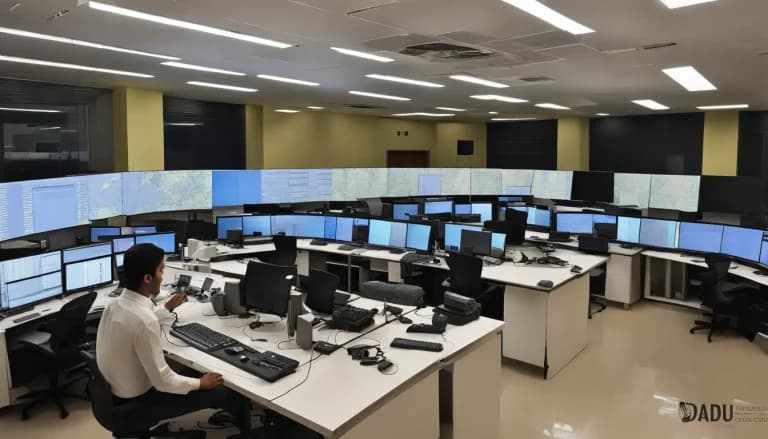
Introduction to Telemetry
Have you ever stopped to think about how complex systems manage to operate effectively and without issues? And how do we identify failures before they compromise critical operations? In a world where failures can cause significant losses and health risks, these questions are truly important.
In this article, we'll explore the essential role of telemetry in effective monitoring and precise observation. Understand how this powerful tool provides us with valuable data to decipher system behavior. Telemetry not only helps find problems before they become critical, but is also vital for the success of solutions like DROME. This method depends on constant monitoring to prevent failures and improve processes. Curious? Keep reading!
What is Telemetry?
Telemetry is like the backstage of a show, but for systems and applications. It's the collection of data that shows how everything is functioning without you needing to watch constantly. Think of it as game statistics: number of shots on goal, successful passes, etc. Here, the data is about application performance.
For example, imagine you have a website that sells products online. Telemetry will tell you how many people are accessing the site, how much time they spend on each page, and whether they encounter any errors along the way. This data is fundamental to ensuring that the website is always fast and efficient.
There are three main types of telemetry data: logs, metrics, and traces. Logs are like diaries, recording each system event. Metrics are numbers that show performance, such as response speed. Traces are like maps that show the path a request takes within the system.
Telemetry is essential for monitoring and understanding what's happening. While monitoring alerts when something is abnormal, observability goes further. It examines all the details to understand the reason behind any problem. With this, you not only fix failures but also improve overall performance.
In the case of a system like DROME, telemetry is even more critical. It helps monitor environmental conditions to prevent loss of sensitive supplies like medications and food. With precise data, the system can warn about problems before they become serious, ensuring everything continues to function well.
Logs, Metrics, and Traces: The Pillars of Telemetry
Understanding telemetry may seem complicated, but let's simplify it. It's essential for discovering how a system is functioning and is composed of three main parts: logs, metrics, and traces. Each one helps observe the system in different but complementary ways.
- Logs as diaries: Think of logs as a detailed diary of what happens in a system. They record everything, from routine actions to errors. For example, if a temperature control system detects that the level is too low, it makes a note. This is useful for discovering where something went wrong and resolving the problem quickly.
- Metrics as gauges: Metrics are like gauges that show system performance. They indicate, for example, how long an API response takes or how many requests are made per second. If the average temperature in a location where vaccines are stored is outside the standard range, metrics alert about potential future problems. They help make decisions based on real data, ensuring efficiency and safety.
- Traces as maps: Traces are like a map that shows the path of a request within the system. Imagine that a medication order goes through several stages before being delivered. Traces allow you to visualize each step, from initial order to final delivery, helping identify and fix bottlenecks in the process.
Together, logs, metrics, and traces increase the observability of a system. This means having a clear view of what's happening at any moment, allowing identification of problems before they cause damage. For sensitive systems, such as vaccine temperature control, this visibility is crucial to prevent losses and ensure the effectiveness of supplies.
How Does Telemetry Relate to Monitoring and Observability?
Understanding the relationship between telemetry, monitoring, and observability is essential for keeping systems running well. Think of telemetry as data collection. This data tells us how a system is behaving, such as the temperature of an engine or the speed of an internet network.
Monitoring then uses this data to alert us when something isn't right. For example, if an engine's temperature is rising too much, an alert is sent. This allows us to act quickly to prevent bigger problems, like a broken engine. Monitoring is therefore like an alarm that goes off when something is abnormal.
Observability goes a bit further. It helps us understand what's happening in a system in more detail. Imagine a website is running slowly. Observability allows us to discover whether the problem is in the network, on the server, or elsewhere in the system. This way, we can solve complex problems even when we don't know exactly what's causing them.
It's important to integrate telemetry, monitoring, and observability to improve the operation of any system. This combination not only prevents problems but also helps us find ways to make things work better. For example, by observing how a refrigerator maintains vaccines at the correct temperature, we can optimize its operation and avoid waste.
That's why using telemetry, monitoring, and observability together is a smart strategy. It not only helps us solve problems quickly but also continuously improve our processes. This way, we can always deliver the best performance and safety in any operation.
Conclusion: The Importance of Telemetry in DROME
Now that you've learned about the importance of telemetry, you're ready to see how this knowledge can be useful in your daily life. Think about which areas of your life or work could improve with this type of monitoring. You might be surprised by the possibilities!
In the DROME project, for example, we use telemetry to ensure that medications and food are stored under the right conditions. This helps us prevent losses and protect people's health. Just imagine how many incredible applications you can discover for this technology!
So, how about reflecting on this a bit? Is there any process in your routine that could be optimized with telemetry? How can it transform the way you work and live? Explore more on this topic and make a difference in your field!