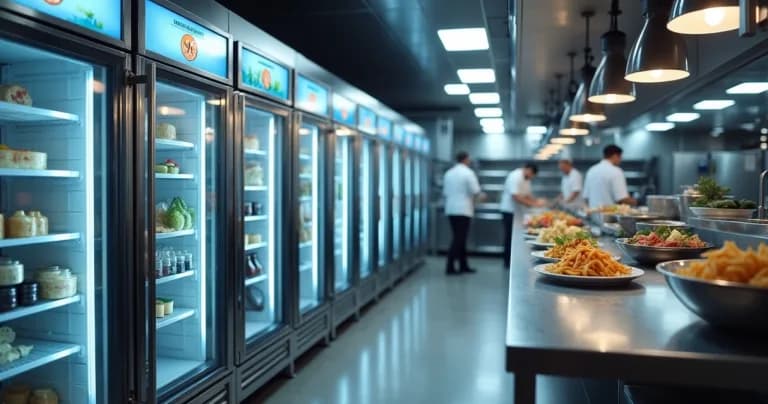
As someone who has worked closely with restaurant teams, I've always been impressed by the value wasted in easily avoidable situations. I've lost count of how many times I've seen boxes of perishable food go to waste due to equipment failure or routine oversight. During the lunch rush, few notice that a single refrigerator operating outside specifications can complicate everything. That's why I've always sought methods to make control more practical and accurate.
Why is waste so common?
Anyone who has worked behind the counter knows that restaurant environments are full of pressures. Demands for quality, cost control, health inspections, increasingly demanding customers… In this dance, errors happen. But when we're talking about temperature-sensitive inputs, any distraction can be costly.
Small storage failures represent financial losses and health risks for customers.
Think about it. In summer, a freezer that doesn't signal a temperature increase is all it takes. Ice cream melts, meat deteriorates, salads become unsuitable. That's not counting risks of citations and even closure, depending on local regulations, such as RDC 275, from ANVISA, discussed in detail in this article on food safety control.
The role of smart monitoring
By dealing with these challenges, I came to understand the difference that good monitoring can make. And in recent years, technologies have emerged with a single purpose: detect problems before they become crises.
DROME, for example, caught my attention for its ability to integrate IoT sensors and artificial intelligence. They take real-time information and analyze patterns. This allows identifying trends that point to chances of equipment failure, or even human behaviors that deviate from the norm – like a cold room door left open for longer than usual during the night shift.
Avoid loss before it arrives.
In comparison, I've seen solutions from other companies. Some help collect data, but almost always stop there: they depend on people to analyze spreadsheets, send alerts manually, or make reactive decisions. I've never felt the same level of security and practicality that a solution like DROME offers. Based on my experience, less integrated systems end up bringing a false sense of security.
What can be monitored?
When I started to better understand how smart monitoring works, I realized it's not just about temperature. DROME, for example, can track multiple variables such as:
- Temperature of refrigerators and freezers
- Relative humidity in preparation and storage areas
- Equipment operating status
- Doors open for abnormal periods
- Power spikes or drops affecting cooling
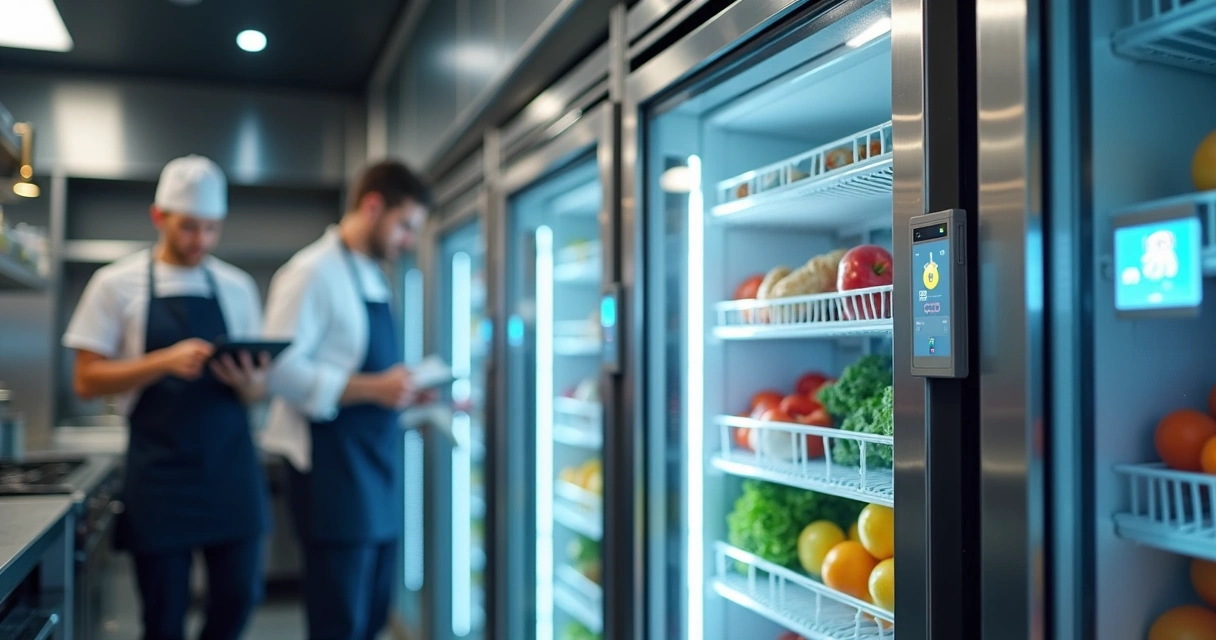
And, best of all, everything is recorded automatically. If anything falls outside the standard, alerts arrive in real time. It's not that warning that depends on passing a note, messaging group, or paper checklist, but a direct notification that allows quick action, even outside business hours.
I've seen competitors offering standalone sensors and dashboards, but they fall short on integration and, mainly, on predictive analysis – which DROME does robustly (learn more here). In the end, less advanced systems may help, but they require much more attention from the team and, honestly, wouldn't meet my needs.
What are the real benefits?
People often ask me: "But is this investment really worth it?". I feel that many people still believe that good sense and attentive eyes are enough. But reality shows otherwise.
The benefits of smart monitoring go beyond reducing waste:
- Drastic reduction in losses from food deterioration
- Improved compliance with health regulations
- Ease in generating reports (great for audits)
- Greater confidence in inventory and input planning
- Less rework from unforeseen incidents
By doing the math, waste can consume 5% to 10% of revenue in some restaurants. And in most cases, it's invisible waste: a cheese that fell outside specifications and was used anyway, or meat that expired and needs to be discarded in a rush.
With automatic data and smart alerts, decisions become simpler and safer.
How does implementation work in practice?
The practical side is, for me, one of the areas where I see the most progress currently. When I followed DROME's implementation in a partner kitchen, I was surprised by the speed. Sensors are installed without hassle, connect to the system in minutes, and start sending data right away. It doesn't require extensive training. Nor complex structural adaptations or operational downtime.
Whoever manages the kitchen can monitor everything on a simple dashboard, via computer or mobile phone. If anything happens (for example, a sudden temperature drop), the system already analyzes and suggests actions. Understand that you don't need to check constantly: the system alerts you when something deviates from expected, and still maintains history to trace causes of old problems.
And for those seeking even more details about this automation, I recommend reading about continuous monitoring with IoT in this content.
Why choose DROME, in my opinion?
I've tested other suppliers and conducted research with colleagues in the industry who tried similar solutions. DROME's differentiator, clearly, is combining continuous monitoring, real predictive analysis, automated reporting, and ease of use.
Intelligence that anticipates the problem and offers the answer.
I've seen systems from, let's say, "competitors" that even monitor climate, but fall short when it comes to failure prediction, report integration, and alert speed. With DROME, the feeling is being up to date with regulations, prepared for unforeseen events, and perhaps most importantly, with the freedom to dedicate time to what really matters: the customer and the quality of the dish.
Another point I consider quite relevant is the concern with audit and traceability. It's no use just monitoring day to day. Many health requirements may ask for detailed reports and historical proof. Systems like DROME automate records and facilitate organization for any inspection. This takes a huge weight off the management team's shoulders.
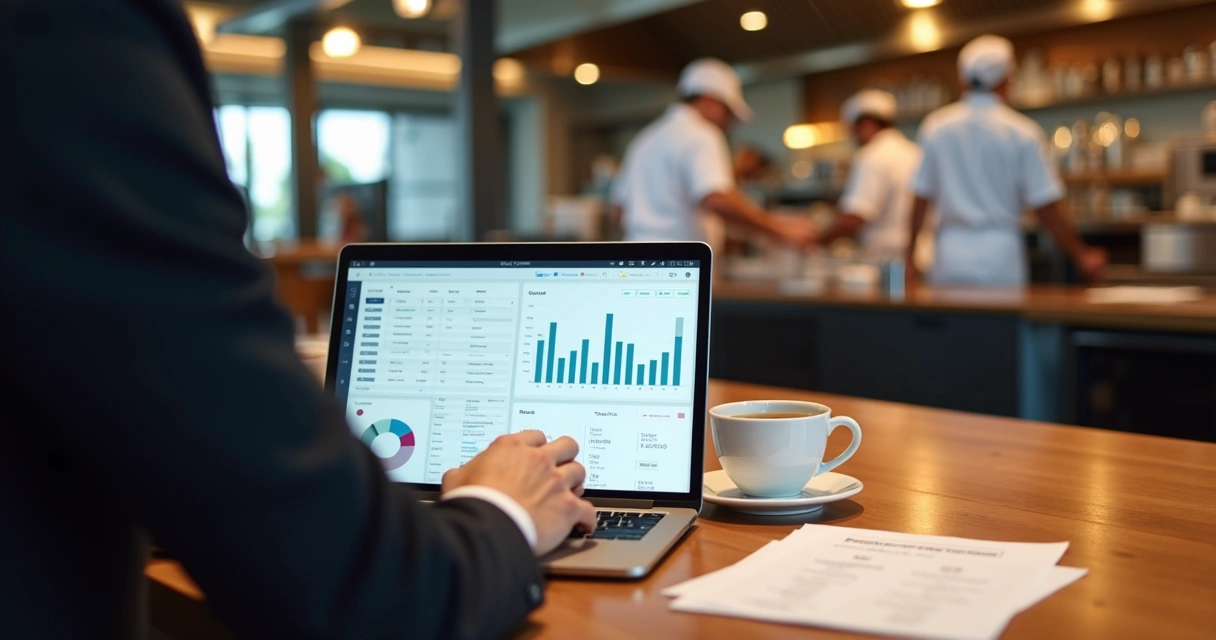
Thinking about the future: less waste and more sustainability
I often say that reducing waste is not just a matter of economics, but also of respect for the customer and the environment. Each poorly stored food item is natural resources thrown away, wasted energy, lost transportation. I like DROME's approach to treating the cold chain and sustainability in the context of logistics, as it demonstrates that it's not just about money, but about a culture of responsibility.
Another interesting point: for those who want to dive deep into how these technologies are changing the way we approach food losses, I recommend the article on temperature and humidity monitoring in different types of foods and situations.
Conclusion: acting now makes all the difference
If I had to sum up everything I've been observing, I'd say that investing in smart monitoring is a concrete choice for those who want to survive in the restaurant market. It's not just about avoiding fines or following protocols. It's about ensuring quality inputs, confidence, compliance with standards, and, most importantly, peace of mind to focus on the customer.
Curious to understand how it works up close or want to see practical examples? This is the time to learn more about DROME and experience technologies that really make a difference. Less food in the trash. More safety for those who serve and those who consume. A step forward in management, sustainability, and the health of the food sector.
I invite you to discover, without commitment, how DROME can transform the routine and results of your restaurant.