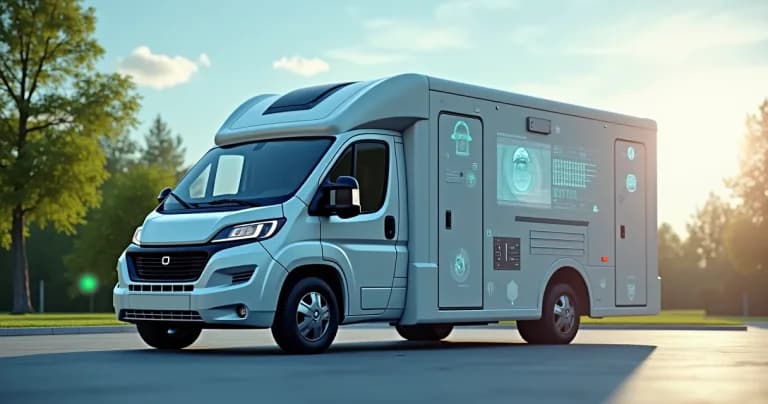
When I think of mobile laboratories, I recall the first time I witnessed sample collection in a van adapted for environmental research. The challenge was enormous: maintaining stable reagent temperatures, ensuring sensitive equipment wasn't affected by vibration, and still caring for sample security in varied environments. Today, looking at how technologies have evolved, I notice a complete transformation in environmental monitoring of these mobile laboratories.
The old scenario: evident limits and risks
A few years ago, environmental monitoring was almost manual. I myself have seen technicians with spreadsheets and analog thermometers, recording temperature and humidity data on paper. The data remained fragmented, difficult to track, and subject to human error. A refrigeration failure was only noticed hours later, if it was noticed in time at all. The risks? Loss of supplies, sample contamination, and of course, high costs from waste.
Disconnected data does not protect lives.
Furthermore, mobile laboratories deal with variable factors: displacement, climate changes along the route, power variations. All of this amplifies the chances of failures if there is no efficient, real-time system.
How technology changed remote monitoring
With the advancement of IoT sensors, cloud platforms, and artificial intelligence, everything became more dynamic, precise, and integrated. Today, instead of sporadic manual readings, intelligent equipment continuously monitors the environment, triggering automatic alerts in case of anomalies.
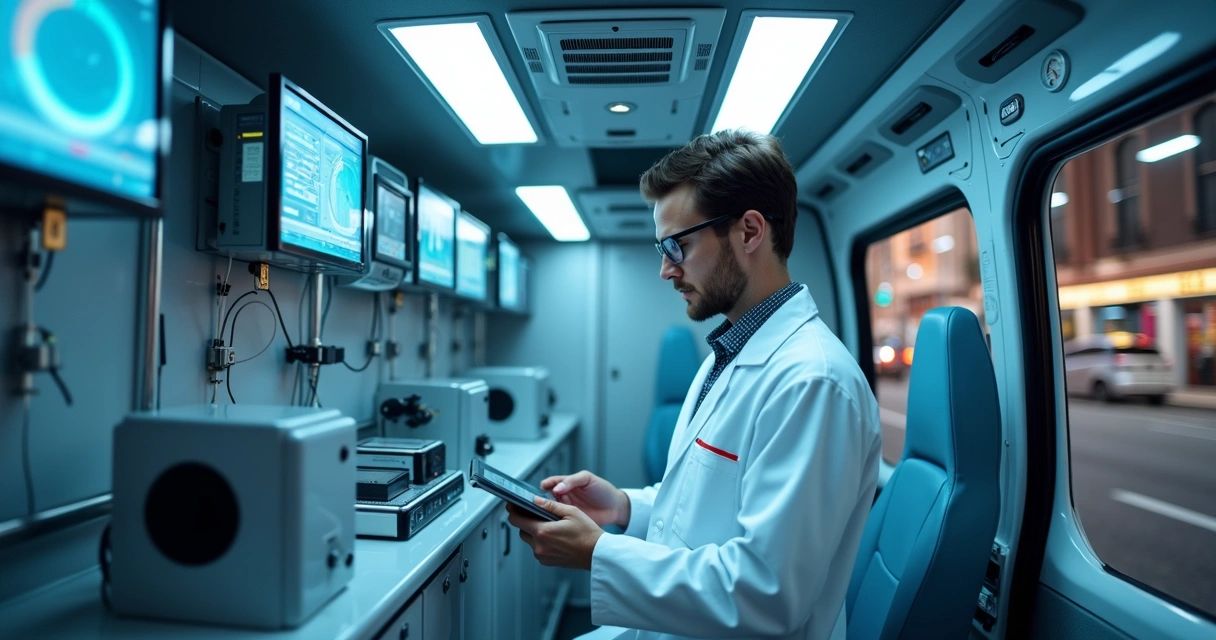
In my experience, the biggest change is not just in automatic data collection, but in the power of predictive analysis: specialized software can predict, for example, that a certain piece of equipment is about to fail, even before this impacts the monitored variables.
DROME brings exactly this modern approach. By integrating multiple environmental variables into a single platform, with clear reports and instant alerts, it has become a reference where precision and traceability make a real difference. I've tested other systems on the market and, frequently, they deliver basic data, without intelligent integration or advanced calibration and audit resources.
Remote monitoring and mobility: why is the challenge greater?
A fixed laboratory would already require attention, but in the mobile environment everything is amplified:
- Sudden temperature changes during displacement
- Vibration and impact compromising less resistant sensors
- Communication challenges (internet signal, unstable power, etc.)
- Space restrictions for device installation
I've witnessed situations where a simple journey on an irregular road resulted in the displacement of poorly fixed sensors, compromising the reading for the entire day. DROME solves this kind of pain by proposing robust sensors, cloud integration, and notifications via multiple channels. Other systems even offer notifications, but the centralization of operational information, detailed reports, and calibration tools that I found in DROME are clear differentiators.
Direct impact: safety, compliance, and loss reduction
Remote monitoring quickly reduces waste and hidden failures. This is not just theory – in projects I participated in, the quantity of discarded supplies fell by more than 70% after implementing intelligent systems.
Another point I value: compliance with standards. Many mobile laboratories operate under rigorous ANVISA and international agency requirements. With automatic digital reports, the entire environmental history becomes accessible for audits, providing much greater legal and operational security. To learn more about sensor calibration in controlled environments, I recommend this complementary reading.
Competitors: what they offer and our advantages
There are alternatives on the market, such as traditional monitoring platforms and some international IoT systems. They even meet basic environmental monitoring requirements, but I see clear limitations, such as little flexibility for mobile environments, unfriendly calibration processes, and often slow support without local personnel.
DROME was born considering the reality of Brazil and Latin America, where connectivity is not always continuous and mobile laboratory environments are diverse. Our interface is designed for the Brazilian operator: clear, responsive, and 100% in Portuguese. Additionally, features like predictive analysis come embedded in the package – with competitors, it's usually a separate module. I haven't found another system with notifications on multiple channels, audit report integration, and calibration management as standard, all in a single SaaS platform.
Preventing losses is a matter of choice, not luck.
Data sources and analysis: the power of integrated information
In the old scenario, each sensor generated isolated data. Already with advanced platforms, like DROME, it's possible to cross data from diverse sensors (temperature, humidity, pressure, CO2), producing intuitive reports and real insights. I experienced this in field projects: we were able to anticipate refrigerator failures thanks to the correlation of environmental data and energy consumption, for example.
Centralizing data not only facilitates decision-making, but enables agile auditing and automatic deviation detection. To better understand how information transforms processes, I suggest reading an article about information technology applied to monitoring and analysis.
Reports, traceability, and audit: the leap of confidence
In many cases, mobile laboratories provide critical services to health and research, including in public vaccination campaigns or emergency containment. Here, trusting the data generated makes all the difference. DROME not only records all environmental changes but stores the history of sensor calibration, offering robust support for traceability.
Personally, I believe that staying ready for audits is almost like putting on a seatbelt before driving: it seems excessive, until you really need it. Detailed reports, like those available in DROME solutions, allow for quick response to questions from regulatory agencies. For those who wish to understand more about the role of monitoring in modern laboratories, I recommend reading the article on the subject on our blog.

The future of remote monitoring in mobile laboratories
For me, it's clear that the future of remote monitoring lies in autonomy and predictive analysis. Mobile laboratories will depend increasingly less on human checks, relying on robust, self-adjusting systems capable of interacting with other devices. CO2 sensors, pressure, movement, everything integrated into centralized solutions.
I already see discussions about real-time response automation: automatic backup activation, sending commands to correct climate control, and even remote reprogramming of sensors. The trend is that platforms like DROME will be protagonists in this movement, bringing end-to-end innovation and reliability. To delve deeper into the role of CO2 monitoring, it's worth checking this content: the importance of CO2 monitoring in cell cultures.
Mobile laboratories will need adaptable solutions, easy to install, and with quick and close support. I bet the differentiator will be in user experience, simple integration with other systems, and complete data transparency. A selection of relevant content on monitoring can be seen in our environmental monitoring category.
Begin the evolution of your mobile laboratory
If you manage a mobile laboratory or work in research, health, or cold chain areas, this transformation is within your reach. DROME emerged precisely to make remote environmental monitoring easy, precise, and safe, with accessible technology and dedicated support.
Don't wait for losses to act. Invest in intelligent monitoring and protect your work.
I invite you to learn more about DROME and how we can support the evolution of your mobile laboratory. Visit our website, discover our products, and expand your safety and operational peace of mind with those who truly understand the challenges in this field.