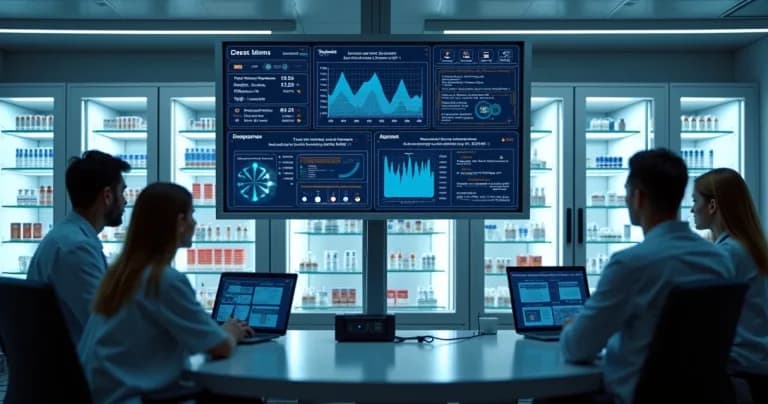
When I look at the current scenario of losses in temperature-sensitive supplies, such as medications, vaccines, and food, I see something that still keeps many managers awake at night: human error. I've witnessed cases where hours of work and thousands of dollars were lost simply because an alert wasn't followed, a record wasn't made, or equipment wasn't checked at the right time. I know technology has evolved significantly, but in 2026, the challenge still has a human face. And a flawed process.
Why do losses from human error persist?
It's still common to think that new equipment or basic training is enough to solve the problem. But from what I've seen over the past few years, most failures are consequences of manual processes, excessive repetitive tasks, and lack of a culture focused on risk prevention. Yes, most people don't make mistakes intentionally, but because they're overwhelmed, lack adequate technological support, or don't even understand the risk involved.
This is where I need to emphasize: lack of continuous monitoring, confusing records, absence of intelligent alerts to predict failures, and even the simple "I forgot to calibrate" can turn any success into a major loss. I see this in clinics, hospitals, distributors, restaurants—if there isn't strong technological support, the trend is the same, regardless of the segment.
How new technologies are changing this scenario
When I started working with monitoring, everything was spreadsheets, clipboards, and phones. In 2026, fortunately, I can affirm that the combination of IoT (Internet of Things), predictive analytics, and artificial intelligence has changed how we view the prevention of human failures. DROME, for example, is a tool that was born to tackle this problem at its root. It integrates sensors, automation, and intelligent alerts, ensuring that errors are detected before they even happen.
I've tested other systems on the market. Some even help, but I always felt the lack of integration of multiple variables, risk prediction, and ease in generating audit reports. DROME stands out because it thinks about the entire workflow: it monitors diverse variables, performs predictive analysis, and reduces dependence on human actions to maintain the quality of temperature-sensitive supplies.
The power of predictive analytics
Predicting the problem is better than rushing to fix it later.
In the article on predictive analytics as an ally to prevent supply loss, I delve into how identifying failure patterns and acting before they happen is a direct result of technology combined with human experience. No employee can, alone, analyze millions of lines of environmental data, predict trends, and trigger personalized alarms. But machines and algorithms do this in seconds, leaving the team focused on decisions that really matter.
Manual processes: silent enemies
I remember witnessing an audit where the temperature record was always at the limit. Everything was manual, notes were taken at the end of the shift, and it only took one sick employee to forget an entire day of measurements. The result? Discarded vaccines. This is an error that could have been prevented with simple alert automation.
There are at least six types of alerts I consider essential, especially in the cold chain. Content that marked me, in fact, details all of them: the types of automation that transform monitoring into reliable routine. If each step of the process has the right alert, the employee stops being the last bastion of quality control and becomes part of the solution, not the problem.
Where do people make the most mistakes in monitoring?
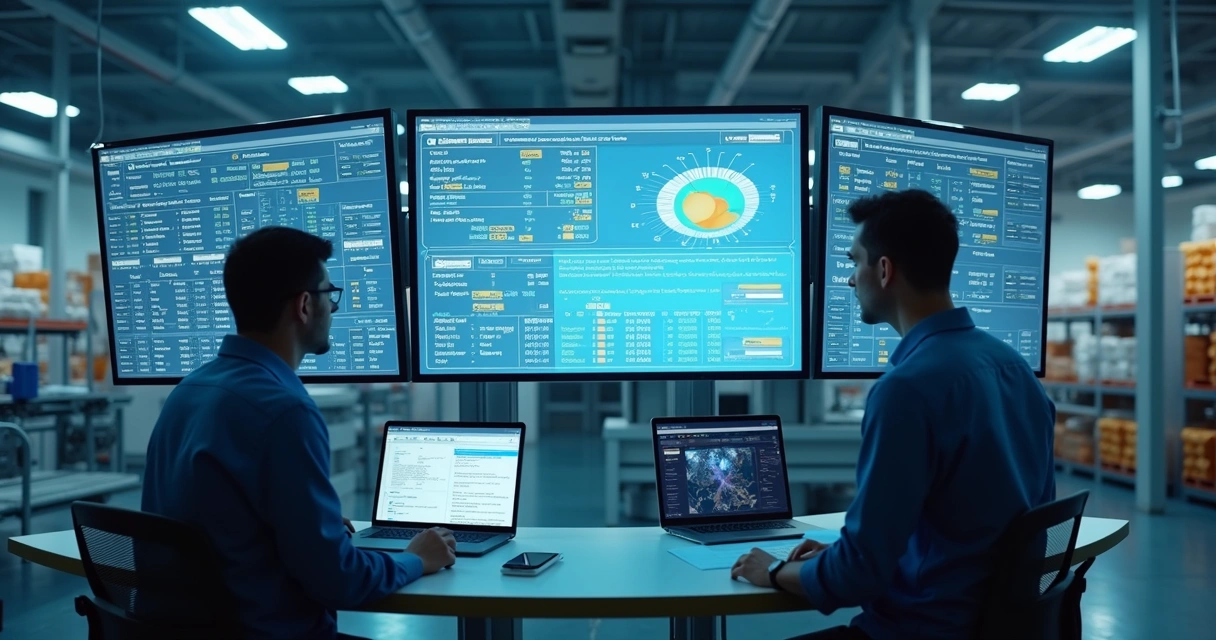
Throughout my journey, the same errors repeat. In an article about the seven most common errors in vaccine monitoring, I highlight how most problems are simple:
- Leaving sensors disconnected or poorly calibrated
- Records made outside correct intervals
- Confusion between times and scales
- Not paying attention to failure alerts
- Poor storage of reports
- Lack of preparation in data interpretation
- Negligence in incident response procedures
Note that, once again, technology appears as an ally. With systems like DROME, calibrating sensors becomes routine (there's even a calibration management module), alerts are automatic, and reports are easily generated and stored. This makes human error increasingly rare.
How to transform data into prevention?
I've seen companies bet only on new refrigerators or cold chambers, forgetting about data analysis. Not infrequently, failures multiplied because no one was tracking historical indicators, wear trends, or usage peaks. For me, the secret lies in turning numbers into action.
Data that doesn't become prevention is just forgotten files.
The monitoring technology has already changed pharmaceutical management, showing in just a few clicks where the bottlenecks are and where risk might exist. With easy dashboards and accurate reports, decisions stop being based solely on guesswork.
I can state, without exaggeration, that those already using sensor integration and predictive analysis show fewer losses. The difference is evident when I compare results: less waste, fewer audit problems, safer processes. Competing solutions even bring some advancement, but in my view, few demonstrate real concern for the entire journey: sensors, alarms, reports, calibration management, all in one place.
Information management and internal culture
I'm not saying that adopting technology is enough and that's it. Culture needs to follow. Training teams, reviewing protocols, and encouraging data-driven decision-making are processes that cannot be ignored. I participated in trainings where I noticed how adoption grows exponentially when people understand why that data matters—it's not just another routine, it's safety, it's economy, it's public health.
Generating detailed reports, having clear audit trails, and easily retrievable evidence is only possible if information is centralized and protected. DROME offers exactly that, while many competitors limit their functionality to simple data collection.

The future of loss reduction: prediction, agile response, and learning
I've talked with several managers who still bet on "we'll see later." The advantage of automation and intelligence is increasingly clear: speed in response, less waste, auditable processes from start to finish. I see a future where employees won't be blamed for failures because they simply won't go unnoticed.
Those who really want to reduce losses in 2026 should adopt three basic pillars:
- Automated monitoring:
- Use of integrated sensors connected to the cloud
- Personalized and automatic alerts for environmental deviations
- Predictive analytics and intelligent reports:
- Patterns and deviations are detected before they become problems
- Data generates audit-ready reports
- Support for internal culture and process review:
- Recurring training and clear protocols
- Team involvement with technology (not just to comply)
And, of course, seeking inspiration from successful experiences helps. A case I like to cite shows how information technology boosted monitoring and data analysis in pharmaceutical and food operations. This shortened timelines and generated real savings, plus more confidence in external audits.
Why I trust DROME more
I've tested competitors that limit themselves to issuing alerts and storing raw data. DROME goes further: it creates intelligent routines, allows detailed sensor management, facilitates audits, and anticipates failures. For me, this makes all the difference. The user isn't held hostage by rigid interfaces, the team gains freedom to act where it really matters, and loss reduction becomes a natural consequence.
Well-designed technology protects people, supplies, and reputation.
I know that reducing losses from human error won't happen overnight. But it's also become clear to me that the right technology, connected to revised processes and engaged people, makes 2026 a landmark year in this transformation.
If you also want to turn the tables and protect public health, your business, and your team, I recommend learning everything DROME can do for your operation. Your next step begins when you choose to innovate and prevent, instead of regretting losses that could have already been avoided.