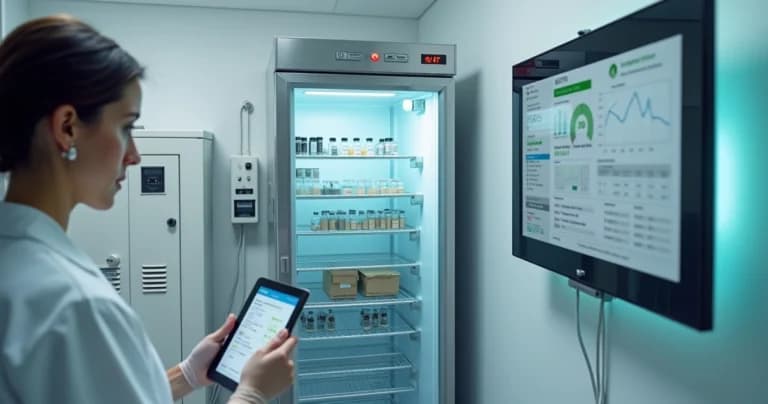
When I think about the challenges of vaccine storage and transport, the risk of thermal damage caused by power failures has always been one of my greatest concerns. I've witnessed considerable losses at clinics and health centers simply from minutes of electrical fluctuation. The consequences affect not only the budget but also public health. That's why I decided to share what I've learned over the years about how to prevent this type of situation. I'll cover everything from best prevention practices to the use of advanced technology, like DROME, to ensure vaccine stability.
Why are vaccines so sensitive to temperature?
Since the beginning of my career, I've noticed how many people have no idea how just a few degrees can compromise the effectiveness of an immunizer. Vaccines must be maintained within very restricted temperature ranges to preserve their potency and safety. Exposure to inadequate temperatures can render a vaccine ineffective, leading to serious risks, including disease outbreaks.
The risk of loss intensifies during power failures, since the cold chain is temporarily interrupted. A single occurrence can be enough to lose an entire batch of vaccines. I've witnessed cases where a weekend without monitoring cost thousands of dollars in losses, plus the frustration of entire teams.
Power failures: causes and consequences
Power failures can be caused by blackouts, voltage drops, accidental shutdowns, or even human error. When this happens, refrigeration systems stop functioning and the cold room or refrigerator gradually loses its ability to maintain the required temperature.
Time lost is a dose lost.
- Medications and vaccines become unusable.
- Risk emerges of administering compromised doses to patients.
- High financial impacts result from replacing supplies.
- Delays and rescheduling occur in vaccination campaigns.
That's why establishing a reliable prevention plan is essential.
How to prevent thermal damage to vaccines from power loss?
I've learned that prevention begins long before a power failure occurs. It's not enough to react: it's essential to create a structured and automatic routine of monitoring and contingency. I'll list the best practices I've seen actually working in different healthcare settings:
- Install real-time monitoring systems: Using smart sensors to track the temperature of cold rooms is a game changer. Constant monitoring allows you to detect variations as soon as they happen. I personally recommend IoT-based solutions, like what is offered in DROME itself. This technology provides immediate alerts and prevents a failure from going unnoticed during the night, for example.
- Have alternative energy sources: Installing generators or UPS battery systems ensures operation even during short periods without electricity. Additionally, keep maintenance current on these alternative sources.
- Continuous team training: I don't compromise on training professionals who handle vaccines. They need to know how to act quickly in response to an alarm or power failure, understanding emergency procedures and safe transfers.
- Adoption of clear contingency plans: In contingency planning for cold room failures, establishing well-defined protocols makes all the difference in containing losses.
- Periodic equipment verification and calibration: One of the most neglected actions, but which I always recommend, is the calibration of sensors and periodic validation of thermostats, ensuring they are providing accurate readings.
The role of intelligent monitoring
I've tested various monitoring systems, including DROME competitors, but none with the flexibility and intelligence I found in our platform. The difference lies in what goes beyond basic alerts.
DROME uses IoT sensors and artificial intelligence algorithms that not only monitor but learn the behavior of your equipment over time and anticipate possible failures before the temperature even leaves the safe range. I know few solutions that can deliver real predictability in these environments.
Comparing with other systems available on the market, many are limited to sending alerts via email or SMS without offering detailed reports and without integrating sensor calibration data. DROME delivers automatic reports, complete histories, and even assists in the audit process, which saves hours of work for technical and administrative teams.
What to do if a power failure occurs?
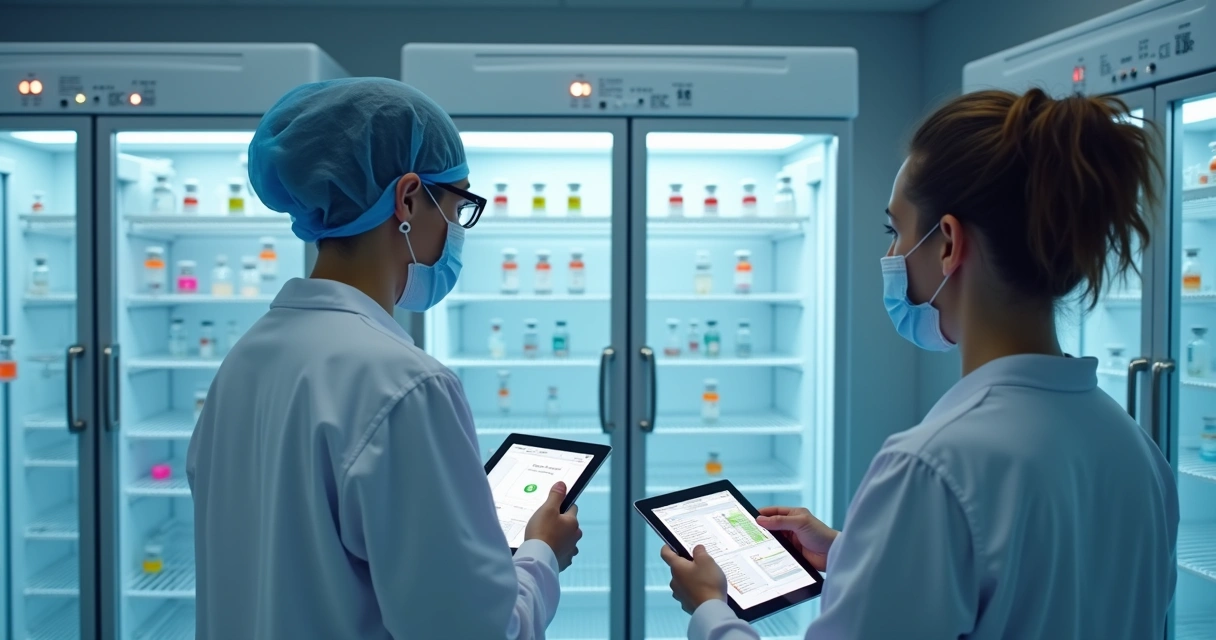
Even with all prevention, failure can happen (and I've lived through this type of situation). That's why it's important to act quickly and in a coordinated manner. Some immediate actions I recommend:
- Keep cold room doors closed, avoiding rapid loss of cooling.
- Immediately activate the alternative energy source (generator or UPS).
- Check the status of the real-time monitoring panel using platforms like DROME's, to know when and where to act.
- Record all occurrences, times, temperatures, and actions taken.
- If possible, transfer inventory to another functioning cold room if you can't restore cooling.
It's worth mentioning here that less advanced systems from some competitors may not update information instantaneously during network collapse. With DROME, monitoring is continuous even in the face of interruptions, as data is transmitted redundantly, increasing confidence in the information received.
The impact of human error and how to reduce it?
In my experience, much of the thermal damage could be prevented with more transparent processes and supporting technology. Errors such as failing to check door closure or delaying response to alerts are common. An automated platform that alerts those responsible directly and generates clear reports drastically reduces this type of failure.
Additionally, if the location uses a system like real-time vaccine monitoring by sensors, the risk decreases significantly, everyone monitors the environmental conditions in real time.
Audits, reports, and data reliability
Over the years, I've participated in many health audits. What I've noticed is that audits become less stressful when we have all data organized and accessible. DROME, for example, generates automatic reports, making it easier to present information to regulatory agencies.
Beyond temperature, monitoring humidity in cold rooms is also essential, something our platform delivers in an integrated way, ensuring greater overall data reliability for inspections and decision-making.
Having digital history, graphs, and highlighted events prevents surprises and gives greater credibility to the service provided by the institution.
Practical daily care
There are simple details that make a difference and I guide healthcare professionals to always adopt:
- Have precision thermometers with minimum reading of 0.1°C, preferably digital with internal memory.
- Perform simulated power cut tests to check how long the equipment remains safe without electricity.
- Record manually (in addition to the digital system) temperature readings at least once per shift, always.
- Contact the manufacturer's support or the platform (like DROME's) at any suspicion of hardware or software failure.
- Maintain contact with logistics companies for quick removal of supplies if necessary.
I've learned that the combination of technology, processes, and a sense of urgency makes all the difference.
Common errors and how to avoid them
Even experienced professionals can make trivial mistakes. I recommend reading the article on the most common errors in vaccine monitoring, which shows how small details change everything.
The best learning comes from avoiding the error before it happens.
In the end, the greatest gain is in investing in automated systems, recurring training, and well-designed protocols. And then, I can affirm, the loss from thermal damage will be almost zero.
Conclusion: acting today ensures safety tomorrow
For those of us, like me, with responsibilities in healthcare, vaccine integrity should never be negotiable. A good plan begins with the right choice of technology partners. DROME shows how predictive monitoring, based on IoT and artificial intelligence, can transform the landscape of safe vaccine storage.
If you want to know how our solution can protect your institution's vaccines and ensure more peaceful nights, I invite you to discover more on our website. Don't wait for the next power failure to act. Get ahead and be part of a new standard of safety and reliability in the cold chain.