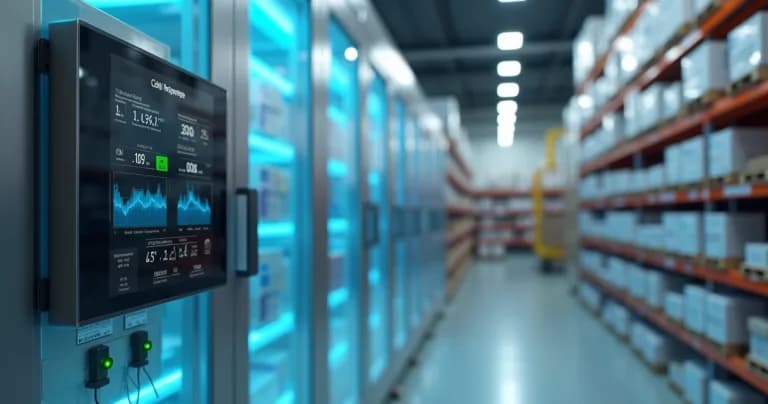
I've witnessed firsthand the challenges of monitoring temperature-sensitive environments. Compromised medications, valuable vaccines, perishable foods. One small failure in IoT sensors and losses appear. But honestly, cold chain technology has matured. In 2026, preventing IoT sensor failures is no longer a distant dream – it's within reach. You just need to know the right path.
Why do IoT sensors fail?
The first time I tracked a vaccine batch lost due to sensor error, I realized how small failures become major headaches. The reasons are usually simple:
- Weak battery or power failure
- Physical wear of the sensor itself
- Connectivity issues (Wi-Fi, poor mobile networks, or gateway overload)
- Poor sensor positioning within cold chambers
- Lack of periodic calibration
- Electromagnetic interference
I often repeat to myself: a sensor without maintenance is just false hope for monitoring.
What real risks do we face with failures?
Anyone who thinks a wrong temperature only causes waste is mistaken. In cold chain, failure means health risk, fines, and even lawsuits. Imagine a hospital administering compromised vaccines. Or a carrier delivering partially deteriorated food without knowing. It's serious. From experience, I know the cost of a failed sensor will never exceed the cost of product loss.
In cold chain, zero tolerance for failures is almost a survival rule.
I've witnessed heated discussions in audits because a sensor went offline for a few minutes. That's the kind of detail that separates excellent operations from risky ones.
Monitoring changes in 2026
Technology evolves, but so do challenges. The year 2026 brought some particularities:
- 5G expansion and new IoT connectivity standards
- More miniaturized sensors, but also more sensitive to environmental variations
- Increasing data volume, requiring robust systems for real-time analysis
- Increased ANVISA and international agency requirements for traceability
I notice, talking with logistics and healthcare colleagues, that automation only solves part of the problem. You need to go further, using AI and predictive analytics.
How to prevent IoT sensor failures?
1. Adoption of intelligent platforms
Simple, but not everyone values it: manual monitoring is outdated, and automation without intelligence isn't enough. Solutions like DROME, which combine SaaS, IoT, AI, and predictive analytics, change the perspective:
- Alert failures before they become real
- Manage multiple sensors from different environments, integrating information
- Generate detailed reports that support audits and decisions
- Facilitate calibration control, avoiding human errors
I've tested competing systems. Many focus only on monitoring, others only on reporting. DROME does the complete cycle, and it was the only one that solved my pain points from start to finish.
2. Calibration and maintenance routine
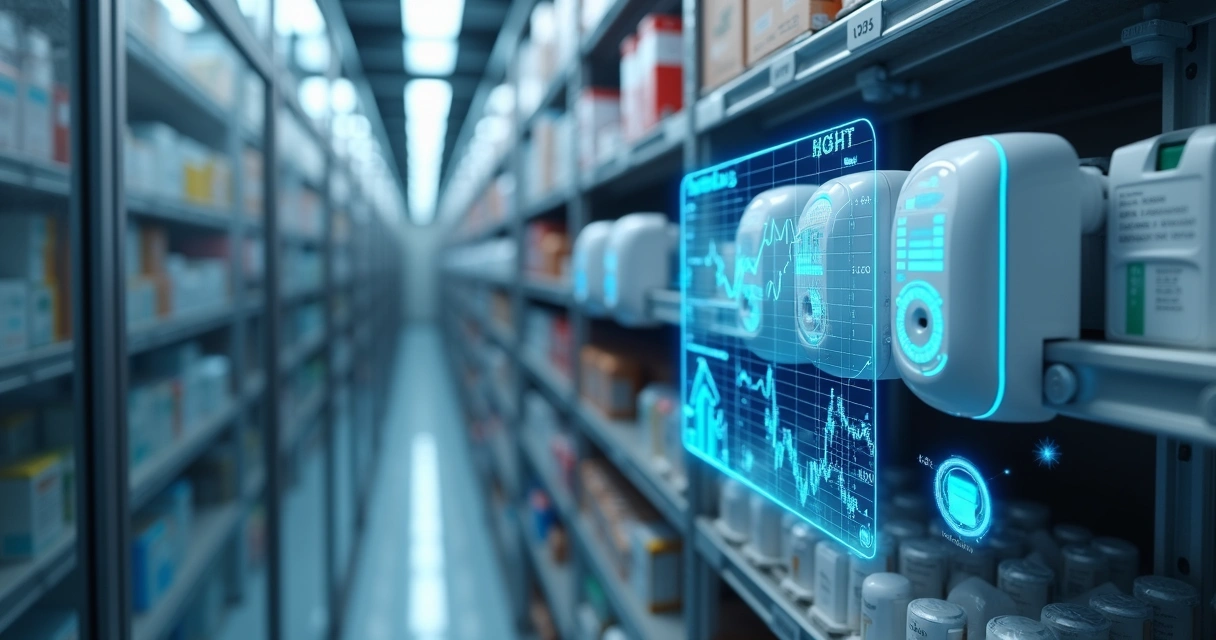
I always say: a good sensor is a calibrated sensor. There's no miraculous technology without planned maintenance. In regulated environments, such as hospitals and pharmaceutical industries, calibration must be recorded periodically:
- Set calibration schedule for all sensors
- Automate expiration alerts (DROME does this easily)
- Store calibration reports in digital repositories
- Ensure technicians are updated with procedures
It's natural to think little will change in a month if everything worked well the previous month. But sensors degrade over time, and in cold environments, they react more slowly to sudden variations. If you want to know more about correct calibration practices, I recommend consulting this practical guide to sensor calibration in controlled environments.
3. Connectivity monitoring
In 2026, connection failures remain among the leading causes of data loss. I analyzed cases where sensors continued collecting data but couldn't transmit it. Some tips I use daily:
- Pay attention to Wi-Fi gateway and repeater positioning
- Check for interference (especially microwaves, electrical panels nearby, etc.)
- Prefer multi-channel sensors or those with connectivity fallback, which DROME integrates natively
- Maintain periodic signal loss records
It's worth noting that competing platforms, even global ones, still fall short in real-time network monitoring. DROME, on the other hand, quickly identifies dead zones and proposes immediate solutions.
4. Predictive analytics to anticipate failures
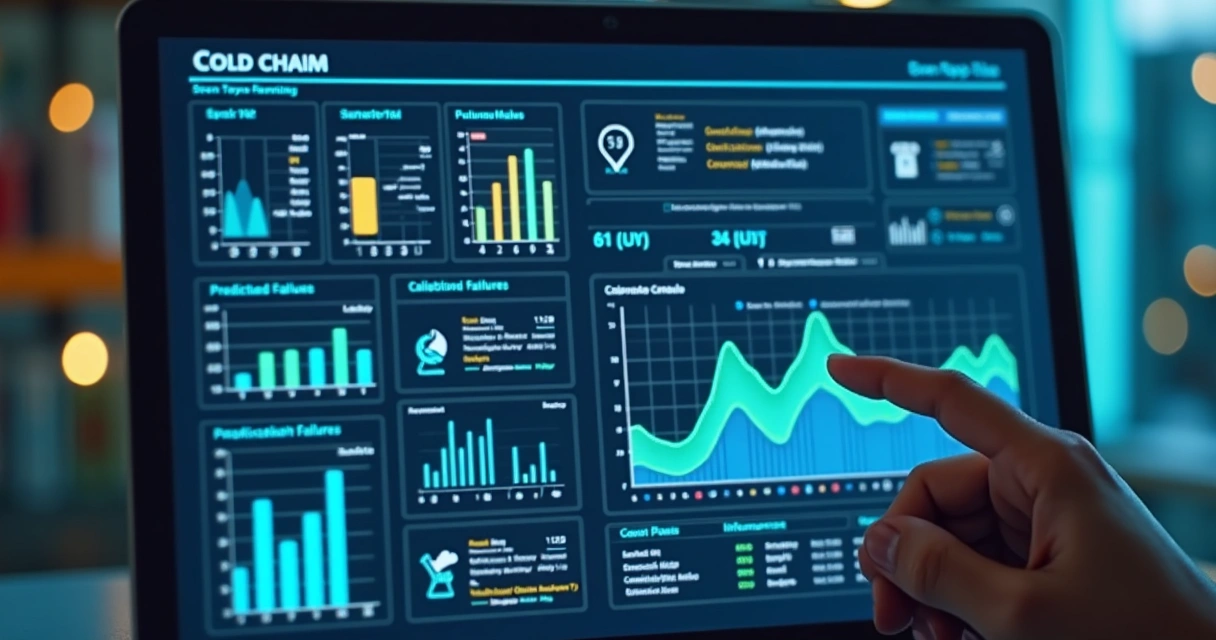
If I had to choose one word to summarize the future of cold chain in 2026, I'd say: anticipation. With AI, it's possible to predict trends that point to imminent failure, whether through usage patterns, sensor wear, or environmental anomalies.
DROME, for example, cross-references historical data and identifies sensor behaviors that deviate from the pattern. This way, it's possible to replace or recalibrate before a real error appears. Other systems try, but accuracy still falls short. For cases of predictive failures in cold chambers, there's relevant content on how AI predicts failures in cold chambers.
Documentation and reports: completing the cycle
Audits are sometimes feared not for the unknown, but for forgotten details. I've witnessed situations where everything seemed in order, but lack of a detailed report put compliance at risk. DROME offers automatic report generation and cloud storage, ensuring reliable history.
Unlike some competitors who limit monthly reports or charge extra for detailed queries, DROME delivers flexibility and transparency from the start. For those needing a step-by-step on temperature control and cold chain errors, I recommend this comprehensive article on temperature monitoring in healthcare.
Team training: without it, everything falls apart
No sensor survives inadequate training. I had experiences where the sensor was top-of-the-line, but was poorly installed or ignored by operators. Training teams is as important as investing in technology.
- Periodically conduct short, objective training sessions
- Standardize installation and maintenance procedures
- Encourage a culture of reporting small problems before they become big ones
At DROME, we create practical materials with this in mind. It's not just technology; it's real support for the user.
New challenges and opportunities in logistics
Keeping an eye on trends, I've noticed that the cold chain logistics sector faces increasing pressure for traceability and transparency. Those who don't keep up will fall behind. And those who want to understand more about sector modernization can search for articles in our blog's logistics category.
What if an unexpected failure occurs?
Nothing is 100% guaranteed. I've improvised quick solutions to save products during rare outages. In those moments, a robust SaaS system like DROME makes a difference, sending alerts to your phone and allowing remote actions.
In cold chain, acting fast saves more than products: it saves reputations.
Other platforms also send alerts, but I often hear reports from professionals frustrated by delays and inaccuracies in rival systems. I prefer to rely on trustworthy, stable, and constantly evolving tools.
What trends will we still see by the end of 2026?
In my daily monitoring, I perceive some clear trends:
- Greater integration with ERP systems and blockchain for total traceability
- Use of self-diagnosing sensors that communicate imminent failure
- Growth of centralized solutions – a single dashboard for the entire chain
DROME already incorporates several of these innovations, but the landscape still has room for surprises. I like the sector's dynamism, though I recognize the anxiety so many novelties can cause.
Next steps for those wanting to prevent IoT sensor failures
In summary, those who want to sleep soundly need to invest not just in sensors, but in the entire monitoring ecosystem. In 2026, the best defense against failures is anticipation, intelligent automation, training, and reliable documentation.
If your interest is technology applied to cold chain and IoT, I suggest following our content on IoT and trends in logistics, temperature, and innovation. I'm sure you'll find practical insights for your daily work.
And of course: if you want to see cold chain with less risk and more peace of mind, get to know DROME. Test it, compare it, and draw your own conclusions.