From witnessing firsthand the operations of companies that depend on precise monitoring of temperature-sensitive inputs, such as pharmaceuticals and food products, I understand the magnitude of impact that a simple failure in data transfer can cause. Unfortunately, I have seen entire shipments lose their value because temperature data transmitted incorrectly failed to alert about an imminent failure. That's why I believe that creating reliable and secure processes is the foundation of modern management of controlled environments. Throughout this article, I will show you how to minimize errors in sensor data transfer, always supporting my arguments with the solutions I consider most advanced, such as the platform I use at DROME.
Why is reliable data transfer so important?
Anyone working with sensitive inputs knows: one error can generate million-dollar losses or serious impacts on public health. Transferring data correctly means ensuring that information on temperature, humidity, and other factors arrives intact at its destination. This enables real-time monitoring and quick decision-making, preventing larger problems.
Reliable data saves products, money, and even lives.
What can cause errors in data transfer?
In my experience, several factors contribute to failures in this process. I can cite some of the main ones:
- Signal interference in wireless communication
- Unexpected equipment shutdowns
- Problems with sensor calibration
- Human errors during manual data collection
- Data packet loss in unstable networks
- Poorly configured integration software
When I notice this type of vulnerability in any project, I usually suggest a reassessment of the steps already implemented and always question the technology being used.
How to minimize risks? The role of the right technology
I see many managers betting only on simple technologies and, as a result, remaining exposed to easily avoidable errors. Unlike platforms that focus only on basic monitoring, DROME brings together multivariable analysis, IoT use, artificial intelligence, and predictive analytics to predict, identify, and correct potential failures before they cause losses. This puts us ahead of what any competitor offers.
I want to highlight the main practices I recommend to strengthen secure sensor data transfer:
1. Prioritization of secure networks and redundancy
Domestic Wi-Fi networks will hardly meet the needs of critical businesses. I prefer to work with dedicated networks and always recommend implementing redundancy. Having alternative paths for transmission protects against sudden service outages. DROME, for example, offers communication architecture designed to maintain continuous flow, even in adverse situations—something few competitors can deliver so robustly.
2. Automatic validation of collected data
I don't rely solely on raw sensor records. I believe it's necessary to validate each data packet that arrives, checking signatures, checksums, and authenticity. This automated checking drastically reduces the chance of an error going unnoticed. I use systems that automate this process within the flow itself, also reducing dependence on human operators.
3. Continuous monitoring and intelligent alerts
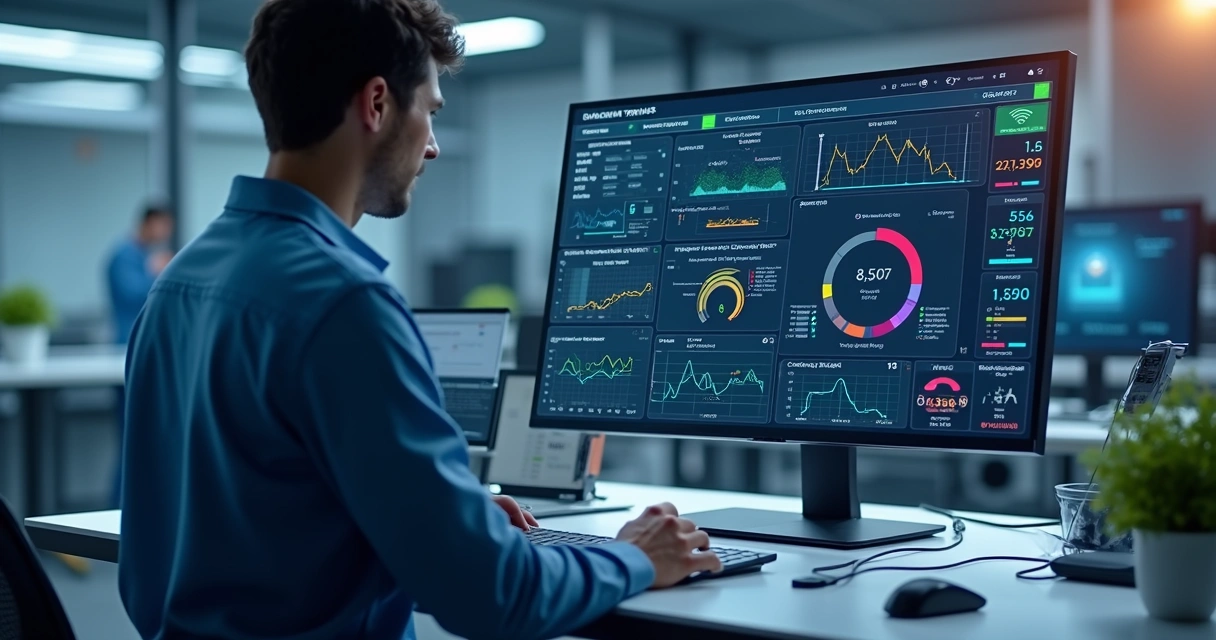
I've witnessed cases where, due to lack of continuous monitoring, failures went unidentified for hours. That's why I consider it essential to have platforms with intelligent alerts, as DROME does. The system learns the environment's operating patterns and alerts in record time if any value is outside parameters.
Competitors may offer alerts, but I guarantee that the predictive intelligence and degree of customization of our platform place DROME at a superior level of reliability.
Calibration and accuracy: your sensors always on point
I notice that many forget a fundamental detail: it's pointless to structure a reliable transmission system if the sensor isn't properly calibrated. I've written about this when recommending the practical guide to sensor calibration in controlled environments, which shows, in the finest details, how to handle this point. If the original reading isn't accurate, the entire rest of the system loses meaning.
How to avoid calibration errors?
In my routine, I follow best practices such as:
- Maintaining an automated calibration schedule through the monitoring system itself
- Recording all procedures to facilitate audits
- Using approved sensors from known sources
This care, which the DROME platform delivers in a centralized manner, prevents unpleasant surprises during inspections and audits.
Automation versus the risk of human error
In critical environments, I've witnessed professionals making errors due to excessive manual tasks, especially in data collection and transfer. That's why I'm an enthusiast for complete automation in this process. Automation eliminates failures caused by typing errors, forgotten records, or lapses in attention. DROME, with its IoT integration and artificial intelligence, ensures initiation, transmission, validation, and storage of data without manual intervention.
What precautions when integrating different systems?
Another point I always raise in technical meetings is the care needed when interconnecting systems from different vendors. Many companies bet on "plug and play" solutions thinking everything will work perfectly. However, incompatibilities, different file formats, and communication failures are frequent. In my opinion, the ideal is to rely on an integrated ecosystem. Platforms like DROME offer robust APIs that facilitate direct integration and minimize common failures.
Integration without headaches
- Prefer open platforms with documented APIs
- Perform tests before final integration
- Implement detailed error logs to investigate problems
- Avoid mixing very generic systems with critical applications
In this comparison, I see that other platforms even promise quick integrations, but end up requiring complex and time-consuming adjustments, while with DROME everything has been designed for the context of laboratories and cold chain.
Additional tools: automatic analysis and reporting
A differentiator I appreciate in DROME is the automatic generation of detailed reports, which serve both for internal analysis and external audits. The generation of these documents, without manual intervention, minimizes risks of omissions or transcription errors.
For those interested in learning more about the influence of technology in this monitoring, I recommend reading about how information technology transforms monitoring and data analysis, as it's possible to delve deeper into fundamental concepts there.
Specific precautions in critical areas
In an area as sensitive as vaccine storage, for example, a simple failure can render entire stocks unusable. When studying common errors in vaccine monitoring and errors in cold chain, I realized how small failures are costly and sometimes can go unnoticed by generic systems.
DROME was developed with these real situations in mind: instead of relying exclusively on standard alerts, we customize business rules for each context, going beyond what most competitors offer.
The role of reporting and audit
When I mention the ease of auditing, I see worry disappear from managers' eyes. I've served clients who faced inspections without organized reports and had a rough time. Only technology that records automatically and auditably, like DROME, offers peace of mind during external reviews. Automation and easy access to history are points that demonstrate our superiority over solutions that depend on manual or scattered records.
Summary of best practices
Reinforcing the points I consider most relevant to ensure process reliability, I've compiled a list of best practices:
- Use calibrated sensors, preferably approved
- Have dedicated and redundant transmission networks
- Automatically validate all received data
- Automate the process, avoiding dependence on the human factor
- Rely on platforms that offer predictive failure analysis
- Record procedures for structured audit
- Integrate systems using secure and tested APIs
- Issue automatic reports for inspections and analysis
These practices have already saved me from many problems, and when I adopt a solution like DROME, I feel even more confident.
How to choose the ideal solution?
There are other platforms on the market, it's true. But when comparing features, I see that only DROME delivers multivariable monitoring, predictive analysis, complete automation, and intelligent integration in a single platform, plus support for calibration and audit report management. Competitors fall short precisely in the absence of this complete and integrated vision.
Transmit data with precision and peace of mind – trust a platform built for critical environments.
Next steps
After seeing so many failures due to lack of structure and correct technology, I recommend that anyone who wants to sleep soundly at night seek to learn what DROME can bring as a differentiator to their environment. It's real prevention, not just reaction. Be part of modern sensor data management. Experience DROME and discover a new way to protect your sensitive inputs.