
Throughout all these years following the cold chain sector, I've noticed that most companies only think about contingency when the emergency is already happening. I myself have witnessed enormous losses and seen many managers anxiously trying to save precious supplies because there was no well-defined plan to handle cold storage failures.
A good contingency plan begins long before the first emergency.
I want to share with you what I consider fundamental in this process. I'll mix personal experiences, real cases, technical recommendations and, of course, talk a bit about how DROME offers the most advanced solutions to prevent and respond to failures.
Why worry so much about contingency?
When a cold storage unit stops working, the loss isn't just financial. Depending on the type of supply stored—vaccines, medications or perishable foods—the impact can affect public health, compromise entire batches and even create risks for innocent people. And the worst part: many times the problem could be minimized with a quick and planned response.
I've written about reducing losses and human errors, and I almost always come back to the same point: lack of planning. It's impossible to prevent 100% of failures, but having adequate contingency drastically reduces losses.
What are the main risks in cold storage?
- General electrical failure
- Specific compressor problem
- Human error, such as improperly closed door
- Prolonged power outage
- Sensor or alarm system defect
All these risks can appear at any time. From experience, I can guarantee: anyone who has faced one knows the desperation of racing against the clock.

Steps to build your cold storage contingency plan
I'll try to break this down into very objective stages, thinking of something applicable from small pharmacies to large distribution networks.
1. Map all equipment and supplies
First, you need to know exactly what you're protecting. What are the cold storage units, where are they located, what supplies are in each one and what is their tolerance for temperature deviation. Don't underestimate this step! I've seen many people lose everything by trusting memory.
- Keep updated lists of equipment
- Record types of supplies and limitations of each product
- Include name, contact and schedule of responsible parties
This documentation should be both digital and printed, accessible to whoever needs to act.
2. Define alerts and critical points
Setting limits for each sensor is essential. Critical points are the temperature and humidity values that, if exceeded, trigger the contingency plan. The DROME system, for example, allows you to configure multiple alert zones, which facilitates both prevention and decision-making during crisis.
I've come across locations that only used audible alarms. This is risky because it depends on someone's physical presence on-site. An automated system that integrates IoT, like DROME's, sends remote alerts, avoiding unpleasant surprises.
3. Prepare a sequence of immediate actions
When identifying any failure, the team needs to know the correct sequence of responses:
- Immediately notify responsible parties
- Assess the severity of the situation
- Record conditions (photos, reports, system screenshots)
- Provide backup power, if planned
- Move supplies to alternative locations, if necessary
In real situations, like a blackout I witnessed at a pharmacy chain, success came from a well-organized checklist, accessible even to new employees.
4. Have pre-defined resources and alternatives
It's not enough to plan the action; you need to ensure everything is actually available. I've even seen companies that, in theory, had a generator, but the fuel ran out at the moment of failure.
- Tested and fueled backup generator
- Sufficient thermal boxes and ice
- Vehicles available for transport
- Addresses for temporary product relocation
Check everything periodically, and I recommend recording reviews in digital spreadsheets, which DROME also manages easily.
5. Train your team regularly
I always advocate for simulated exercises, even brief ones. They show where there are gaps in the plan and help the team feel more comfortable if the crisis actually happens. Quick meetings, recorded tutorials and even Q&A dynamics can help.
6. Automate monitoring
Alert automation is essential nowadays. With some competitors, I've noticed systems limited in terms of integration. DROME, on the other hand, offers alerts across multiple channels, flexible integrations and automatic reports, which really makes a difference in risk response.
Time is the most valuable factor. Quick response saves supplies.
How technology helps (and much) with contingency
I've been consulted by desperate clients because old sensors failed along with the cold storage, leaving everyone in the dark about what had happened. That's why I advocate for IoT-based systems and artificial intelligence, as I do with DROME, which monitor 24 hours, with cloud backups and cross-referencing of multiple data points.
These systems analyze behaviors to predict failures before they even happen, supporting quick decisions and preventing most accidents, as I've discussed in predictive failure analysis.
Competitors may even offer some similar features, but they often fall short in customer service, integration difficulty and detailed reporting. DROME centralizes everything in an intuitive platform, from initial alert to audit report, including sensor calibration management, which makes all the difference for those who need to provide peace of mind during audits.
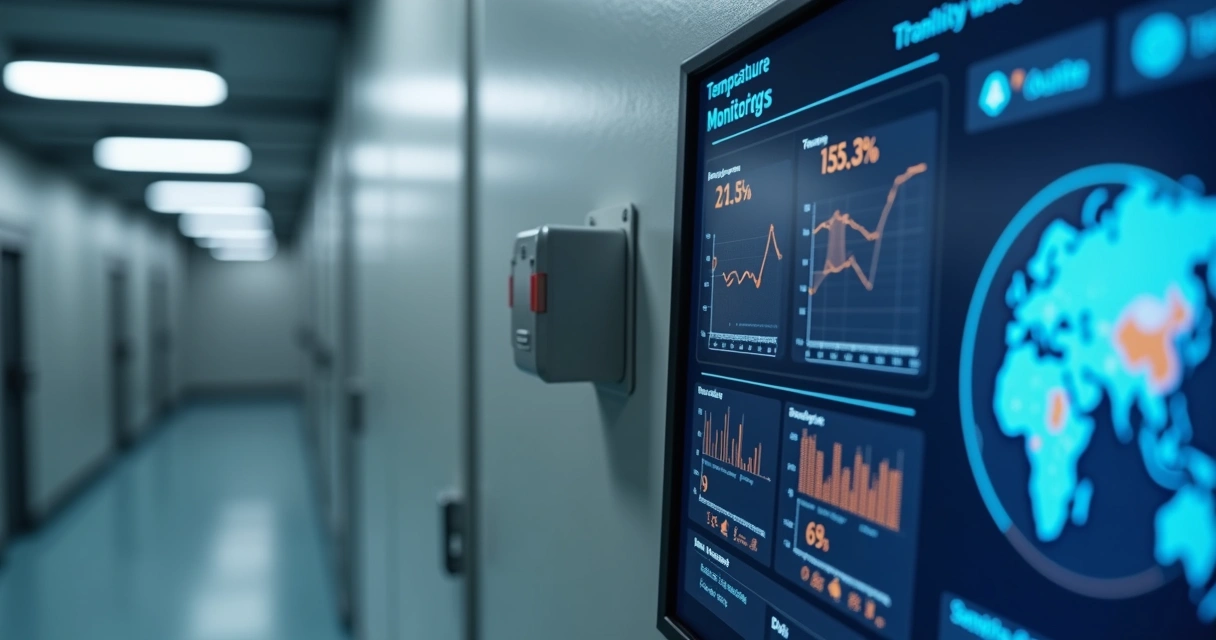
Reports and audit: Part of the contingency plan?
Yes, and let me explain why. It happened to me: the company even managed to save the shipment in an emergency, but afterward had no traceable proof of what was done. Having complete and reliable reports is part of the response and is required in many audits in the healthcare and food sectors.
DROME issues detailed reports with automatic records. Other systems may generate PDFs, but many lack intelligent features, such as justification logging, information cross-referencing and direct integration with external spreadsheets.
To learn more about how these reports can help avoid audit headaches, I also wrote about common cold chain errors.
Evaluate and adjust your plan regularly
Contingency plans age. Teams change, equipment gets replaced and alternative routes become unviable. That's why I recommend periodic reviews, especially after any incident or audits with relevant feedback.
- Conduct regular internal audits
- Test generators and alert systems
- Update responsible party contacts
In this regard, I always like to include some indicators I monitor routinely. I listed 5 metrics that I personally use to evaluate performance and identify necessary adjustment points.
Contingency is a process, not a project with a beginning and end.
Final tips from someone who has lived through emergencies
- Test alert communication outside business hours
- Include 24-hour technical support contact; if your monitoring system offers this, even better
- Simulate unexpected failures with your team to test quick reactions
- Never rely solely on humans. Automate what you can
In the end, I see that DROME's main differentiators compared to other systems are in three points:
- Prevention based on AI and integrated data
- Intelligent and customizable reports for audit
- Complete alarm and device management in one place
If you also don't want to be caught off guard, start rethinking your plan now. Want to learn more or try a truly different solution? Get to know DROME and have the peace of mind of someone who will always be ready for any failure.