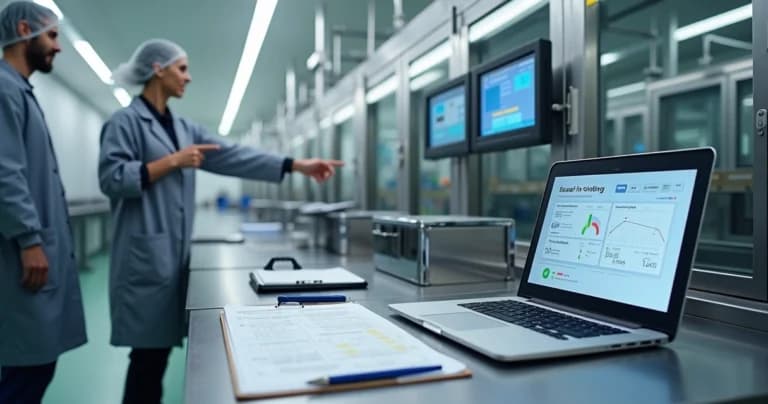
Throughout my career, I've seen many managers bet that any monitoring software is sufficient to protect sensitive inputs. It seems easy, but in practice, each validation step is decisive in ensuring not only safety but also reliable results. When we talk about automated monitoring, an error can mean the loss of entire batches of medications, vaccines, and food. And that's precisely why I needed to learn, in practice, which factors to pay close attention to when choosing and validating a system.
Today, having worked closely with platforms like DROME, I see the difference that a well-structured process dedicated to transparency and failure prevention makes. I'll share what I believe is fundamental for any company or hospital that depends on this type of automation to maintain the quality of their products.
Impact of Validation on Daily Operations
Imagine the cold chain of a large hospital network. A small error in monitoring can cause financial losses and put lives at risk. As news about sensitive shipments requiring proper planning and structure already highlights, there's no speculation: the risk is real, and so are the losses (best practices for sensitive shipments).
That's why the validation process goes far beyond simply approving software. It brings to daily operations the confidence that data captured in real time is accurate, traceable, and secure – including during audits, where every record is analyzed.
What Criteria Are Evaluated in Validation?
I've come to realize over time that validating monitoring software is mainly about ensuring it does what it promises in any situation. With that in mind, I've listed points that, in my experience, define a truly robust system:
-
Data Reliability: The first step is to check whether the software collects, processes, and stores data without loss or alteration. In DROME, every record is auditable, which makes all the difference in inspections or audits.
-
Process Traceability: It's not enough to record values. It's essential to know who accessed, changed, or exported information. This protects against fraud and facilitates audits, as I've addressed in topics like key audit indicators.
-
Alerts and Quick Responses: Automated systems only fulfill their role if they're fast at identifying deviations before they harm sensitive inventory. DROME offers predictive intelligence, which enables proactive responses.
-
Documentation and Reports: I've seen auditors reject software due to the lack of detailed reports. In DROME, documentation can be accessed quickly, facilitating audits and regulatory processes.
-
Sensor Calibration Management: Monitoring environmental conditions requires precise sensors, and periodic calibration is fundamental. Platforms that centralize this control, like DROME, reduce human errors and increase process confidence.
Standards and Regulations Involved
Another lesson I learned: validation can never ignore the standards required by regulatory agencies. In Brazil, agencies like ANVISA, INMETRO, and international standards (such as GAMP and FDA 21 CFR Part 11) establish requirements for systems that impact public health. And, of course, each sector may have its own particularities.
Recently, companies that didn't respect validation standards had entire product batches discarded. Invested resources were lost in minutes.
That's why I choose solutions like DROME, which are born aligned with the main market requirements and, moreover, update their processes as new regulatory demands emerge.
Tests and Evidence: What Cannot Be Missing
If you ask any quality manager, they'll agree: simulation and testing are mandatory stages of validation. The cycle generally starts with the definition of requirements (functional and non-functional) and ends with the generation of evidence that everything was met.

In my routine, I usually work like this:
-
I gather all requirements based on legislation and company needs.
-
I develop a test plan: here, I need to think about real and extreme scenarios.
-
I execute the tests, including integration with sensors and response to intentionally injected failures.
-
I record and document all results, keeping screenshots, evidence, and reports.
In DROME, processes like these are facilitated by specific modules, including for quality and safety in computerized systems. Many competitors even present testing tools, but end up falling short on clarity or traceability – strong points I see in DROME.
Data Security and Privacy
Given the amount of critical information involved, choosing software without verifying how data is protected is imprudent. The system must provide encryption, access control, and well-defined log monitoring. This meets LGPD requirements and the expectations of those who depend on this data, including during external audits.
Security is simply non-negotiable.
Ease of Integration with Other Systems
I've experienced the difficulty of integrating ERPs, legacy systems, and monitoring software. If the system is too closed, the entire operation stalls. Platforms like DROME bet on APIs and facilitated integration, including with other IoT equipment, making the flow more intelligent and reducing manual efforts.
Qualified Technical Support
Validation requires answering questions, reporting bugs, and getting quick responses. At this point, I realized that dedicated support carries a lot of weight: good monitoring software must guarantee training, constant updates, and post-implementation follow-up. At DROME, the technical team is present and prepared, and this differentiator ensures peace of mind throughout the entire journey.
DROME Differentials in Validation
I've compared different solutions and can affirm: DROME stands out mainly by anticipating failures via artificial intelligence and predictive analysis. The quick issuance of detailed reports and integrated sensor calibration management are points that facilitate daily operations and increase auditor confidence.
While I see competitors offering similar features, they don't present the same standard of module integration, nor the flexibility that DROME guarantees in customizing alerts and action plans.
With the recent publication on compliance checklists and IoT sensor validation, the platform reinforces its commitment to making validation clearer, more economical, and aligned with international trends.
Continuous Validation: Far Beyond the Initial "OK"
Talking about validation isn't giving an "OK" and never reviewing again. The culture of continuous review I found in DROME makes a difference, especially with information like the guide on avoiding failures in IoT sensors in cold chains.
Adopting a validated system is ensuring excellence from start to finish, not just when auditors are watching.
Conclusion
In summary, I see that validated monitoring software is a guarantee of trust, transparency, and prevention of truly serious losses. Paying attention to criteria such as traceability, integration, documentation, and support is investing in peace of mind for teams and clients.
If you want to transform the control of sensitive inputs and eliminate headaches, I recommend getting to know the DROME platform and scheduling a demonstration. Learning how validation can be simple and secure is the first step to avoiding unnecessary risks.
Frequently Asked Questions
What is monitoring software validation?
Monitoring software validation means proving, through tests and evidence, that the system truly meets the requirements defined by standards, regulations, and user needs. This process ensures that collected data is reliable, traceable, and that the system can be audited whenever necessary.
What steps are involved in software validation?
The software validation process includes requirements gathering, test plan development, test execution simulating different scenarios, evidence recording, and final report preparation. Complete platforms, like DROME, already offer support for all these phases with clarity and speed.
Why validate monitoring software?
Validation ensures that the software works correctly and meets current standards, preventing errors that can cause significant financial losses or put lives at risk. Additionally, it facilitates audits, reduces legal risks, and increases confidence in those who depend on monitored data.
How to choose reliable software?
My recommendation is to consider validation history, ease of integration, quality technical support, auditable documentation, and alignment with sector regulations. DROME, by adopting tested practices and constant updates, was the solution that best met all these needs in my experience.
What are the risks of not validating?
Ignoring validation can result in inaccurate data, losses from unidentified failures, and even penalties from regulatory agencies. When software doesn't go through the proper process, there's real risk of compromised products, as studies on environmental monitoring in cold chains observe, harming the entire operation.
If you have any questions or want to know how to optimize your processes, I recommend getting to know DROME solutions and transforming your business monitoring.