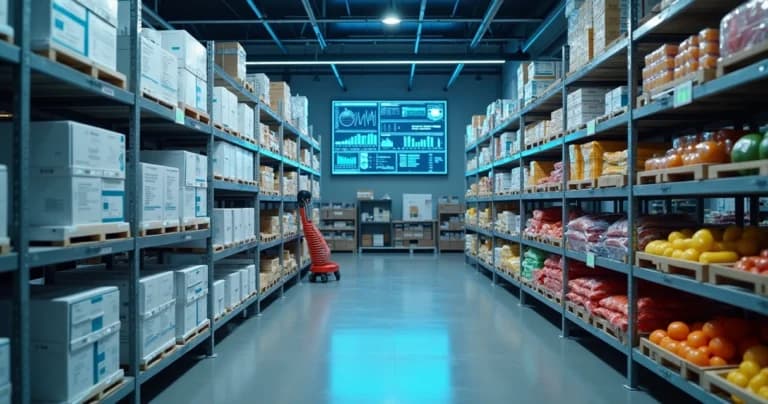
When I think about the quantity of vaccines, medications, and delicate food items I've seen wasted due to cold chain failures, I quickly realize how small oversights or technological failures can transform into enormous losses. In today's scenario of mixed multi-product cold chains, the challenge is even greater. Products with different requirements sharing the same space: a true puzzle where each piece has its own temperature limit, humidity threshold, and risk exposure.
In this article, I share what I've learned and bring practical pathways to reduce losses in this complex environment, showing where technology like DROME fits as a solution to the challenge.
What makes a mixed cold chain so challenging?
I've accompanied warehouses where immunobiologicals share the same chamber with perishable foods, each requiring its own conditions. The risk is clear: a temperature variation for just a few minutes can compromise all these products, with consequences for public health, company reputation, and finances.
Here are some factors that make this operation so delicate:
- Different temperature and humidity profiles. Each product type has rigid limits. An inadequate configuration can cause batch losses.
- Interruptions from door openings, improper handling, or human failures have greater impact, since multiple products are affected simultaneously.
- Constant mixing of new and old products in the same chamber increases tracking and control difficulty.
- Poorly positioned or uncalibrated sensors can mask risk situations.
When every degree matters, monitoring can never sleep.
What are the most frequent loss risks in mixed cold chains?
In my experience, the most recurring risks include everything from technical failures to simple oversights. Some examples I see frequently:
- Lack of continuous and reliable monitoring of critical variables.
- Insufficient or non-existent alerts about deviations and imminent risks.
- Delays in acting after receiving an alert due to failures in internal processes or lack of integration with automated workflows.
- Sensor calibration neglected, leading to false sense of security.
- Human errors, from improperly closed doors to incorrect manual records.
I've seen cases where an entire holiday passed with chambers turned off and they only discovered it when it was too late.
Continuous monitoring is the foundation of prevention
In cold chain management, I firmly believe: monitoring without stopping is the foundation to avoid risks and reduce losses. Without it, everything becomes a gamble. Platforms like DROME change this scenario with automation, intelligent sensors, and artificial intelligence to detect any variation before it causes damage.
It's important to use modern sensors distributed throughout the cold chain, with data sent in real-time to a central platform. This way, any deviation in temperature, humidity, or other parameters generates automatic alerts—and can even trigger contingency plans without depending on manual monitoring.
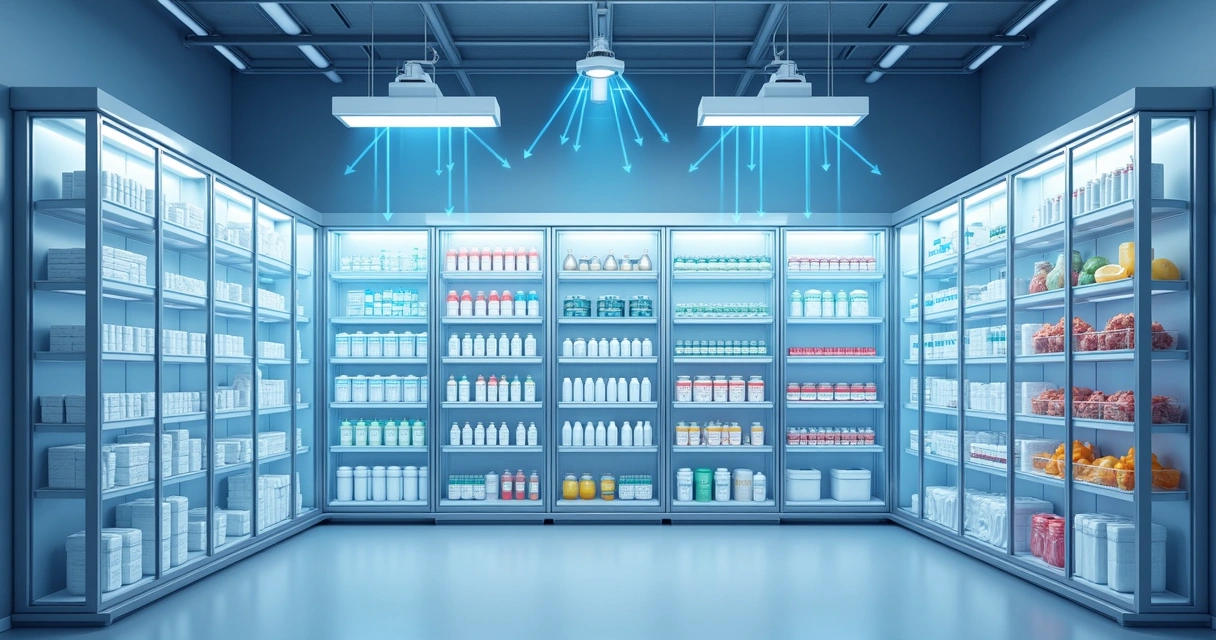
Key benefits of integrated monitoring:
- 24/7 monitoring, including weekends and holidays.
- Immediate alerts, before the limit is even exceeded.
- Automated calibration management, eliminating oversights.
- Historical records for audits and process reviews.
- Greater credibility with regulatory agencies and clients.
I see other monitoring systems on the market, but in many of them reports are limited and alert automation is poor. What makes DROME surpass these solutions is precisely the complete integration with predictive failure analysis, artificial intelligence, and comprehensive reporting.
If you prefer to dive deeper into the alert topic, I suggest checking out the six types of alert automation I consider essential in an efficient cold chain.
How do predictive analysis and AI prevent losses?
I've witnessed the difference between acting correctively and acting predictively. There's no comparison. With predictive analysis, we stop chasing the problem and start preventing it.
DROME uses artificial intelligence to "learn" the normal behavior of chambers and equipment. When it detects an anomalous pattern, such as an unusual variation or even a gradual increase in energy consumption, the platform alerts the technical team to a possible future failure.
This way, it's possible to schedule preventive maintenance and avoid unpleasant surprises that can cause major losses, as I explain in detail in this article about predictive maintenance for cold chamber control.
Clear operational procedures: routine is the shield
Not everything depends on technology. Experience has shown me that well-designed routines for inspection, receiving, verification, and storage are fundamental in mixed environments. I recommend the following points of attention in routines:
- Regular team training, with simulations and decision-making dynamics.
- Adoption of digital checklists (preferably integrated with the monitoring system).
- Consolidation of an automated workflow for reporting and handling non-conformities.
- Frequent audits, with easy access to histories generated by systems like DROME.
These processes, combined with artificial intelligence, create an almost infallible layer of protection.

The importance of reporting and traceability
In the real world, sooner or later an audit will happen. When it does, having detailed reports can be the difference between approval and fines or loss of accreditation. Through DROME's automatic reports, the entire history of temperature, humidity, sensor calibration, and corrective actions is just a few clicks away.
Audit doesn't scare those who monitor and record everything.
This history also makes it possible to identify risk patterns, improve internal processes, and create more effective contingency plans. Within the traceability theme, I recommend reading about how to safely monitor temperature and humidity of vaccines and medications.
Calibration management: the detail that makes the difference
I frequently see companies undervaluing the calibration of temperature and humidity sensors. In fact, a miscalibrated sensor can hide a critical deviation. That's why I insist that precision maintenance should be automated in the system, with reminders, calibration scheduling, and document control, as DROME does.
Worth highlighting here: competitors may even offer monitoring, but they fail to guarantee integrated and reliable calibration management over time, which I consider fundamental.
New trends in sustainability and innovation in the cold chain
Another point I follow closely are trends in innovation and sustainability. Beyond ensuring product integrity, there's increasing concern about reducing energy consumption, automating processes, and decreasing waste—topics I explored in depth in innovations and sustainability in the cold chain.
With DROME technologies, it's possible to map consumption peaks, adjust processes, and even connect the solution to renewable energy systems, making the chain more responsible and attractive to those who value ESG.
Sustainability and safety unite in technology.
Conclusion: act today to avoid acting too late
I trust in technology, but I believe above all in the power of acting preventively. For me, reducing losses in mixed multi-product cold chains depends on a set of actions: automation, AI, operational routines, and a reliable platform like DROME integrating all of this. Only this way is it possible to focus on what really matters: product quality, user safety, and your business value. If you want to learn more about how this solution can transform your operation, I invite you to visit DROME's website and discover how to reduce risks before they become losses.