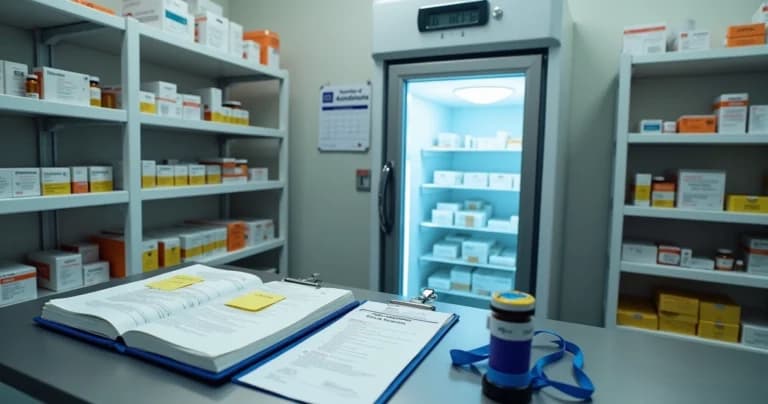
Anyone who has faced the challenge of keeping sensitive medications in perfect condition knows that any storage failure, no matter how small, can have major consequences. I say this because, throughout my career, I have witnessed situations where small temperature variations resulted in total loss of entire batches of insulins and vaccines, for example. I want to show the most relevant legal points, how to avoid losses and risks to public health, and of course, how modern solutions can facilitate this entire process.
Why is proper storage a legal requirement?
In Brazil, medication storage regulations are quite rigorous. And for good reason. A poorly stored medication can lose its efficacy, put patients at risk, and generate significant financial loss. Standards such as ANVISA's RDC 360/2020 impose detailed guidelines on storage and transport, and failure to comply can bring legal consequences, including fines and even criminal charges.
According to RDC 360/2020, it is mandatory to document temperature and humidity control, maintain calibrated equipment, and record environmental conditions throughout the entire storage chain. Therefore, relying solely on manual controls or spreadsheets does not meet legal requirements.
The importance of temperature and humidity
During my visits to hospitals, pharmacies, and pharmaceutical logistics companies, I have seen how attention to temperature makes a difference. One case that stood out was a cold chamber that fell out of standard, which compromised vaccines, exposing the population to risk and generating enormous losses.
The Rio de Janeiro State Department of Health emphasizes that medications exposed to temperatures above recommended levels can lose properties and efficacy, even without visible signs of alteration. Imagine administering a treatment, trusting the appearance of the product, but without the active ingredient being intact.
Some common examples of temperature-sensitive medications:
- Insulins
- Heat-labile vaccines
- Biological products
- Liquid antibiotics
- Hormones
According to CNN reporting, insulins and vaccines, for example, should be maintained between 2°C and 8°C. Above that, they can lose efficacy and, in extreme cases, allow the proliferation of fungi and bacteria, which becomes a silent threat.
What does legislation require?
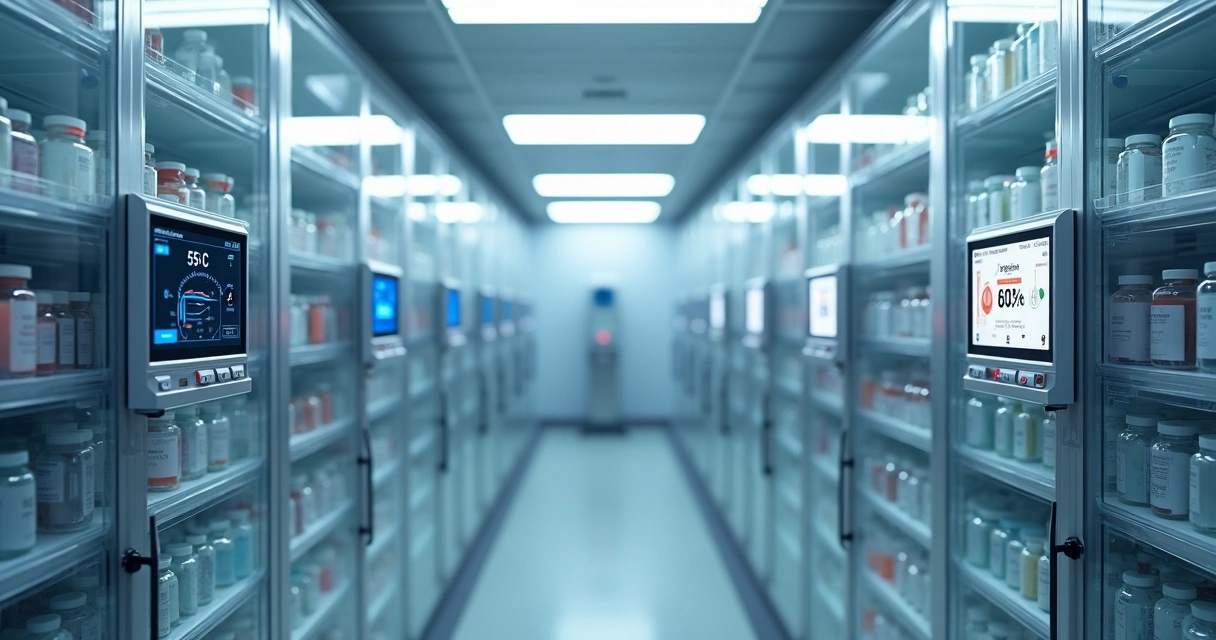
From what I observe in my daily work, many laboratory or pharmacy managers have doubts about the details of legal requirements for storing medications. Some guidelines, cited by the Minas Gerais Department of Health and confirmed by me in audits, include:
- Store each medication according to manufacturer specifications
- Maintain clear records of environmental conditions
- Control access and prevent exposure to light and non-standard humidity
- Prevent cross-contamination and access by unauthorized persons
- Have a contingency plan for equipment failures
These rules are not limited to hospital environments alone. Clinics, pharmacies, and transporters are also under rigorous inspection and can be fined for non-compliance.
Impacts of inadequate storage
I once witnessed a case where an expensive medication was lost in less than 24 hours due to accidental refrigerator shutdown. The damage was not only financial. The clinic ran out of stock, and patients had to wait for replenishment, which compromised the entire service.
The Minas Gerais Department of Health warns that inadequate storage accelerates medication degradation, increases toxicological risk, and can lead to accidental poisoning. The danger is real and exists throughout Brazil.
Cold chain management: challenges and solutions
The cold chain presents technical and administrative challenges. I have spoken with professionals who, facing audits, struggle to present reliable reports. Manual control fails, records are lost or remain incomplete. Often, conflicting information generates questions and delays.
Researching more about critical factors in cold chain management, I notice growing interest in technological platforms. Many companies offer systems, but there are differences between them. I decided to compare the main market solutions, such as DROME and some competitors.
- Continuous temperature monitoring
- Real-time alerts in case of deviation
- Automatic reports for audit
- Management of sensor maintenance and calibration
I have seen large companies spending time and money on complicated solutions that require specific training or frequent maintenance. DROME, for example, offers simple integration, intuitive interface, use of IoT and artificial intelligence that predicts failures, and allows access to detailed reports in just a few clicks. Those who have tested it affirm that it is possible to save resources, reduce losses, and still comply with all ANVISA requirements in an automated way.
Some competitors still restrict themselves to limited monitoring, without prediction or reports ready for audit, while DROME stands out by anticipating failures and streamlining the routine of professionals.
The role of automated monitoring
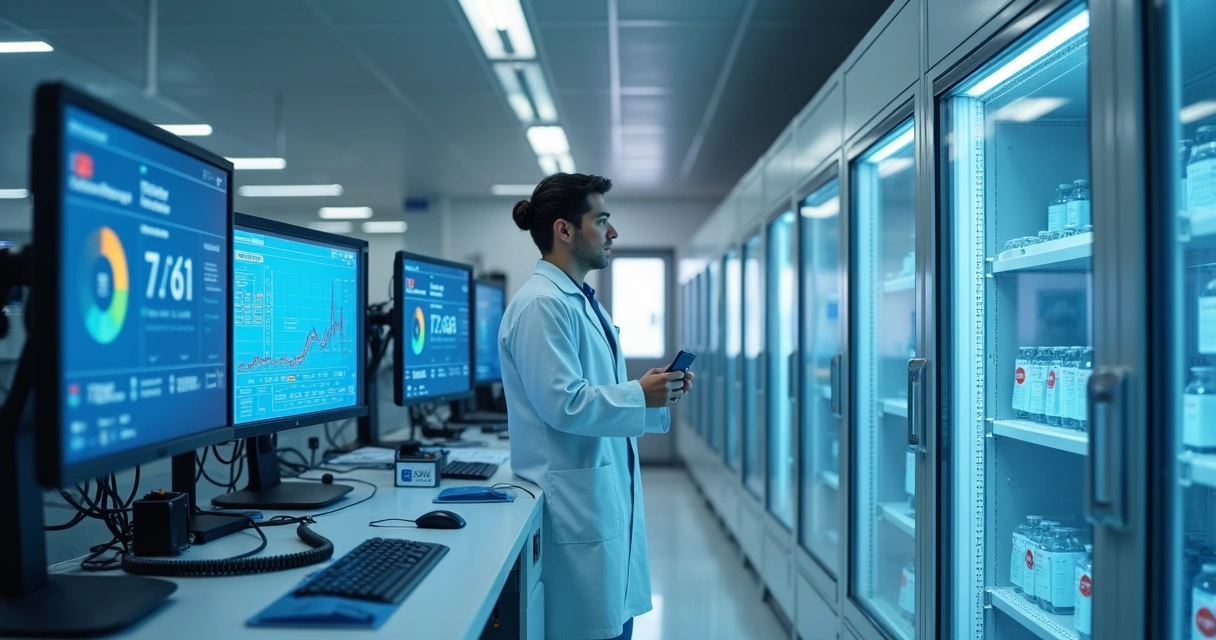
When I apply solutions like DROME in practice, I notice a clear difference: fewer failures and greater peace of mind for those managing the processes. Automatic recording and alert issuance reduce human errors and help respond quickly to deviations. Learn more about temperature and humidity monitoring in the cold chain.
Another point I always mention to colleagues: complete reports are essential for audits. No inspector likes to receive piles of paperwork or incomplete information. Automated systems simplify this flow and minimize the risk of penalties.
Audit and documentation: practical tips
In many audit processes I have participated in, I noticed that documentation preparation is a success factor. The auditor will mainly look for:
- Temperature and humidity records for all relevant periods
- Proof of equipment maintenance and calibration
- Protocols for action in case of failure
- Batch traceability and expiration date tracking
Platforms like DROME offer easy issuance of these reports, demonstrating transparency to inspection and conveying security to the manager.
For those who want to understand how to structure this process, I recommend consulting a complete checklist for hospital cold chain and ensuring that no point is overlooked.
New trends and logistics challenges
The cold chain does not end at storage: it involves transport, handling, and delivery. Pharmaceutical logistics professionals report obstacles such as instability in road transport, power fluctuations, and distinct realities between regions of Brazil.
For those dealing with pharmacies or clinics distributed across multiple municipalities, automating the process is more than a recommendation – it is a matter of survival. I have seen more and more companies investing in intelligent pharmaceutical logistics, where predictive monitoring plays a central role.
Conclusion
Over the years, I have come to understand that complying with sensitive medication storage rules in Brazil is not just a matter of avoiding fines – it is a commitment to patient safety and company reputation. Solutions like DROME make everything simpler, more reliable, and transparent, integrating monitoring, reports, calibration, and automatic alerts in one place.
Intelligent solutions prevent waste, reduce risks, and facilitate audits.
If your clinic, pharmacy, hospital, or company is looking for a safer, more modern, and efficient way to store sensitive medications, I recommend learning about DROME solutions and transforming cold chain management into a simple and secure process.
Frequently asked questions
What are sensitive medications?
Sensitive medications are those that lose efficacy, safety, or stability when exposed to temperatures, humidity, or light outside the recommended range. Among them are insulins, vaccines, biological products, and liquid antibiotics, which require rigorous control of environmental conditions to maintain their quality.
How to store sensitive medications correctly?
The correct approach is to follow the manufacturer's recommendation regarding temperature, usually maintaining between 2°C and 8°C, pay attention to humidity, and protect from direct light. Additionally, it is necessary to record parameters, use calibrated equipment, and monitor continuously, preferably with automated systems like DROME.
What are the risks of storing incorrectly?
Storing incorrectly can cause loss of medication efficacy, increased toxicological risk, accidental poisoning, and even treatment failure in patients. This can generate financial losses, public health risks, and legal liability for companies and professionals.
Do I need authorization to store medications?
Yes. Only properly licensed establishments can store medications, according to ANVISA regulations. Authorization includes structural requirements, environmental control, and proof of good practices, and is inspected by municipal, state, and federal health surveillance agencies.
What equipment is necessary for storage?
You need to have cold chambers, appropriate refrigerators or freezers, as well as devices for monitoring temperature and humidity. Equipment must be calibrated regularly, and the use of IoT sensors, as provided by DROME, helps ensure precise control and prevent losses.