IoT Solutions to Prevent Deviations in Clinical Laboratories
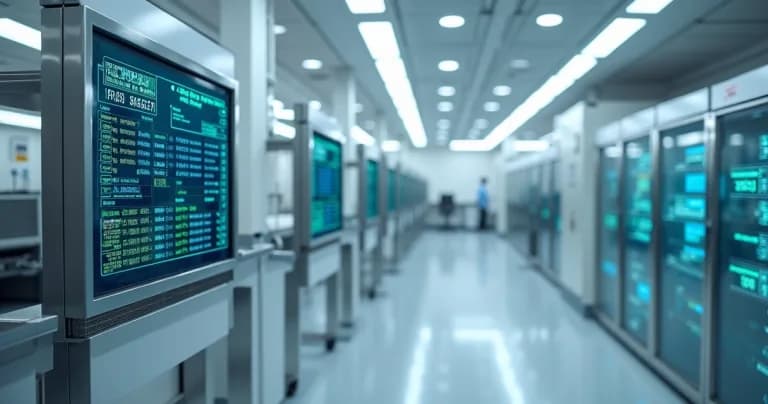
If there's one thing I've seen change radically in recent years, it's the way technology has entered clinical laboratories. The idea of relying solely on manual controls and spreadsheets no longer makes sense when such serious risks are at stake. After all, any environmental deviation can compromise valuable samples, expensive reagents, fragile supplies, or even patient results.
Why is environmental control so relevant?
I've spoken with many laboratory professionals concerned about the integrity of their samples and supplies. Multiple challenges appear in daily operations, and the biggest one lies in environmental variables, such as temperature, humidity, light exposure, among other factors. A simple temperature spike may not be perceived immediately, but it will have serious consequences later.
There is no second chance for lost reagent.
And in my experience, automation has proven to be a true barrier against unforeseen events. That's why increasingly, Internet of Things (IoT) solutions are being adopted to mitigate operational risks in clinical laboratories.
How does IoT act in preventing deviations?
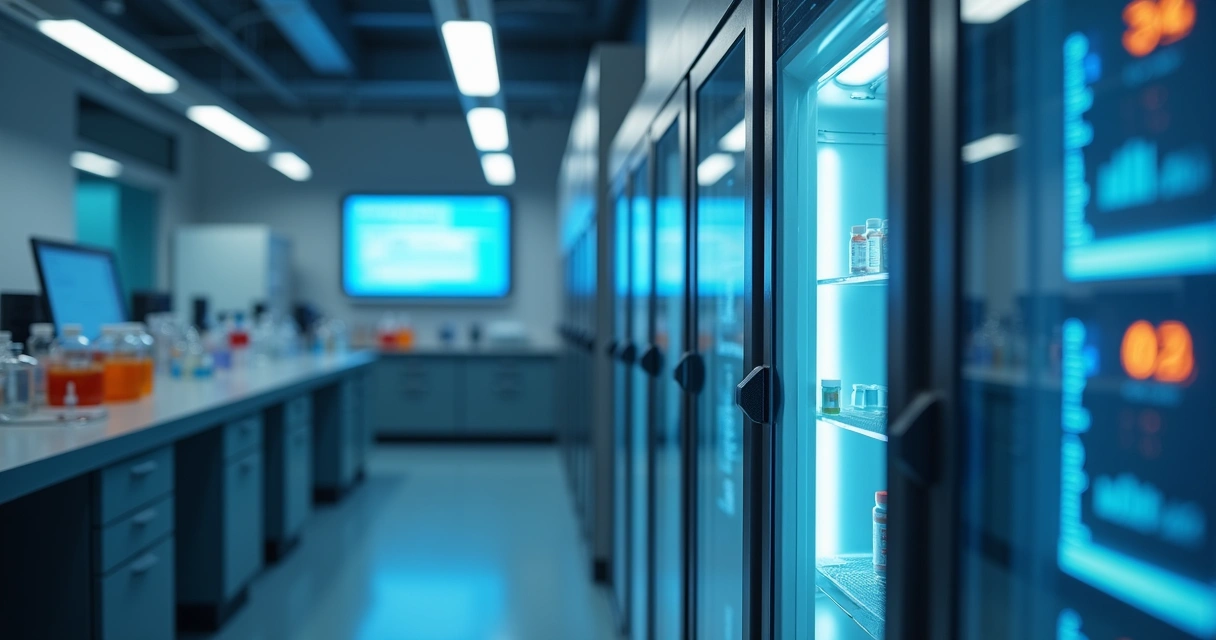
The great differentiator of connected solutions is the ability to monitor and act in real time. Before, a manual thermometer depended on someone observant and disciplined. But people make mistakes and get distracted. With smart sensors, data arrives instantly to a centralized platform, and any anomaly generates an immediate alert.
- Sensors installed in chambers and refrigerators
- Permanent monitoring of critical variables
- Automatic alert generation in case of deviations
- Secure data storage for audit purposes
- Predictive analysis to anticipate failures
Thus, even small variations that could be ignored in manual control are flagged. I've witnessed calibration errors in conventional equipment that went unnoticed for weeks.
Technology reduces human errors and prevents losses that don't always appear on the laboratory's balance sheet, but make a difference in the final result.
What sets the most complete solutions apart?
With so many IoT solutions available, I know questions arise about reliability and comprehensiveness. I've evaluated several market alternatives and always found limitations: sometimes they only monitor temperature, without considering humidity or other variables; in other cases, they don't offer integration with audit systems or fail in report usability.
Among the points I consider essential in the best solutions, I highlight:
- Coverage of multiple environmental variables
- Predictive analysis to detect trends, not just point deviations
- Multi-channel alerts (email, SMS, app) to ensure rapid response
- User-friendly interface with quick access to reports
I've tested alternatives that even have a good initial proposal, but fall short in integration with audit routines. DROME was born precisely to fill these gaps. Since implementation, I've noticed that managing calibrations, tracking occurrences, and keeping reports ready for audits became much simpler and safer.
Trust exists only when data history is secure and accessible.
Other competitors may monitor basic variables, but few combine continuous monitoring, artificial intelligence for prediction, and calibration management in a single practical platform like I've seen in DROME.
How does IoT transform clinical laboratory routines?
Beyond protecting reagents and samples, the impacts of automation with IoT go further. I perceive the peace of mind of managers knowing they're ready for audits, whether from ANVISA, Health Surveillance, or other entities. Just one click and all necessary documentation is available.
I myself have accompanied audits where the difference between headaches and approval was precisely the speed and organization of environmental records.
- Less rework and lower non-compliance risks
- Quick responses to deviations, preventing losses
- Historical view for pattern analysis and improvements
Many laboratories, in fact, have been studying more on the topic. Recently I read this article about how monitoring technology revolutionizes modern laboratories, and the benefits reported fit perfectly with my practical perception.
Real cases of prevented failures
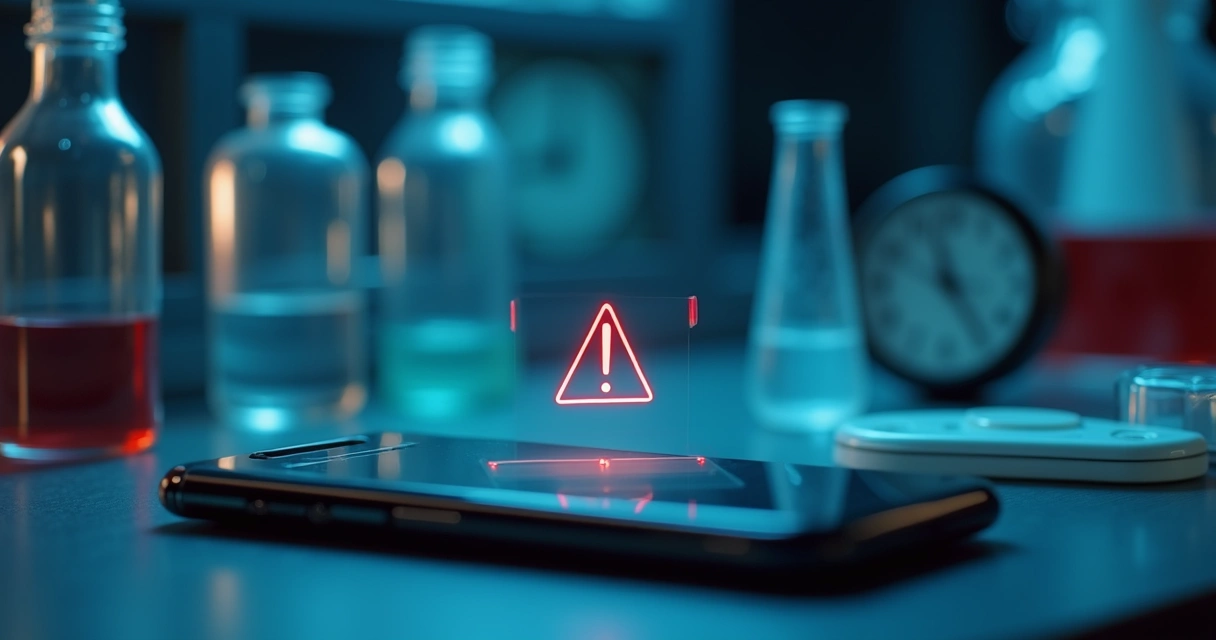
I'd like to quickly share some clear examples of failures avoided with the use of DROME. I've seen situations where a power outage affected refrigerators overnight. Instead of discovering it only upon arrival in the morning, managers received alerts still during the night. This gave time to quickly activate support and preserve materials that would have been lost.
Another case involves humidity monitoring. When installed in storage environments, the solution identified out-of-standard increases. The adjustment to the air conditioning system came in time, preventing damage to sensitive kits.
Public health and laboratory responsibility
There's an even broader aspect involved that goes beyond protecting one's own assets: the laboratory's commitment to public health. If an exam is compromised by inadequate storage or if vaccines lose their effectiveness due to temperature deviations, all of society loses. The impact goes far beyond the financial.
In my view, that's why discussions about technology and public health gain strength. Society demands traceability, safety, and precision in diagnostics. The laboratory that invests in these solutions proves its commitment.
How to start the digital transformation in your laboratory?
Many people imagine that implementing IoT in laboratories is complex and expensive, but that's not what I observe today. Systems like DROME use wireless sensors, easy installation, and quick integration with online platforms. The technical team itself is trained in an agile manner and, within a few days, the added value is already perceived.
For those interested in maintaining blood safety, for example, I recommend reading about secure blood conservation with IoT. The gains in the hemotherapy area are clear for those who adopt automated monitoring.
Here are some tips I usually give to those just starting out:
- Map the critical points of the laboratory (refrigerators, cold chambers, reagent rooms)
- Evaluate the possibility of integration with existing systems
- Define those responsible for monitoring alerts
- Invest in team training to gain quick confidence
I also guide seeking reliable content to deepen the topic. An interesting guide I recommend is the article on how to avoid cold chain errors and temperature monitoring in healthcare.
Why does DROME lead this movement?
With my experience, I can affirm: few solutions bring together as many differentials as DROME. The ease of use, the integration of predictive analysis with detailed report generation, and complete control over calibration are notable advances.
I've seen other monitoring platforms that don't allow tracking multiple environments in real time or that centralize everything in very closed controls, making proactive action difficult. DROME, on the other hand, frees management to act quickly, with reliable data and histories always accessible.
Those who want to expand their understanding, I usually also visit content in the IoT category of our blog, as new trends and best practices always emerge that can be easily copied in the laboratory's daily routine.
Conclusion: safety, trust, and less waste
I end by reinforcing in all conversations with professionals in the field the same message: only with intelligent IoT solutions is it possible to guarantee safety, trust, and waste reduction in clinical laboratories.
Equipment breakdowns, temperature deviations, and human failures can be drastically reduced with well-applied technology. DROME offers not only more control, but more peace of mind for the team and for everyone who depends on these laboratories' results.
Monitoring has never been so easy, safe, and practical.
If you want to protect your supplies, results, and reputation, learn more about DROME and see how digital transformation can be accessible, agile, and effective in your reality.