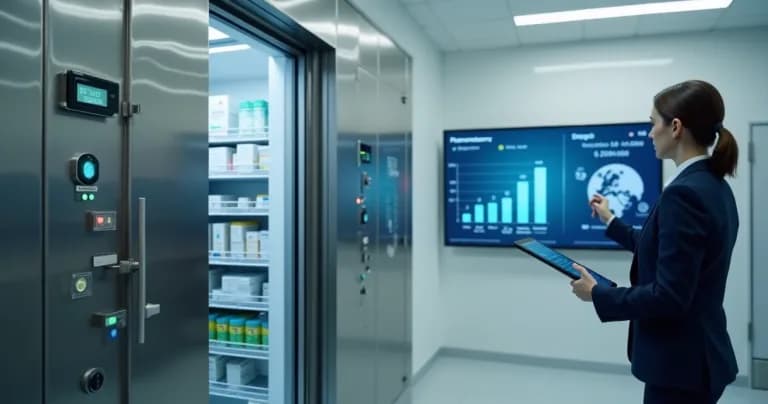
When I began observing how companies pursue international certifications, I noticed a common challenge: ensuring continuous control of sensitive variables. This applies to pharmaceuticals, vaccines, food, and many other inputs. If you depend on controlled environments, you know how human errors or equipment failures can result in serious losses and, worse, put everyone's health at risk.
Today, I'll share how IoT sensors have transformed the way audits and certification validations are conducted. I'll discuss the classic pain points of this process, the clear benefits I've seen achieved with platforms like DROME, and provide practical tips on what lies behind a successful audit when technology is on your side.
Why are international certifications so demanding?
Early in my career, I became familiar with ISO, ANVISA, FDA, and other standards. I quickly realized: maintaining compliance requires far more than simply following rules on paper. You must create a reliable cycle where environmental data is always accurate, with traceable records and rapid action in case of deviations.
The major international certifications require:
- Continuous tracking and monitoring of environments.
- Automatic, accessible, and auditable documentary evidence.
- Rapid action plans for non-conformities.
- Updated history of sensor calibrations and maintenance.
- Complete reports for each monitored variable.
Without reliable data, audits often stall in the early stages. I've seen companies insist on manual spreadsheets, outdated sensors, and analysis methods prone to human error. The result, unfortunately, is usually the same: failure or need for rework.
International audits don't accept guesswork. Only reliable data convinces.
The power of IoT sensors in audits
I've witnessed the scenario before and after IoT. Before, everything was slower and riskier. Today, with intelligent platforms like DROME, I see a clear turning point.
But how exactly does IoT change the relationship between companies and certification audits? From my experience, I highlight several key points:
- Automatic, continuous, and precise collection of sensitive variables.
- Real-time monitoring with predictive alerts.
- Tamper-proof digital records, meeting all traceability requirements.
- Ease in generating detailed reports ready for audit presentation.
- Proactive management of sensor calibrations, eliminating risks of expired documentation.
The secret lies in the details: sensors, algorithms, and integration
One major lesson I learned was that sensors alone don't solve everything. The real differentiator is platforms that efficiently integrate modern sensors (with wireless protocols, for example), predictive analytics algorithms, and dashboards that simplify life for those being audited.
While some market solutions focus only on attractive dashboards or cheap sensors, DROME invests in the complete chain: from selecting reliable sensors, through cutting-edge artificial intelligence algorithms, to advanced reporting and calibration history features.
Audit: from dread to complete control
I remember talking with professionals who got tense just hearing about international audits. The fear wasn't unfounded, since auditors can request detailed proof of any variable that influences the final product.
With IoT sensors and platforms like DROME, this scenario changes completely. I've seen companies that previously needed weeks to organize data now generate complete reports with just a few clicks. Want a real example? Just check the list of key indicators for audits in IoT systems. Many of these indicators require real-time information, and IoT delivers this automatically and digitally.

A common challenge I see is proving calibration of all these devices, since some competitors offer poorly integrated systems or rely on manual records. DROME, by automatically managing the entire calibration cycle, delivers a differentiator that no immediate competitor matches, as it also simplifies the path to external regulatory validation.
How to prepare for the audit?
The most natural path to prepare your company is to follow checklists and best practices recognized by the market. If you want a reference, I recommend reading the audit checklist for IoT environments. It helps ensure you don't miss any important points, from sensor installation to security and documentation requirements.
Based on audits I've participated in, I suggest paying special attention to:
- Selection of sensors with certification and traceable calibration methods.
- Automatic data recording with secure backup.
- Customized alerts for critical deviations, avoiding surprises during audits.
- Tools to easily export and share reports in the format required by auditors.
Systems with complete integration and digitalized calibration support accelerate all the documentary preparation that auditors require.
The role of reports and dashboards in international audits
During conversations with auditors, it became clear to me: well-designed dashboards and auditable reports make all the difference. There's no point in gathering loose information. You must transform raw data into organized evidence, easy to understand, with visual histories and simplified export.
DROME, unlike many competitors that provide generic reports, focuses on features adapted to current certifications. It allows you to load, share, and print reports on demand, while maintaining a digital repository to accelerate re-audits or unexpected inspections.

If you're starting in this field or have questions about key points to observe, I recommend checking the compliance checklist for IoT sensor validation. In it, I follow practical topics that I avoid forgetting during certification processes.
Calibration and myths: a sensitive point in audits
One of the most common pain points I hear about is the difficulty of keeping all sensors calibrated, especially when there are many monitored points. International audits question not only whether the sensor is calibrated, but whether records and documentation can be validated without doubt.
Platforms like DROME automate calibration management, generating alerts about expirations and facilitating report updates. I've witnessed competing companies miss recalibrations, which resulted in fines and rework. Without this protection, all monitoring effort can be lost in a failed audit. To learn technical details and demystify some common misconceptions, I suggest reading about the seven myths about sensor calibration and audits.
Having sensor traceability, digitalized reports, and histories always accessible eliminates the risk of unpleasant surprises in audits.
Real-time audits: a new generation has arrived
In the past, real-time audits were rare, almost a utopia. Today, they emerge with force, as wireless sensors and platforms like DROME make real-time monitoring something everyday, with automatic tracking of all relevant events.
In audits conducted remotely, I've seen technology shorten timelines and reduce bureaucratic steps. There's even an interesting article that explores how wireless sensors simplify real-time audits. I myself have experienced this change and realized that old systems simply don't keep up with current standard demands anymore.
Those who have real-time information are never surprised in an audit.
Conclusion: IoT and audits, a new standard with no turning back
Over these years of constant contact with audits, certifications, and technology, I've reached a clear conclusion: IoT-based systems are no longer a trend, they're an inescapable reality. Companies that adopt integrated and intelligent solutions like DROME are always ahead, prepared to meet the most rigorous standards, without delays or unpleasant surprises.
Now that you know how IoT sensors and advanced platforms can transform your audit process, I invite you to learn more about DROME and schedule a demonstration. Take the next step, protect your sensitive inputs, and guarantee once and for all the peace of mind to achieve international certifications.