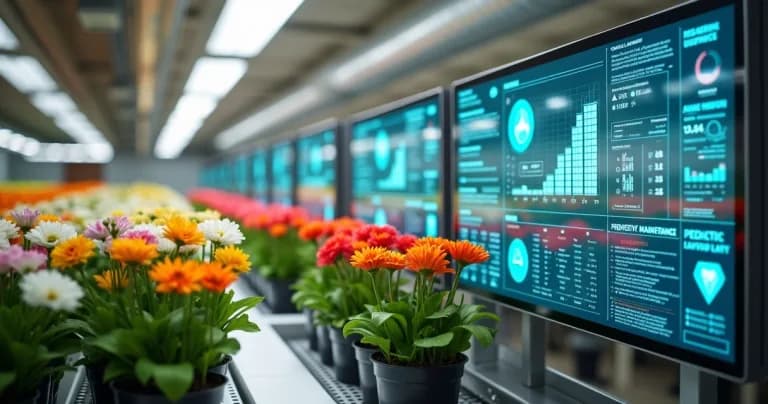
I'll admit that before diving deep into the world of flower farms, I thought preventing losses in these businesses would simply be a matter of taking good care of the plants. But I quickly realized that behind the colorful counter of fresh flowers, there's a constant challenge: controlling environmental variables that can turn an entire batch of roses into losses in the blink of an eye. That's when IoT (Internet of Things) started catching my attention as a real solution.
Why is loss prevention in flower farms so challenging?
When talking with flower farm owners, I heard stories of sleepless nights, fears of cold chamber failures, and difficulties in detecting small temperature or humidity changes in time to act. In those moments, I saw that
Prevention is much cheaper than trying to remedy the damage afterward.
Unlike other sectors, flowers are highly sensitive to temperature, humidity, and even light variation.
- Excessively high temperatures accelerate decomposition;
- Sudden fluctuations affect stem health;
- Lack of air circulation creates environments conducive to fungi and bacteria.
Often, a technical failure, human error, or even a door left open by accident can compromise the quality of the entire inventory – and there's no way to go back.
IoT technology as a partner for flower farms
In theory, the concept is simple: connected sensors monitor the environment in real time. But in practice, I discovered how each detail makes a difference. Systems like the one we developed at DROME continuously monitor environmental conditions, sending instant alerts so adjustments can be made before it's too late.
With IoT, the flower farm gains eyes and ears 24 hours a day, even when employees have gone home.
From my experience, I see that automated monitoring takes the weight off managers' shoulders, who no longer need to rely solely on human surveillance (always subject to failure).

Key practices for reducing losses with IoT
Adopting IoT goes beyond installing sensors. In my view, some practices make all the difference, and I'll list them with the clarity I value so much:
- Mapping critical points: It's not enough to install sensors only at the cold chamber entrance. You need to identify hot and cold zones, air circulation variations, and even possible cold leak points.
- Setting personalized alert thresholds: Each flower has its ideal conservation range. Configuring exact alerts prevents both waste and false alarms.
- Team training: The technology is useless if the team doesn't know how to respond. A standardized routine for responding to alerts is essential.
- Integration with logistics processes: Monitoring flower transportation can make a huge difference, especially in markets where delivery is a large part of the business.
- Predictive maintenance based on data: Analyzing failure patterns helps prevent future breakdowns, allowing the system itself to "learn" to identify risks in advance.
These practices integrate completely with what I designed at DROME: a system truly capable of transforming data into action.
Common challenges in IoT adoption for flower farms
Nothing is 100% simple. And honestly, the most frequent difficulties I see when talking with managers are:
- Initial cost: Sometimes there's concern that investing in sensors and software is too expensive. However, when you add up the loss from a lost shipment, the investment pays for itself.
- Team culture: Implementing IoT requires a change in mindset. I've seen resistance from those accustomed to manual methods, so internal communication is fundamental.
- Technical complexity: Some solutions promise the world but are difficult to install and use. This is where I believe DROME gains an advantage by being designed to be intuitive.
I've used other monitoring platforms, mainly in market testing, but I missed clear dashboards and flexibility to adapt alerts to my process. That's why DROME was designed to be simple without sacrificing data precision, plus it offers detailed reports and easy sensor calibration management.
Predictive analytics and artificial intelligence: real difference for the business
Many people think that monitoring alone solves everything, but I realized that predictive failure analysis is the true leap forward in prevention. Using algorithms that learn from history, we can predict equipment failures before temperature rises too much or the environment becomes unfavorable.
This way, we not only prevent losses but reduce response time and corrective maintenance costs.
This differentiator is part of DROME, and honestly, I haven't seen it work with the same depth in competitors, who typically offer only basic monitoring.
In the article about predictive analytics to prevent supply loss, I shared more about this journey and how it connects with flower farm reality.
Reports and audit processes: IoT's invisible role
I've had to justify losses to suppliers and even regulatory agencies in some situations. Without well-organized data, everything becomes a he-said-she-said situation. Systems like DROME help generate detailed and organized reports, showing each relevant variation, and facilitating audits, contracts, and warranty processes.
With digital reports, history is protected, secure, and available at any time, without depending on memory or manual spreadsheets that can get lost.
In fact, topics like reducing losses from human failures and advances in IoT monitoring have been the subject of other articles, and I recommend reading them for those who want to go deeper.
Integration with logistics and supply chain
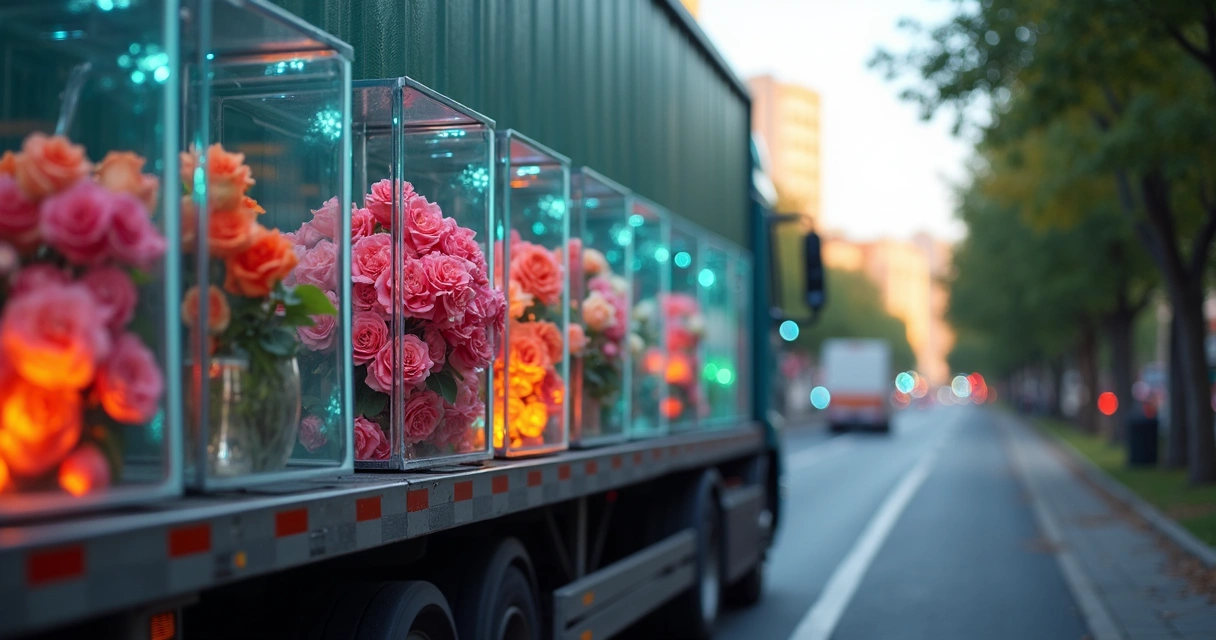
Another side of the coin is transportation to the customer. I see that it does little good to care well for flowers in the store if conditions are lost along the way. That's why integrating IoT with logistics became a priority for many businesses. Monitoring trucks, routes, or even thermal boxes has become reality, and it's a real differentiator against competitors who ignore this stage.
For those also working in the pharmaceutical sector, I advise reading about how monitoring technology is changing management, many concepts apply to the flower universe.
A final reflection on choices
Some competitors offer superficial solutions or ones difficult to adapt to the sensitive context of flowers. I've seen proposals that look good "on paper" but don't deliver agility or local support. With DROME, our SaaS solution was developed by listening to clients and teams to truly solve what keeps flower farm managers up at night.
Ultimately, investing in IoT is choosing to anticipate problems rather than chase them after the damage has already appeared. Every time I visit a flower farm already monitoring its inventory with DROME, I see a lighter environment – and it's not just because of the flower fragrance.
Taking good care of flowers is taking care of the business. IoT is just the beginning of what we can still do together.
If you also want to transform your routine and end losses from out-of-place temperature or human failures, I invite you to learn more about DROME's differentiators. And discover how our technology can become the next chapter in your flower farm's success.