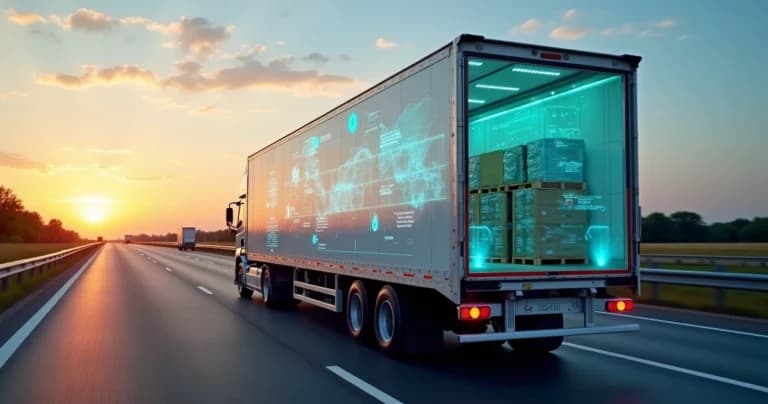
I have witnessed how the integration of IoT sensors in refrigerated trucks is changing the way we manage the cold chain. A few years ago, we relied solely on manual measurements, spreadsheets, and a lot of luck. Today, the story is quite different. Smart sensors have become invaluable allies in preventing losses of temperature-sensitive materials, such as medications, vaccines, and food products.
In this article, I share nine fundamental tips, based on my experience and various practical case studies, for efficiently integrating IoT sensors in refrigerated trucks. I will provide guidance that applies both to those just starting out and to companies looking to improve their processes, always highlighting how DROME can transform this reality.
1. Clearly Define Your Monitoring Objectives
It may seem straightforward, but when speaking with fleet managers, I notice that many don't take time to clearly define what they expect from IoT sensors. Do you want to control only temperature? Or do you also need humidity, door opening, and location data?
This initial definition impacts the entire project structure. If the focus is vaccines, for example, there are strict health regulations, and precise sensors registered with ANVISA are essential. In other cases, such as food logistics, it may be worthwhile to include sensors for vibration or CO₂.
Plan ahead to avoid having to correct later.
With DROME, I see that part of our competitive advantage lies in delivering customized solutions for each scenario, something that larger competitors often standardize excessively, overlooking specific needs.
2. Choose Sensors Appropriate for Mobile Environments
Sensors for use in refrigerated trucks must withstand vibrations, mechanical shocks, dust, moisture, and large temperature variations. An inappropriate choice can lead to recurring failures and inaccurate data readings.
In my opinion, autonomous sensors with long-lasting batteries and easy installation are the most suitable. I have seen failures occur from attempts to adapt common fixed-environment sensors. On the DROME blog, I go deeper into autonomous sensors and their applications in refrigerated vehicles.
If you compare with some market alternatives, you will see that DROME invests in robust technology, focusing on precision and low maintenance requirements.
3. Install Sensors in the Correct Positions
Placing sensors randomly inside a refrigerated compartment is a common mistake that compromises monitoring. It is essential to cover different thermal zones: near the door (greater variation), in the center of the load, and along the side walls.
For some shippers, I suggested including extra sensors at points farthest from the refrigeration system. This made it possible to identify localized thermal deviations that would otherwise go unnoticed.
Intelligent positioning increases accuracy and reduces the risk of "blind spots."
With DROME, I use thermal maps to assist in optimal sensor distribution, increasing confidence in cargo integrity.
4. Test Communication Before Operating
After installing the sensors, I strongly recommend testing data communication before the truck hits the road. I have witnessed failures simply because the IoT gateway signal was not calibrated or the network operator failed in certain regions.
At this stage, I like to simulate real routes and check for dead zones. DROME sensors, for example, use multiple communication technologies (such as 4G, Wi-Fi, or LoRa) to ensure continuous coverage, surpassing solutions limited to onboard Wi-Fi.
Before trusting, validate in practice.
This reduces unpleasant surprises and non-compliance penalties.
5. Integrate Data with Specialized Platforms
The true value of IoT sensors only appears when collected data transforms into useful information. And that is where I see many projects stall: they installed the sensors, but don't know how to analyze, aggregate, and make decisions based on the data.
My suggestion is to integrate sensors with a SaaS platform focused on cold chain management. Solutions like DROME automate alerts, generate audit-compliant reports, and adapt to systems already in place at your company. I discussed IoT-ERP integration in a recent article (learn how to simplify this step).
Some competing platforms offer dashboards that look attractive but fall short on usability and fail to issue intelligent alerts. DROME stands out through the use of artificial intelligence in predictive analysis, further increasing the safety of transported products.
6. Prioritize Alert Automation
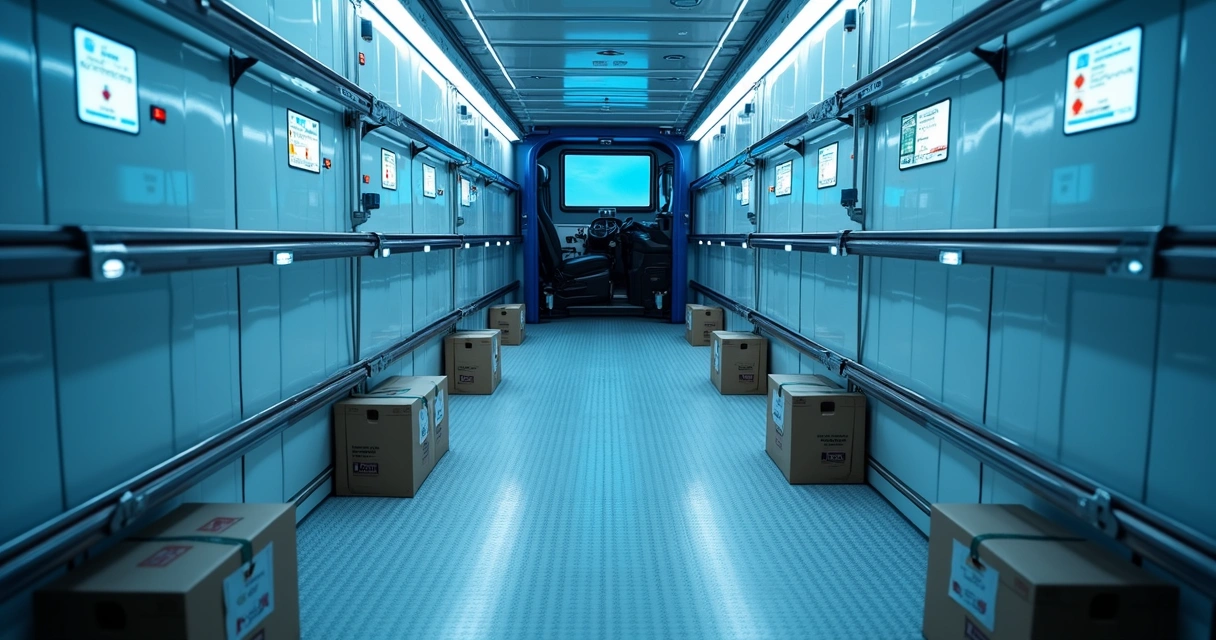
Alert automation is one of the main advantages of IoT sensors in refrigerated trucks. It is not enough to simply record data: it is essential to receive immediate notifications in case of temperature deviations, power failures, or unexpected door openings.
Solutions like DROME allow you to create different alert types, customize recipients, and even automate emergency commands (such as activating an auxiliary fan). I expand on these concepts in an article about alert automation in the cold chain, which I consider essential reading for anyone wanting to elevate their monitoring standard (check out the full content).
Automatic alerts prevent losses and increase customer confidence.
7. Properly Manage Sensor Batteries
Battery-powered sensors are common in mobile environments, but each model has different autonomy and requirements. I have witnessed situations where the battery ran out in the middle of a long trip, compromising the entire data history.
I always recommend testing the autonomy of new sensors before starting operations, and also adopting a replacement or recharge plan. DROME includes battery status reports, preventing surprises. For those wanting to delve deeper into this topic, I recently published an article on how to choose and test batteries in the cold chain (understand the main points).
Those who opt for alternatives without intelligent battery resources may end up spending much more on losses and maintenance, while our solution prioritizes risk reduction throughout the operation.
8. Focus on Sensor Calibration and Maintenance
There is no point in installing sophisticated sensors if no one remembers to calibrate and periodically check them. Uncalibrated sensors generate questionable data, and this can compromise both product safety and audit approval.
I suggest maintaining a calibration schedule integrated into the monitoring platform, as I do with DROME, which automatically organizes deadlines, report issuance, and device histories. This reduces human error and simplifies sensor lifecycle management.
9. Monitor and Act in Real Time
The biggest fear of any fleet manager is discovering a failure only after the cargo has spoiled or been rejected by the customer. That is why real-time monitoring is essential: it provides instant visibility of operations and allows immediate intervention if necessary.
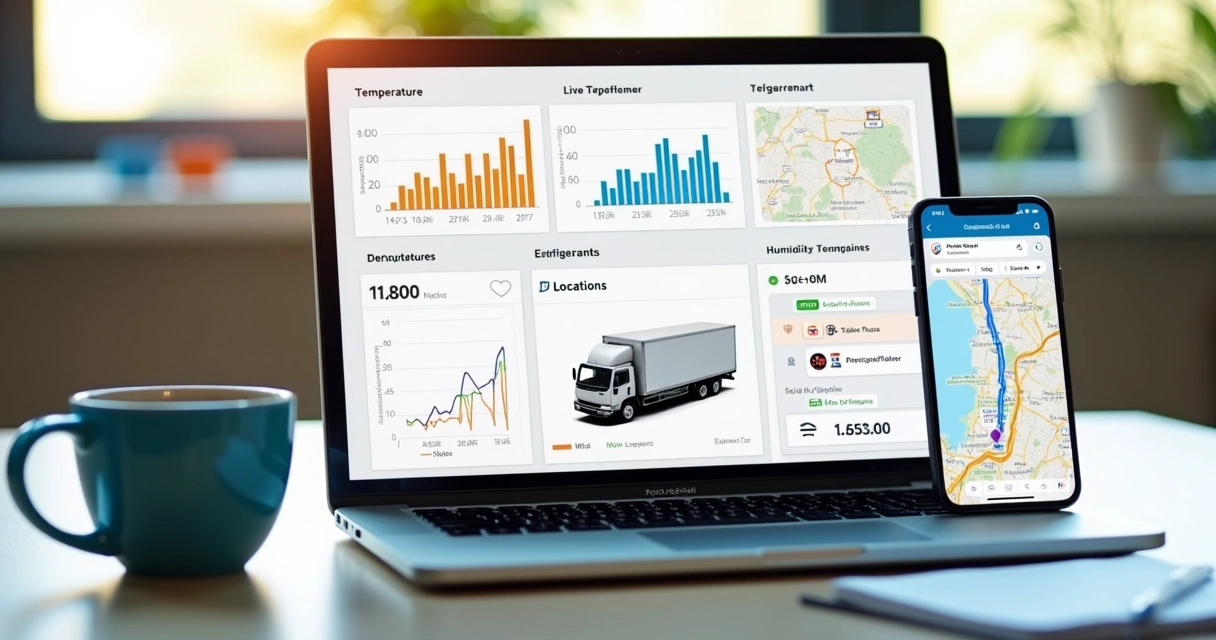
DROME delivers easy-to-read dashboards where you can monitor truck conditions in real time, even from your mobile phone. In the last implementation I conducted, this allowed us to redirect a vehicle before the problem worsened, saving the entire load.
Having control in the palm of your hand makes all the difference.
For those seeking practical information about vehicle temperature and humidity monitoring, I recommend consulting our materials on the DROME blog (see integration and functionality details).
Conclusion
Integrating IoT sensors in refrigerated trucks is an important step for any business wanting to ensure the quality, traceability, and safety of transported materials. Avoiding waste, human error, and financial losses is only possible by investing in reliable technology and real information, not just off-the-shelf gadgets.
With DROME, I see that the attention to detail at each stage, from project planning to alert automation, through calibration, keeps us always ahead of other options, offering not just data, but support, intelligence, and confidence for your operations.
If you are ready to elevate your monitoring standards, prevent losses, and follow best practices in cold chain transportation, learn more about DROME and get in touch. I guarantee your logistics will never be the same.