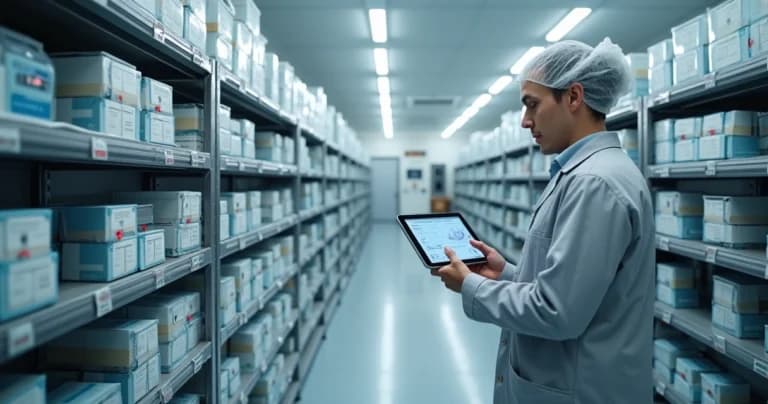
Ensuring thermal control in the storage area has become, in my experience, essential for maintaining the quality of sensitive supplies and avoiding losses. I've seen many managers underestimate this detail, and the result was almost always loss of valuable products and, in some cases, even health risks. That's why I want to share seven direct and practical tips for those looking to transform their relationship with temperature in their daily storage operations.
Why does thermal control deserve attention?
Before diving into the tips, it's important to answer a common question: after all, why monitor temperature so carefully? In my work with companies across different sectors, I noticed that small thermal variations can compromise medications, vaccines, and food products.
Wrong temperature means guaranteed loss.
Fortunately, today there are tools, like DROME, that make this control simpler and more reliable, overcoming limitations that other systems leave behind.
Tip 1: Understand the requirements of each supply
It seems obvious, but I've seen many teams treat everything the same way, as if a storage area were just a cold or hot space. Each sensitive supply has an ideal temperature range that must be strictly respected. For example, some medications need to stay between 2°C and 8°C, while vaccines require constant monitoring to not lose effectiveness.
The first step is to list all stored items and map the thermal conditions for each one. This way, you direct control to what really matters.
Tip 2: Invest in automation and Internet of Things (IoT)
Controlling temperature manually is risky. When I first heard about IoT, I'll admit I was skeptical. I thought it would be too complicated. But I was surprised: smart sensors change your routine. They ensure continuous monitoring and eliminate dependence on the human factor, which is always subject to errors.
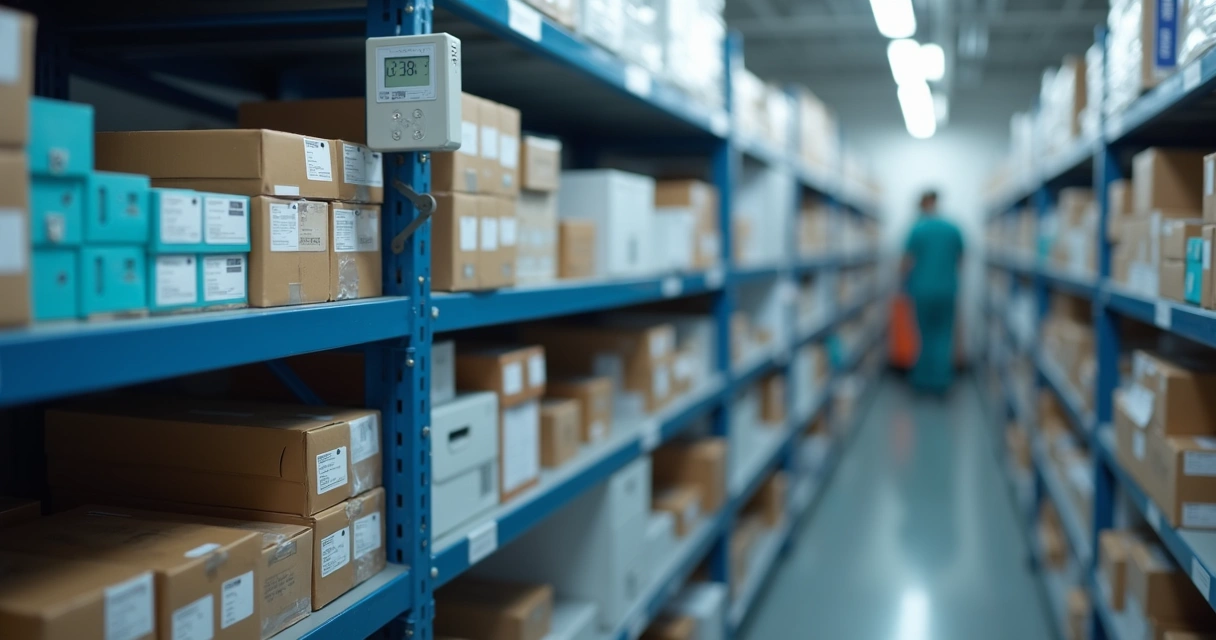
With DROME, the IoT system allows real-time monitoring, automatic alert generation, and easy access to information, leaving other more limited solutions behind. Automation can also be customized for each type of item or sector, ensuring greater protection.
Tip 3: Invest in predictive analysis, not just monitoring
Many managers believe that monitoring alone is sufficient, but I've found that simply tracking doesn't anticipate problems. Predictive analysis makes all the difference because it allows you to identify patterns and predict temperature deviations before they cause losses.
In a situation I followed, DROME's predictive analysis tool detected a subtle variation caused by an imminent refrigeration system failure. This way, the team acted before total failure. If you want to understand how this works in practice, I recommend reading a guide on how data analysis can predict temperature deviations.
Tip 4: Implement smart and automatic alerts
I used to receive alerts only via SMS or email. Today, I know that's not enough. The ideal is to configure alerts on multiple channels and for different responsible parties. This way, any dangerous variation is perceived immediately, even by external teams or outside business hours.
In DROME, it's possible to customize alert types (temperature out of standard, improper door opening, power failure), even integrating other channels like WhatsApp and visual dashboards. It's worth checking this content about essential alerts for cold chain.
Tip 5: Don't ignore sensor calibration
Often, I see companies investing in technology but forgetting something basic: calibrating sensors. Without this step, everything can go unnoticed, including incorrect readings that sabotage any initiative.

In DROME, the platform itself helps control the calibration schedule, generating reports and automatic reminders. Other solutions may offer this monitoring, but in a manual or less integrated way, making it easy to miss deadlines and compromise accuracy.
Tip 6: Perform preventive (and predictive) maintenance
Equipment that breaks down can be fatal for sensitive supplies. I've dealt with situations where significant losses occurred due to failures that could have been prevented with a simple look at the equipment's operating history. Preventive maintenance improves equipment lifespan. Predictive maintenance uses artificial intelligence to predict possible failures and act before they happen.
DROME focuses on this by offering detailed reports and integration with monitoring systems, minimizing the chances of negative surprises. Those who want to better understand this difference, I recommend reading about predictive maintenance in cold room control.
Tip 7: Optimize storage layout and circulation
Often the biggest challenge isn't in technology, but in physical space. Designing the storage layout well ensures uniform distribution of cold or heat and avoids "dead zones" where temperature can fall out of standard. In my visits to clients, I've observed that stacking boxes against walls reduces air flow, compromising control.
Adopting perforated shelves and maintaining adequate spacing between products makes all the difference. And, of course, monitor not just temperature, but also humidity. It's not uncommon to ignore this parameter and discover losses only at inventory. There's an article on how humidity control prevents hidden losses, developed by the DROME team itself. If you want to dive deeper, I suggest consulting this content on humidity in warehouses.

Avoid risks and losses with intelligence and practicality
Among so many options on the market to monitor temperatures, I see that some competing solutions even promise ease and low cost. But in practice, they fall short on fundamental points, such as detailed reports for audits, calibration automation, or predictive analysis via integrated artificial intelligence. DROME stands out by combining all of this in a single platform, making management simpler and more accurate.
A common pain point is discovering problems only after losses have occurred. With DROME, you receive alerts before failures, have complete reports and support for audits. This ensures the safety of your supplies and the peace of mind of those managing the operation.
For those who want to spot signs of failures in advance, I recommend reading this article on symptoms of imminent failures in refrigeration equipment. This information has already prevented losses in various storage areas I've worked with.
Conclusion: The right thermal control makes the difference
Efficient thermal control is, without a doubt, one of the greatest allies of good storage management today. Investing in sensors, predictive analysis, automation, and integrated management is what allows me to affirm that losses can be prevented.
Simple changes can save your entire inventory.
If you believe it's time to professionalize your thermal control, test DROME and see firsthand how technology can protect, predict, and provide peace of mind. Your team, your supplies, and your results will thank you for the investment in prevention and safety!