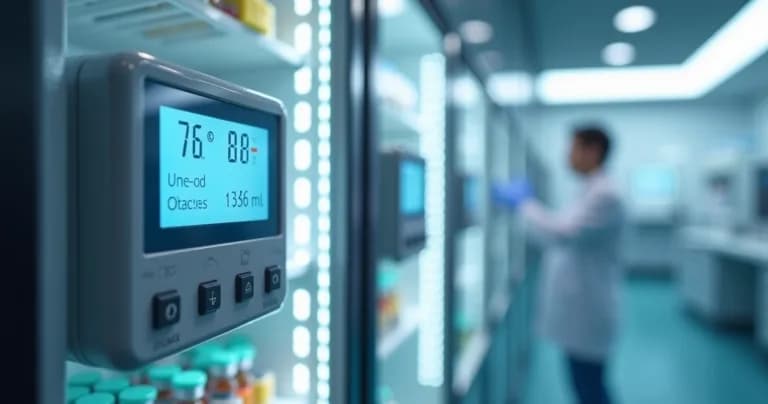
For years, I have closely observed the evolution of vaccine monitoring in cold chains. Much has changed. What was once done with manual records and simple thermometers has now become a universe of interconnected sensors, automatic alerts, and intelligent platforms. But… are all these sensors truly "ideal"? How do you choose and not make mistakes on such a sensitive topic?
In this article, I will address essential points about sensors for real-time vaccine monitoring, based on both practical experiences and failures and successes I have witnessed. Throughout the text, I will also show why I believe solutions like DROME are the logical next step for companies and institutions that want to go beyond the basics – with real insights and technology, not just promises on paper.
Why real-time vaccine monitoring changed everything
If anyone still believes that a thermometer hanging inside the refrigerator is enough, I strongly recommend reading this article about common errors in vaccine monitoring and how to correct them.
Vaccines are too sensitive to rely solely on luck or human supervision. Temperature fluctuations, light exposure, mechanical failures, and operational errors are more common than they seem. Real-time control is not just a trend, but a necessity.
Monitoring is prevention. Those who monitor in real-time act before the problem appears.
Which variables really matter?
When I talk about "real-time" monitoring, I am not referring only to temperature. There are vaccines, such as some similar to COVID-19, that require even more rigorous conditions:
- Temperature (obvious, but any sensor won't do)
- Relative humidity
- Light and UV exposure
- Presence of CO2 or other gases (in highly controlled environments)
- Storage integrity (door openings, vibration presence, etc.)
At DROME, we always consider multiple variables to anticipate threats, not just record values. It makes a difference. That's why, when thinking about sensors, I look beyond temperature.
Most suitable sensor types
I want to get straight to the point. Ideal sensors for vaccines need to go beyond "cheap" (and unreliable) technology. I always look for equipment that combines precision, stability, and easy integration with IoT platforms. Below, I list the main types used in advanced systems like DROME:
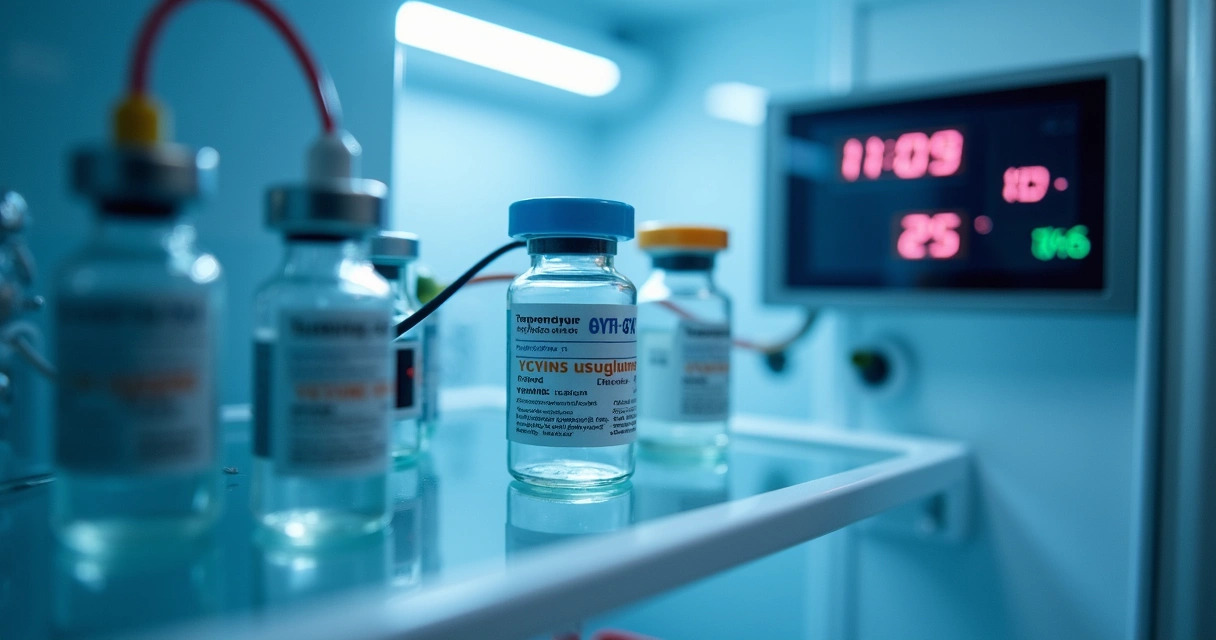
Temperature sensors
- Digital thermistor: Small, precise, fast response. I recommend it for stable environments.
- Pt100 / RTD: High precision at low temperatures, ideal for ultra-cold freezers. Requires good calibration.
- Type K thermocouple: Resists environments with abrupt variation. Not as precise as the previous ones, but useful in some situations.
In my experience, the best approach is to never rely solely on "off-the-shelf" sensors found in common stores. They almost always deliver inconsistent results after months of continuous use. The secret lies in sourcing, warranties, and integration with specialized software.
Humidity sensors
- Polymer capacitive: Very reliable for measuring humidity in storage. Does not suffer as much from contamination.
- Analog resistive: More sensitive to variations, less suitable for pharmaceutical environments.
Humidity outside the ideal range accelerates vaccine degradation. I like using temperature and humidity sensors together in systems like DROME – cross-referencing data can indicate risks before conventional alarms even sound.
Light and door opening sensors
- Digital optical sensor: Detects light spikes, indicating undue exposure.
- Magnetic sensor: Signals each time a refrigerator is opened, useful for identifying suspicious movements or negligence.
These sensors are more recent and have been applied especially in vaccine transport and temporary storage. I would not do without them in high-turnover situations.
How to avoid failures and mistakes with sensors?
It does not help to install sensors and relax, thinking everything will resolve itself. I have witnessed cases where humidity and electrical current variations throw sensors out of calibration over time. Or sensors that, without maintenance, start reporting "normal values" when they are already damaged.
- Regular calibration is essential. I always recommend scheduling routines and recording everything – platforms like DROME already have this function built in.
- Replace sensors at the first sign of precision loss.
- Cross-validation with other reference equipment.
- Immediate integration with alert systems: a good sensor is one that communicates!
The sensor that does not alert in time is useless for the cold chain.
Another point: securely and easily accessible stored histories are necessary during audits. DROME, for example, not only stores but produces automatic reports and makes life easier for managers in this regard, surpassing competitors who only send CSVs without context.
IoT integration and artificial intelligence: where the sensor becomes prevention
Unlike solutions that merely collect data, innovative platforms like DROME apply IoT and artificial intelligence to transform sensors into automatic sentinels.
Here, the sensor does not just serve to record: it anticipates failures, suggests actions, and learns from each recorded event.
Comparing with companies that only offer "plug-and-play" sensors, I see that DROME integrates layers of predictive analysis, detecting failure trends before the problem impacts vaccine inventory. This is a real advantage, especially for those dealing with large volumes and health responsibility.
Additionally, if you want a more detailed look at how the cold chain requires multiple monitoring points, I strongly recommend the content at that link. There, I delve deeper into these integration and applied intelligence scenarios.
Automated alerts and reports: how does the system inform and protect?
In many systems, alerts still depend on manual checking. For me, this no longer makes sense in the current context. A real-time monitoring system, as I insist on defending with DROME, sends automatic notifications, cross-referencing information between sensors and learning failure patterns.
It is not enough to know that temperature went out of range. You need to be notified in time to act.
Some competitors even send SMS or emails, but they tend to be slow and poorly customizable. With DROME, it is possible to receive alerts through multiple channels, depending on severity and the responsible party informed. We even have automations for preventive shutdown or backup activation, a feature practically inaccessible in traditional solutions. In this article about alert automation for the cold chain I show practical examples of these automations.
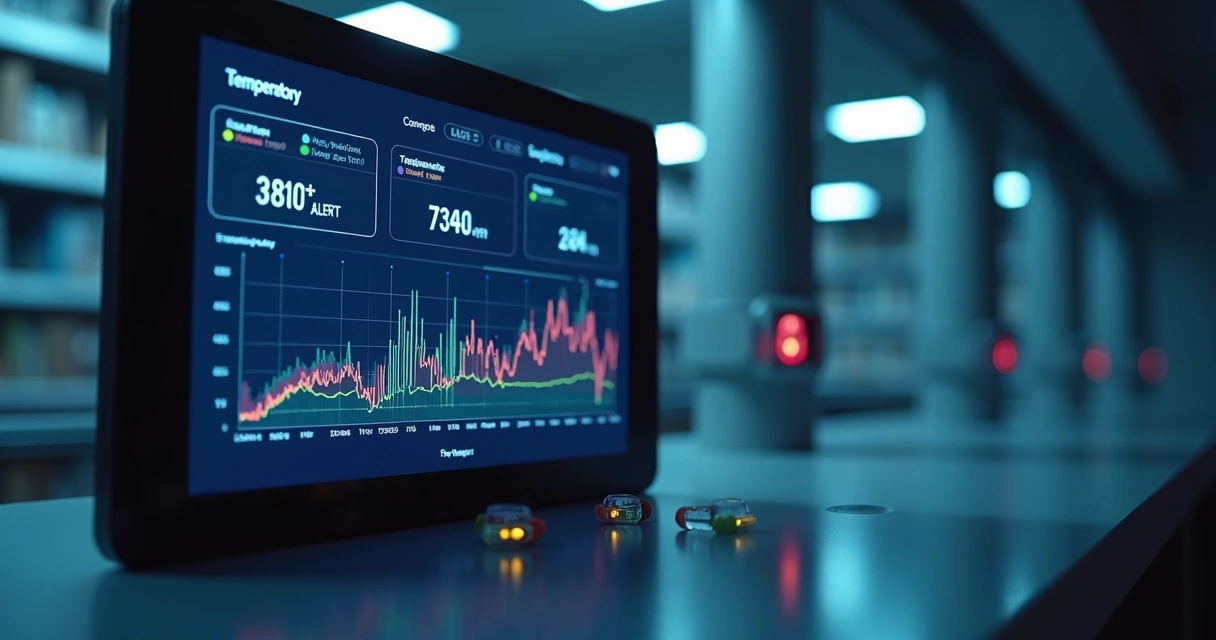
Audit and compliance: sensors audit-proof
Having automatic and reliable reports carries significant weight in the daily routine of health teams.
I have served clients who lost entire batches due to lack of proper documentation. Platforms like DROME issue complete reports, ready for audits, and with traceability systems that prevent later edits or fraud. There are other systems, of course, but they suffer from heavy bureaucratic processes or poor compatibility with Brazilian standards. At DROME, we designed everything to align with ANVISA requirements and facilitate inspections – including sensor calibration scheduling, as I mentioned earlier.
To learn more about new monitoring technologies in pharmaceutical management, it is interesting to check the innovations brought by the sector, where DROME leads in modernity and flexibility.
A perspective on sustainability and the future of monitoring
I know that investing in quality sensors for vaccines may seem like an added cost. But after years of witnessing losses from supply waste, I affirm: cheap is expensive. The cold chain scenario is changing rapidly, with increasingly environmental requirements, energy efficiency, and intelligent automation.
Solutions like DROME, in addition to ensuring traceability and reducing losses, bring gains in sustainability and logistics management – topics I discuss in the article about sustainable innovations in the cold chain. It is an evolution that, I believe, will only grow and bring positive results for everyone involved.
What is worth considering now?
After so many tests and learnings, for me, choosing the right sensors comes down to three words: precision, integration, and prevention.
- Do not bet on cheap sensors without proper sourcing.
- Combine monitoring of multiple variables.
- Prefer SaaS platforms like DROME, which unite IoT, predictive intelligence, and smart reporting.
- You will not see all these differentials together in competitors who invest only in hardware and neglect software.
- Worry more about the final result than about "price per sensor" – avoiding losses means real savings.
Want to know more?
In the end, my experience shows: sensors are the heart, but DROME is the brain of vaccine monitoring.
Are you unsure about how to protect your supplies once and for all? Get to know DROME, try our platform, and discover a new standard for the cold chain. The right choice can save thousands of doses – and your peace of mind. Schedule a conversation with us right now. Together, we will raise the standard of control and achieve safer, more reliable, and more intelligent results in healthcare.