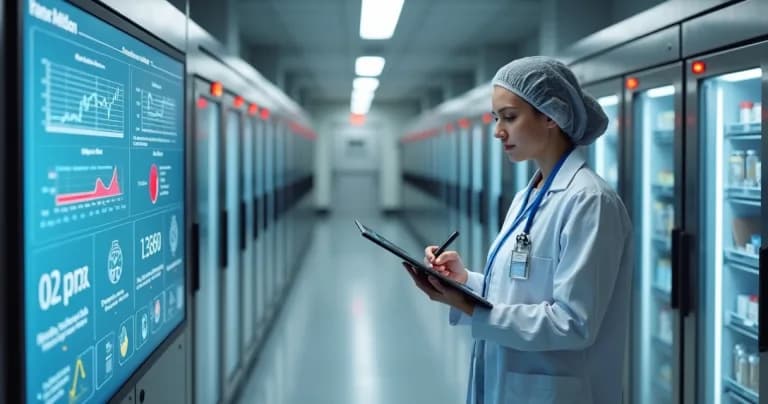
In my years of experience dealing with cold chains, I've realized that registering non-conformities is not just a bureaucratic procedure. It's a true line of defense to protect sensitive supplies and prevent major losses. I want to share clearly how you can perform this registration with safety, agility, and rich detail, and why a system like DROME makes such a difference in this process.
First, what is a non-conformity in cold chains?
I see that many people still confuse deviations and non-conformities. When I talk about cold chain, a non-conformity occurs when any requirement—whether temperature, humidity, equipment integrity, processes, or documentation—fails to be met. In other words:
- Temperature outside the specified range.
- Equipment with failure or unplanned downtime.
- Control routine not followed or documented correctly.
- Monitoring sensors miscalibrated or with questionable readings.
Recording non-conformities in detail helps prevent losses, ensures traceability, and contributes to continuous improvement processes.
Why is registration so necessary?
I've witnessed situations where simply forgetting to record a problem resulted in million-dollar losses in vaccine inventory. Correct registration is fundamental because:
- It allows you to quickly identify the root cause of the problem.
- It generates learning to prevent recurrence.
- It facilitates audits and regulatory controls.
- It ensures transparency and safety in operations.
Transparency is the best remedy for cold chain failures.
Today, with monitoring platforms like DROME, it's much safer to ensure this control, especially because there's direct integration with sensors, automatic traceability, and report generation in just a few clicks.
What information must be included in the registration?
If the registration is not complete, it's worthless. I always follow this basic structure:
- Non-conformity identification: Date, time, and location.
- Precise description of what occurred: Explain what happened, citing events, readings, and actions already taken.
- Responsible party data: Who identified the problem and who is responsible for handling it.
- Evaluated impact: What may have been compromised by the deviation.
- Images, graphs, or screenshots: Evidence always helps validate the registration.
- Immediate correction performed: If possible, detail what was done to correct it.
- Action plan to prevent repetition: What improvements or corrections will be implemented in the medium term.
In DROME, this registration is facilitated because most fields are already filled based on data collected by IoT sensors. This reduces typing errors and greatly accelerates the process.
First step: quick and accurate identification
Imagine one of your sensors reported a temperature below expected in an insulin chamber. Without appropriate tools, the operator might only notice hours later, when there's already inventory loss. With DROME, for example, this alert happens immediately: the system already initiates the non-conformity registration, indicating time, sensor involved, and the deviation.
Other competing systems, which may even issue alerts, often don't immediately integrate the formal registration of the occurrence. This increases the risk of data being lost or registrations ending up incomplete. I don't see an advantage in this, especially when traceability is a requirement of regulatory bodies.
How to describe the non-conformity in detail?
A tip: avoid vague phrases. When reporting, I always recommend you get straight to the point, without excessive technical terms that only complicate later analysis. Example:
- Wrong: "Temperature out of standard."
- Right: "At 15:42, sensor 3 in the cold chamber of warehouse 1 registered 12.6°C (above the maximum of 8°C), for 28 minutes, between 15:10 and 15:38."
This objectivity even helps those who will analyze it later and make decisions.
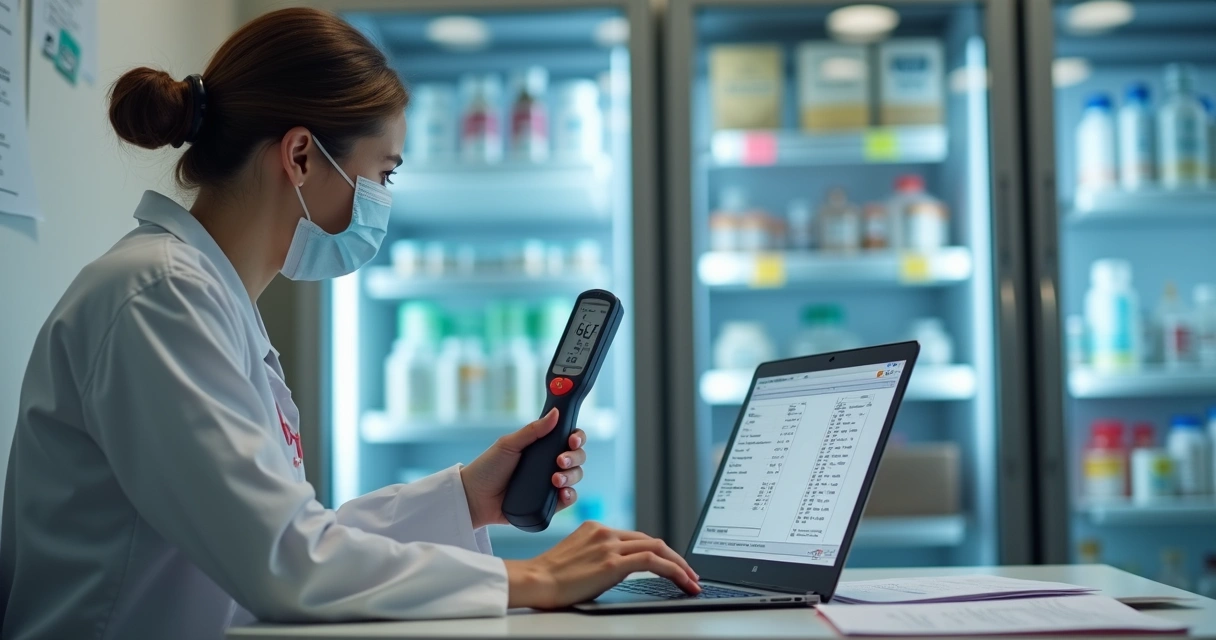
Evidence collection: registration is not just text
Early in my career, it was common to rely solely on the operator's report to justify deviations. Today, I know that's a mistake. Photos, system graphs, sensor reports, and even screen captures are essential. They demonstrate the truthfulness of what was reported and are decisive in internal or external audits.
Solutions like DROME facilitate automatic attachment of this evidence. Some competitors require manual insertion, which takes time and can lead to oversights. I prefer the automated approach to avoid failures due to simple issues like rush or team overwork.
What happens after registration?
Registration is just the beginning. Afterward, it's important to analyze root cause, determine if the impact was total or partial, and implement corrective actions.
For this, it's essential to use platforms that allow:
- Quick visualization of deviation histories.
- Data cross-referencing to identify patterns.
- Complete report generation for audits, as highlighted in this compliance checklist and IoT sensor validation.
- Management of sensor calibrations, strengthening audit processes.
In DROME, the entire cycle is documented: from the moment of occurrence to the conclusion of corrective actions. This generates confidence for both the manager and those overseeing the process.
Who should register and follow up?
I see there's a common question: "Who should do this registration?" I believe everyone who has direct contact with cold chains should be trained and qualified to register non-conformities. This way, no failure goes unnoticed.
However, follow-up, analysis, and case closure should be done by a technical responsible party, usually a pharmacist, quality engineer, or manager. The DROME system allows you to delegate and assign responsibilities, with tracking of all movements in the registration.
Automation of registrations: how technology is changing this scenario
If it was all handwritten notes in spreadsheets before, today automation is increasingly present. Platforms integrated with IoT, smart sensors, and predictive analysis are the most modern approach to monitor and register non-conformities in real time.
I always recommend solutions that offer:
- Smart alerts, with delivery via SMS, email, or specific applications.
- Automatic deviation registration, linking sensor, impacted product, and responsible party.
- Ready-to-audit report generation, without manual rework.
- Predictive analyses to foresee failures before they cause non-conformities.
DROME stands out by automating from registration to action plan. The interface is simple, user-friendly, and any employee understands what needs to be done. This eliminates confusing steps and drastically reduces the chance of human failures, which are normally the Achilles' heel of traditional operations.
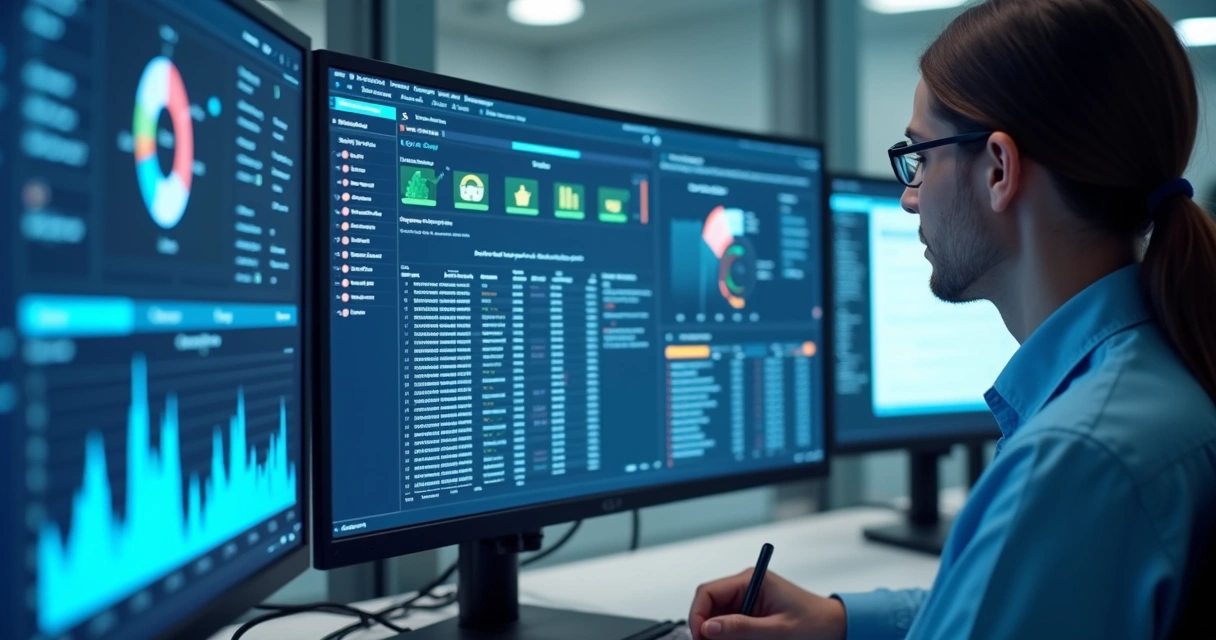
How to set up an efficient non-conformity registration flow?
I believe in simple and direct processes. The ideal flow goes through these steps:
- Automatic or manual deviation detection (by sensor, alarm, operator, or audit).
- Immediate system registration with maximum detail.
- Analysis and impact classification by the technical responsible party.
- Implementation of immediate corrections and proposal of preventive actions.
- Case closure and archiving, maintaining traceable digital record.
I cite here relevant content about the types of alerts essential for cold chain, which will greatly help you think through your flows.
Another reference is the article on how to avoid errors in temperature monitoring in healthcare, fundamental for those working in this segment.
How to act if technology is not available?
Even without a system like DROME, it's possible, but much more difficult, to maintain manual registration.
- Guide your team to note everything in spreadsheets or printed forms.
- Manually photograph deviations, attaching to the registration.
- Control on paper, mapping who does what, when, and how.
However, I always emphasize: Although possible, manual registration increases risks, errors, and time spent resolving cases.
If your operation grows or if you have many audits, the automated system will be more reliable. If you're thinking of advancing, I recommend this article on predictive maintenance in cold chambers, essential to avoid unpleasant surprises.
Conclusion: registration in practice is loss prevention
My experience shows that the difference lies not just in the registration, but in how it happens and is handled day to day. A well-defined process, combined with the right technology, prevents fines, financial losses, and damage to reputation.
DROME, with automation from start to finish, IoT sensor integration, and artificial intelligence, puts your control on another level. If you want to transform non-conformity control in your cold chain and have stress-free audits, I recommend getting to know DROME more closely and taking this next step in safety and traceability.
Preventive registration saves supplies, reduces costs, and protects everyone's health.