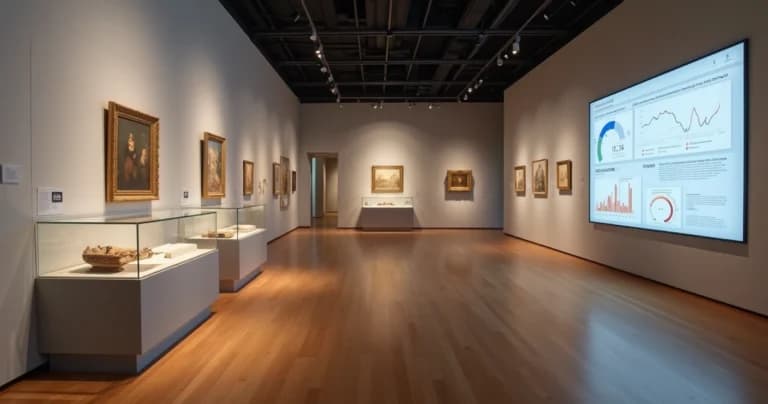
Environmental Monitoring in Museums: Risks and Prevention with IoT
Anyone who has walked through a museum filled with historic works knows: there is always something more at stake beyond the pieces themselves. The work of protecting paintings, sculptures, manuscripts, and other collections requires heightened attention to environmental conditions. Small oversights or equipment failures can cause irreversible damage.
I am someone who closely follows the market for museum solutions and frequently see managers dealing with the constant fear of heritage loss from often silent causes.
Controlled environments are not a luxury. They are a necessity for museums.
Why do museums need to monitor their environmental conditions?
In my experience, few sectors feel the effects of environmental changes as acutely as museums. Parameters such as temperature, humidity, light levels, and even pollutant gases require precise control. This is because each material reacts differently to environmental fluctuations. High humidity promotes mold and paper degradation, for example. Oil paintings can suffer cracks from excessive cold or heat.
I always consider these risks when speaking with museum teams:
- Physical damage from material expansion and contraction
- Discoloration and loss of paint pigments
- Proliferation of microorganisms in humid environments
- Risk of total loss in rare and irreplaceable works
- Issues in audits or insurance processes
Museums need real guarantees that the environment remains stable over time, not just during business hours or during spot inspections.
The role of IoT in museum monitoring
The advancement of the Internet of Things (IoT) has completely changed the landscape of environmental monitoring. Today, it is feasible to install intelligent sensors that capture data on temperature, humidity, light levels, and more at strategic points in a room, display case, or storage area. They communicate via network and send information in real time to platforms like DROME.
I have seen situations, before IoT, where records were made manually and only once a day, with enormous risk of missing something important between one record and the next. Now, the collected data is constant and allows decisions to be made in a much more precise and rapid manner.
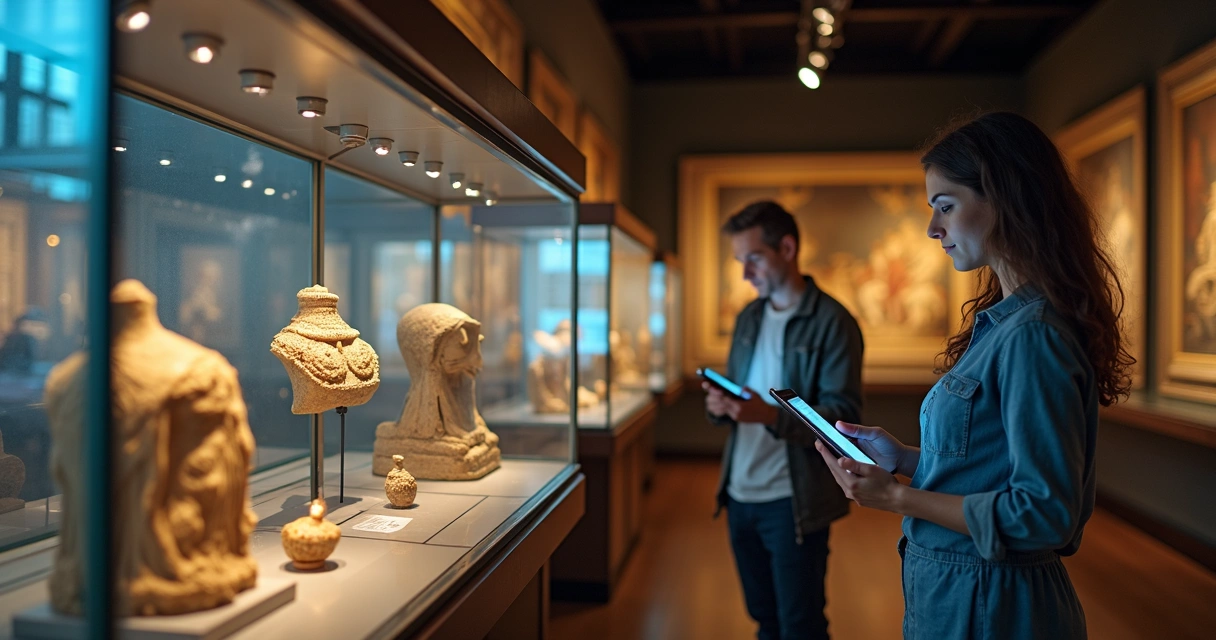
Main environmental risks faced by museums
In my day-to-day work, I typically divide environmental risks in museums into three major groups:
- Temperature fluctuations: cause cracks, paint displacement, and accelerated deterioration
- Humidity variations and excess: promote fungi, mold, and oxidation
- Light and UV radiation: fade pigments, weaken papers and textiles
Beyond that, the presence of pollutants, gases, and particulate matter can pose silent threats to historic heritage. In some cases, environmental damage is only noticeable years later, when reversal is no longer possible.
These risks can arise even from small failures in air conditioning, poorly closed windows, or inadequate lighting.
How IoT systems help with prevention?
What strikes me most about IoT technology is its ability to provide automatic alerts and detailed reports to maintenance and curatorial teams. Platforms like DROME allow you to program notifications if any parameter falls outside the safety margin. As soon as an alarm is triggered, responsible parties can act immediately.
DROME, in fact, offers important differentials in this prevention:
- Real-time monitoring of multiple environmental variables
- Predictive analysis to identify failure patterns
- Detailed history for audits and occurrence tracking
- Sensor calibration management to ensure data accuracy
- Ready-made reports to meet insurance and regulatory requirements
Even knowing there are other platforms on the market, in my conversations with museums, I always notice how much DROME stands out in reliability, alert speed, and flexibility of integration with existing equipment. Other alternatives, while functional, typically lack predictive maintenance features or require complex configurations, which delays response to critical situations.
Where to install sensors to ensure efficiency?
In many projects I have followed, a frequent error is positioning sensors in locations that do not provide a true picture of the environment. I share here some recommendations that I always consider:
- Place sensors near the most sensitive pieces
- Spread sensors at different heights to capture variations in heat and humidity
- Install measurement points in storage areas, exhibition rooms, and closed display cases
- Avoid positions near doors and windows that distort data
Correct distribution results in reliable reports and safer decision-making. If you wish more detailed information on continuous monitoring, I recommend visiting the content on continuous monitoring with IoT.
The importance of sensor calibration and maintenance
I have seen occasions where a miscalibrated sensor caused misinterpretations and unnecessary actions on collections. Therefore, I advocate that sensor calibration management should be part of museums' routine. DROME itself brings tools that help schedule calibration reminders and document the entire process, thus facilitating audits and inspections.
If you want to know more about calibration, I suggest consulting a practical guide on sensor calibration in controlled environments.
Calibrating sensors periodically is essential to ensure that collected data represents the actual behavior of the environment.
How to interpret environmental reports and graphs?
Real-time reports only fulfill their purpose if they are clear and accessible to the entire team. I usually recommend using platforms that contextualize data with simple graphs, visual alerts, and historical analyses. DROME delivers customizable reports, making it easy to identify risk trends.
Understanding a graph can be challenging at first, so I recommend reading content on interpreting real-time monitoring graphs that helped me a lot when I started in the segment.
Simple graphs. Quick decisions. Efficient response.
Examples and trends in remote monitoring
I have witnessed cases where museums managed to prevent major damage thanks to the use of remote monitoring, even during periods of staff absence, such as holidays and weekends. DROME, for example, can be accessed from any location, ensuring 24-hour visibility.
Several institutions already report greater security by adopting online access features, which make environment management more modern and integrated. If you wish to know what changed with remote environmental monitoring, I recommend complementary reading on remote environmental monitoring in mobile environments.
Today, I see the trend of new integrations with Artificial Intelligence, capable of predicting risks based on environment behavior, and DROME is at the forefront of this development.
How to avoid human and technical failures?
The greatest cause of failures in environmental monitoring is still human error or negligence in maintenance. With automatic platforms, the risk of oversight decreases significantly. Additionally, DROME's predictive analysis detects behaviors that may indicate imminent failure before it even occurs, something few competitors can offer so effectively.
To delve deeper, I recommend reading on how to avoid failures in IoT sensors in cold chain. Much of the learning can be leveraged in the museum context.
Prevention is always safer than repairing damage. Technology today allows us to anticipate failures and protect collections with transparency and reliability.
Conclusion: preserve history with technology and confidence
I perceive in every meeting with museum managers the common desire for peace of mind and protection of their collections. Automated environmental monitoring, based on IoT, represents this real security, expanding the possibilities of preventing losses and valuing the country's cultural heritage.
Preserving art and history begins with choosing the right partner in environmental monitoring.
Discover DROME's solutions for museums and speak with our team. Ensuring the integrity of your collection is our commitment. Learn how technology can be your best ally in this challenge.