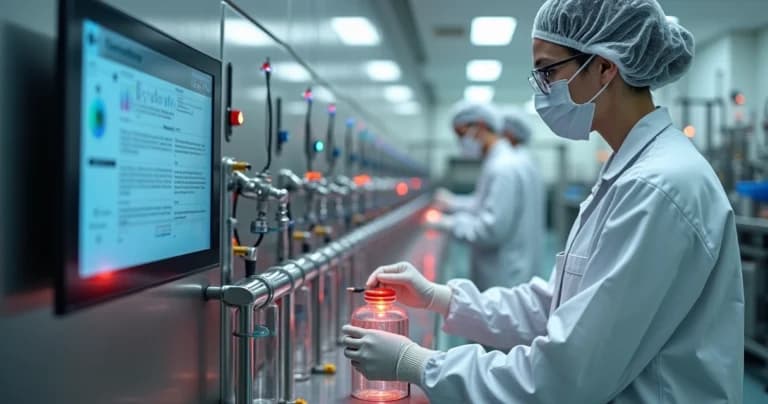
I have encountered many situations where a small oversight with supplies caused serious consequences. In sectors like healthcare, food, industry, and pharmaceuticals, these errors result in losses, rework, and even sanitary risk. For those who deal daily with quality control, I learned that reacting after the problem appears is never the best approach.
The smarter path, especially when dealing with sensitive materials, is to detect wrong supply handling as soon as it happens, or better yet, before actual damage occurs. In recent years, I have closely followed how technology advanced precisely to anticipate problems and ensure safety in operational flow. And in this scenario, solutions like DROME stand out for their combination of precision, prevention, and rapid response.
Why does wrong handling become a critical problem?
Failures in supply handling are almost always silent at first. An employee opens the cold chamber door for too long. A poorly positioned sensor delivers distorted values. The operator leaves packaging exposed to inadequate temperature. When someone notices, it may already be too late. I have seen this happen, and large batches were discarded with no chance of recovery.
However, the failure is not always clear. That is why learning to identify small signals at the exact moment of occurrence makes all the difference in preventing amplified damage in the production chain. And not addressing this is turning a blind eye to one of the main causes of waste and loss of confidence in various regulated markets.
What characterizes wrong supply handling?
In my experience, inadequate handling can involve:
- Exposure to temperatures, humidity, or pressures outside recommended limits
- Contact with contaminants or non-sterilized surfaces
- Errors in sequence or timing during critical processes
- Transport or storage in wrong conditions, even if for a short time
These problems arise not only from human failures but also from confusing procedures or lack of effective monitoring. And of course, uncalibrated sensors are another hidden source of problems. In the article about IoT sensor failures I expand more on how these errors go unnoticed.
How to identify errors in real time?
In the past, monitoring happened reactively: an alert only came after something was already out of standard. Today, I see clients demanding systems that anticipate problems before they become evident. That is where predictive technology makes all the difference, and DROME is a great example of this new moment.
Modern systems continuously analyze sensor data, identifying anomaly patterns and anticipating deviations from critical limits.
- Monitoring of temperature, humidity, pressure, voltage, etc., every minute
- Alerts that consider the trend of problem growth, not just the instantaneous value
- Dynamic learning for each equipment and supply, personalizing alerts according to real context
- Automatic event recording, with timestamp, to facilitate audits
The difference compared to traditional methods is striking: it does not depend solely on setting a fixed alarm, it learns and adapts to the operational routine of each location.
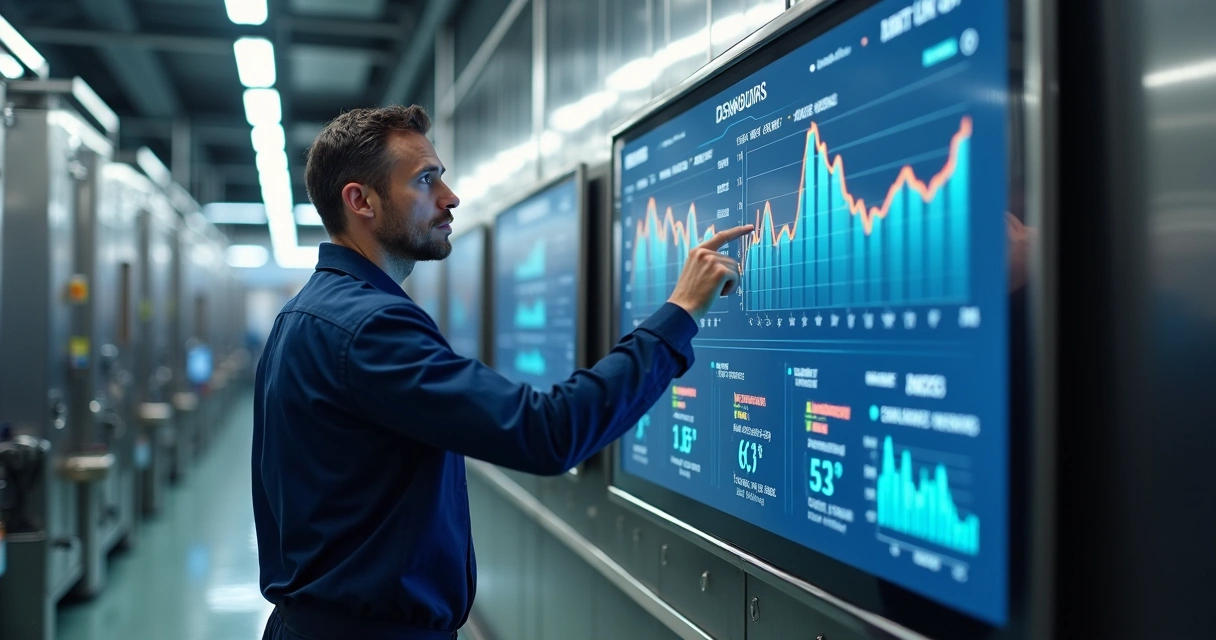
What signals indicate wrong handling in the act?
In day-to-day operations, many signals go unnoticed because they are subtle. Some typical evidence I have noticed in operations:
- Abrupt or incompatible changes in sensor readings (sudden variations that deviate from that equipment's history)
- Statistical temperature spikes during transfers or processing
- Recurring alarms at shift change or loading/unloading times
- Slow trend deviations (drift) indicating persistent wrong handling
- Breaks in handling pattern, captured by machine learning even without limit violation
These signals, monitored in real time, allow the responsible person to act immediately. There is no need to wait for the product to reach the laboratory, for example. Loss is prevented at the source.
Predictive monitoring solutions: what changes?
While conventional platforms trigger alerts only after violation, systems like DROME go further, using AI and predictive analysis to act before damage occurs. Compared to solutions I have known in the market, few combine data volume, traceability, alert personalization, ease of integration, and support like DROME.
Other tools even offer good historical reports or notifications. However, in many cases, they are restricted to outdated data or rigid thresholds, without dynamic adaptation. DROME, focusing on anticipation, brings benefits such as:
- Accurate prediction of the next hours regarding violation risk, ensuring quick decision-making
- Instant detection of spikes and drifts, even before any traditional alarm
- Model evolution based on actual history of each sensor/equipment
- Event visualization on the central dashboard, facilitating investigations and audits
In the article about supply tracking best practices, I explain how these controls raise the standard of good practices.
Technologies allied to real-time detection
The advancement of computing and connectivity enabled a generation of new technologies, and I can list some that I consider essential for those who want to stay ahead in preventing supply errors:
- Intelligent multi-variable sensors that collect diverse data at short intervals
- IoT systems, connecting multiple equipment and environments without losing history
- Predictive analysis, with machine learning algorithms that learn operational patterns
- Web/mobile interface that shows real-time alerts and allows immediate action
- Integration with management systems, facilitating traceability and regulatory compliance
If you want to understand even more about how machine learning makes these systems smarter, I recommend the content about data analysis to predict temperature deviations.
Immediate best practices to avoid handling failures
Not every operation is ready to adopt total automation all at once. In my projects, I noticed that practical steps make a difference in the short term:
- Train teams to act on real-time alerts without procrastination
- Maintain clear protocols, informing handling limits and response to each type of deviation
- Conduct frequent audits on records and sensors, checking consistency of notes
- Use dashboards to analyze trends and detect recurring problem areas
- Quickly adjust procedures whenever a new error pattern appears
It makes sense to deepen the topic also from the perspective of cold chamber failures. That is why in the article about contingency plans for cold chamber failures, I share effective strategies to reverse deviations quickly.
The future: total anticipation and zero waste
Looking ahead, I see a scenario where waste from inadequate handling will be almost zero. Technologies like DROME's create a digital "shield" that protects supplies from receipt to final destination, helping not only to prevent losses but also strengthening confidence in operations and teams.
Prevention has become the key to modern quality control.
If you deal with sensitive supplies, adopting predictive supervision ceases to be a trend and becomes a practical necessity.
Also read about the most common errors in vaccine handling that certainly serve as a warning for other sectors.
Conclusion
In my professional journey, I learned that relying only on the "usual" routine represents too high a risk for companies that cannot afford to lose supplies. With predictive systems like those developed by DROME, you gain the real chance to prevent damage before it occurs. The team works with precise data, reacts in real time, and results appear in reduced losses and increased reliability.
I invite you to learn more about the DROME platform and experience the future of real-time supply control. Anticipating is investing in your business's safety.
Frequently asked questions about wrong supply handling
What is wrong supply handling?
Wrong supply handling is any procedure or condition that exposes materials such as medications, food, reagents, or industrial products to cycles outside the defined parameters of time, temperature, humidity, pressure, or hygiene. This can include anything from inadequate temperature, contact with contaminated surfaces, or delays in processing. The result can range from loss of product efficacy to health risks for users.
How do you identify handling errors in real time?
Today, I identify handling errors in real time with intelligent systems like DROME, which cross sensor data and send automatic alerts in the face of spikes, drifts, or atypical patterns. The secret is to observe sudden changes or trends outside the ordinary before they reach extremes, checking the history of each supply and continuously monitoring critical points in the operational flow.
What are the main signs of wrong handling?
The most common signs include:
- Abrupt fluctuations in temperature, pressure, or humidity
- Values outside the historical standard at key times
- Recurring alerts in specific procedures (loading, unloading, shift change)
- Slow deviation patterns indicating progressive failure
These signals, if detected quickly, allow immediate reaction and prevent material loss.
What technologies help detect wrong handling?
In my experience, I highlight:
- Intelligent sensors for multi-variable monitoring
- Internet of Things (IoT) for real-time data integration
- Predictive analysis with machine learning to identify patterns and trends
- Dashboards that display instant alerts and detailed history
These technologies, when combined in platforms like DROME, promote active prevention, not just late reaction.
Is it worth investing in real-time monitoring?
Yes, investing in real-time monitoring reduces losses, ensures regulatory compliance, and increases product safety. The gains in agility and savings more than offset the investment. Additionally, systems like DROME bring differentials in personalization, integration, and continuous support, further expanding the value for your business.