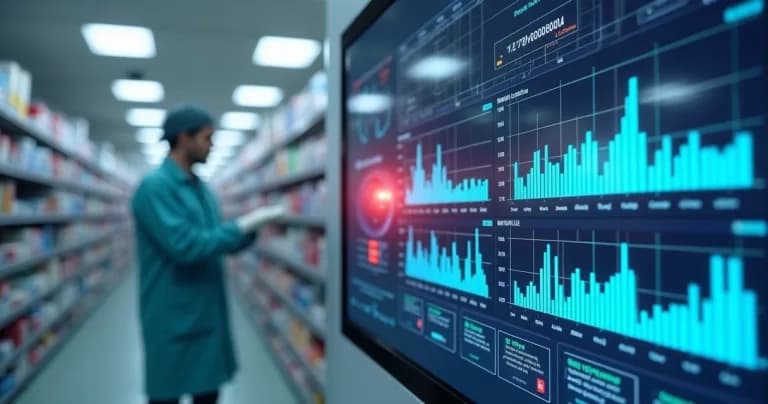
Many times I'm asked why, even with modern equipment, we lose valuable supplies due to temperature failures. I have witnessed unnecessary losses in laboratories and hospitals, and I can affirm: the root of the problem almost always lies in the absence of careful attention to data before the worst happens.
The hidden danger of temperature deviations
For those working with vaccines, heat-labile medications, or perishable goods, temperature deviation is not just a technical detail. It is a real risk: financial losses, broken trust, and even threats to public health.
Equipment alarms don't always sound before it's too late.
I've seen cases where refrigerators, hospital coolers, or cold rooms remained outside the acceptable range for hours, simply due to human error or a subtle failure. When the alarm sounded, hundreds of doses were already compromised. Repair is almost impossible in these cases.
How does data analysis change this reality?
The key point is continuous monitoring, but not just that. With IoT sensors, thousands of measurements are collected day and night. Analyzing this volume of data in a simple way is not viable, which is where artificial intelligence comes in. Modern tools, like DROME, process this information and go beyond raw readings.
- Identify hidden patterns;
- Cross multiple environmental variables;
- Recognize failure trends before they materialize.
Experience has shown me that by analyzing historical data, we can predict not only the deviation itself, but also the probable cause. This way, we avoid waste and act preventively.
Predicting before remedying is the true differentiator.
The main data I monitor in sensitive environments
If there's something I've learned during years working on monitoring projects, it's that looking only at temperature doesn't work. The scenario is broader. The most effective projects (and here lies the merit of DROME) analyze variables together, such as:
- Ambient and internal equipment temperature;
- Relative humidity;
- Power grid fluctuations;
- Door status (opening/closing);
- Sensor calibration;
- Scheduled or unperformed maintenance intervals.
It is the relationship between this data that allows predictions rather than just reacting to an already-installed problem.
How does artificial intelligence make the difference?
In traditional systems I've evaluated, sensors only trigger alerts when temperature goes out of range. But artificial intelligence goes further. It learns, over time, the behavior of the equipment and the environment.
When a compressor starts taking longer to cool, or when variation occurs always after a certain time, the system learns this pattern. It could be the beginning of a mechanical failure, or even misuse.
DROME, for example, learns constantly and can warn: the risk of deviation is increasing, even before the value goes out of acceptable range. It can also suggest actions to prevent the problem, such as storage adjustments, preventive maintenance, or sensor relocation.
It's not enough to record, you need to learn and anticipate.
DROME's role in preventing losses
I've worked with other monitoring platforms, but DROME's difference goes far beyond simple data collection. The system delivers a layer of predictive analysis that I've rarely seen with such precision. Beyond real-time alerts, it makes adjustment suggestions, allows you to view intuitive graphs, and maintains detailed histories for audits.
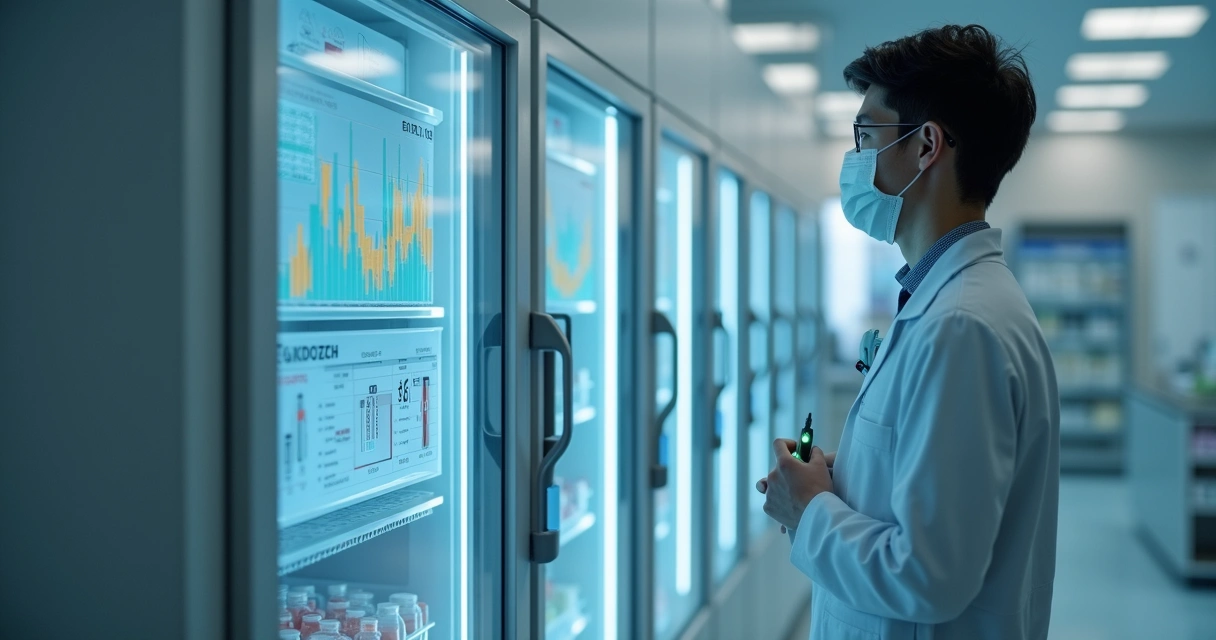
Another point to highlight is support for the calibration process and issuance of auditable reports. I've witnessed audits where all of this made a difference for approval. Even in the details, DROME conveys security and practicality to me.
What signals indicate possible deviation before disaster?
Many colleagues ask me how, in practice, to know something is wrong before damage occurs. In my experience, signals that appear most often include:
- Small increasing temperature fluctuations over days;
- Equipment taking longer to recover cold after opening;
- Overdue maintenance alerts;
- Combined events, such as high humidity and temperature spikes.
Detailed analyses of historical time series are the best allies for seeing deviation trends before the sensor triggers the critical alarm.
In many cases, DROME already pointed out high risk of failure in a particular piece of equipment days before the serious event. This anticipatory view offers great advantage.
Competitors: differences that make sense to me
It's natural to seek other systems on the market. Most alternatives deliver only late alerts or dashboards with loose information. In my experience, they don't always prioritize calibration care, don't make action suggestions, and often require multiple third-party modules to analyze all variables.
DROME brings everything together in one place, reduces the risk of human failures, and allows scalability. In critical environments, this combination is a real differentiator. I tested alternatives that didn't integrate predictive analysis into audit reports, and the difference in daily peace of mind was significant.
Which predictive analysis strategies are worth it?
In my daily monitoring, I see that the best strategies to avoid temperature deviations include:
- Continuous monitoring of multiple variables;
- Automation of data analysis (never rely solely on manual checking);
- Detection of atypical patterns and issuance of preventive alerts;
- Recording, archiving, and easy access to historical reports;
- System learning capability (machine learning);
- Maintenance and sensor calibration management aligned with analysis;
- Audit-ready reports, already standardized.
Important to remember: systems like DROME combine all these strategies to provide a truly complete solution and avoid unpleasant surprises.
For more details on the impact of predictive analysis, I recommend reading how predictive analysis helps prevent supply losses. I also discuss continuous monitoring aspects in this special category on monitoring and, behind the scenes of the process, advances in artificial intelligence applied to monitoring.
Practical results: what have I already seen change with proper analysis?
Based on what I've gone through over the years, I can guarantee the transformation is real. Medication storage that used to last 30% less now reaches full shelf life. Teams less overwhelmed, because the system prevents rather than just reacts to emergencies.
Additionally, when I can issue detailed and reliable reports during audits, the risk of fines or loss of certifications is practically eliminated. DROME delivers exactly that: tools to act before the problem and safely document the entire process.
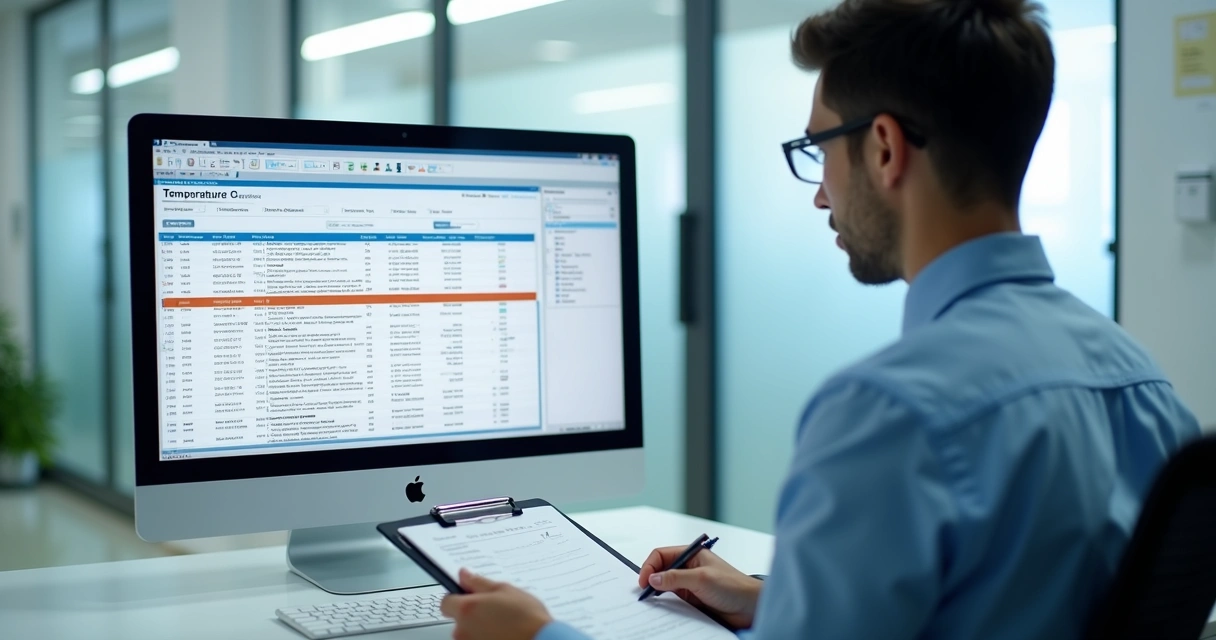
How to start the transition to data analysis in temperature control?
The secret lies in choosing the right platform. Considering everything I've experienced, the simplest step is to integrate a specialized solution, like DROME. It's not enough to install sensors; you need an ecosystem of intelligence, assertive reports, and support for process automation.
Articles like the impact of information technology on environmental data analysis and how to avoid errors in the cold chain provide detailed guidance for professionals transitioning to this new scenario.
Don't wait for the next failure. Anticipate with data.
In the end, what do I recommend?
In every situation I've monitored, the key is acting preventively through intelligent data analysis. Investing in complete systems, like DROME, is synonymous with peace of mind, fewer losses, and greater security for your supplies and the health of everyone involved.
If you're looking to transform monitoring and predict risks before they bring losses, it's worth learning more about our work. Discover how DROME can be your daily ally in preventing temperature deviations and maintaining quality throughout the chain.