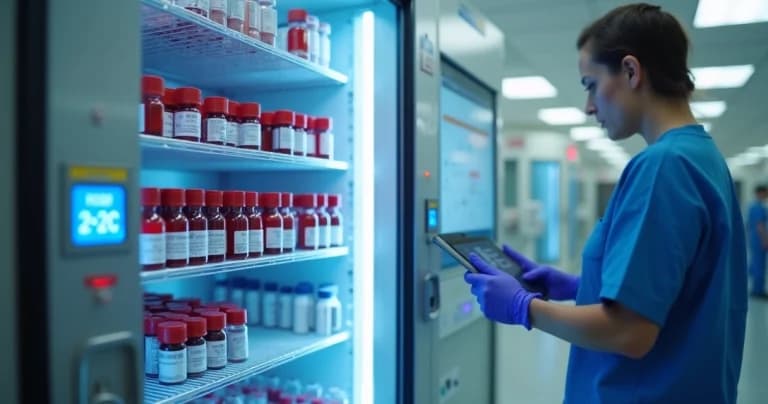
When you think about blood transfusions, you might imagine sterile rooms, lab coats, and precise techniques. But there's a silent—and absolutely indispensable—part behind the scenes: the cold chain. It begins well before the transfusion and ends only when the blood or its components are already saving a life. It seems simple to keep everything cold. In practice, it's not.
Patient safety depends on the right temperature, all the time.
Why the cold chain is so relevant for blood components
Blood and its derivatives are not ordinary products. They are sensitive, fragile, and depend on strict temperature control to ensure they don't lose their properties.
Let's briefly discuss some of the main blood components and the recommended temperatures for each:
- Whole blood and red blood cell concentrate: must be stored between 2°C and 6°C.
- Fresh frozen plasma: needs to be at -18°C or even lower temperatures.
- Platelet concentrate: should remain between 20°C and 24°C, always under constant agitation.
It seems minor, but even minimal variations can compromise everything. When temperature deviates from the expected range, it's not just a technical issue—it's a safety issue.
 From the laboratory to the patient: where dangers hide
The journey of blood components is long and full of obstacles. From the moment of collection, through processing, storage, transport, to transfusion, each step carries its own risks.
Some challenges seem simple but demand attention:
- Temperature fluctuations: Occasional power outages, open doors, prolonged transport. One oversight and an entire batch is at risk.
- Equipment failures: A refrigerator can stop without warning. Analog thermometers can be imprecise, or even forgotten in a rushed note.
- Inefficient monitoring: Manually prepared reports allow errors, delays in alerts, and loss of important information.
- Regulatory compliance: Requirements change, protocols become stricter, documentation must always be updated and available.
- Lack of training: New team members may not know details or underestimate the risk of an improperly closed door.
Not to mention natural wear—both on equipment and on people. Some institutions even try traditional solutions or basic monitoring. Competitors offer simple sensors, there are companies that promise automation, but almost always something falls short. At DROME, we know that only modern and integrated tools can truly reduce these types of risks and make the entire pathway safe from start to finish.
What is a well-maintained cold chain?
Maintaining the cold chain is not just following standards, but acting on multiple fronts at once. Here are some practices that make all the difference:
- Continuous monitoring: Data minute by minute, not just a check at the start of the day. Quick alerts reduce the chance of a problem becoming a loss. Using IoT enables constant and reliable monitoring.
- Preventive maintenance: Regularly test and calibrate refrigerators and sensors. Anticipating wear prevents surprises.
- Team training: Routine refreshers, visible manuals, and simulations. Staff ready to act quickly makes a difference.
- Rigorous protocols: Written procedures, easy to consult, that make clear what to do in each situation.
- Data records and backups: Everything stored securely, without risk of loss or manipulation. Automatic backups facilitate queries and audits.
Note that adopting these practices is not always straightforward. Many institutions lack integrated systems. Some still rely on manual spreadsheets or outdated equipment.
Small errors become big ones when blood is at stake.
Benefits that can change everything
If it seems complex, it's because it really is. But the positive impact of an efficient cold chain justifies any effort.
- Blood component quality: Fewer risks of adverse reactions, safer transfusions, and more effective treatments.
- Waste reduction: Less disposal means savings, more stable inventory, and less frustration among teams that see bags being discarded.
- Regulatory compliance: Documentation ready for inspections, audits, and certifications, without rush or rework.
- Operational improvement: Less time spent on corrections, more agility in care, clear and simple processes.
- Trustworthy institutions: Those who maintain control inspire confidence. Patients, families, and regulators notice immediately.
It's no coincidence that food safety is already undergoing similar revolutions. Now it's the turn of blood banks and hospitals to anticipate trends and adopt real technology.
Technologies that already make a difference
The difference between risk and peace of mind often lies in technological details. It sounds like science fiction, but today the Internet of Things (IoT) already allows monitoring each refrigerator, freezer, and environment almost in real time. Small sensors, connected to intelligent systems, have changed the game: they automatically warn about deviations, record everything in the cloud, and facilitate traceability.
By using cutting-edge technology, blood banks gain:
- Immediate alerts: If temperature goes out of range, responsible parties receive notifications before damage occurs.
- Efficient calibration: The system indicates when it's time to review sensors, avoiding incorrect readings.
- Simplified auditing: Detailed reports are ready at any time for inspections or consultations.
- Remote management: It's possible to monitor multiple locations, even from afar, while maintaining decentralized control.
- Secure storage: Data is saved in the cloud, protected against physical failures and accessible to those who need it.
At DROME, we take this even further. Our SaaS platform combines continuous monitoring, predictive failure analysis, and artificial intelligence. We don't just monitor—we work to anticipate problems, correcting them before they become critical. Beyond sensor quality and connectivity, we handle automatic report generation and intelligent control not just of temperature, but also of humidity.
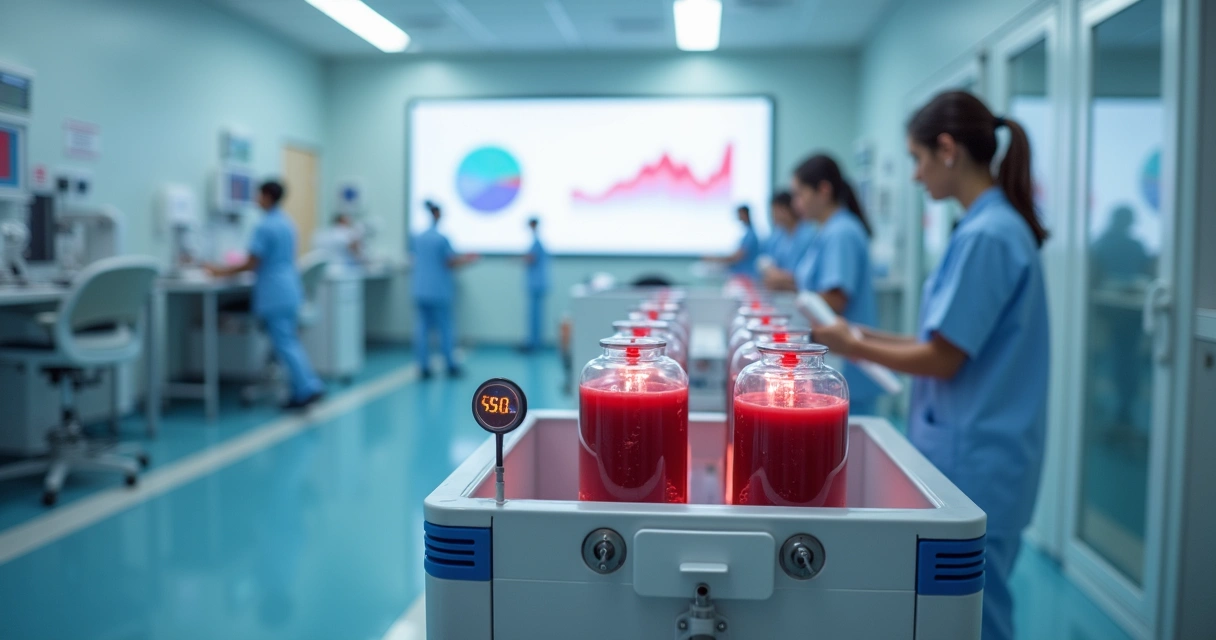 In some places, solutions do exist, but they have limitations: only local monitoring, unintuitive interface, poor support. DROME offers complete integration, combining IoT sensors, predictive intelligence, and data centralization with easy access—without relying on spreadsheets or lost papers.
Looking for more reference on how technology can transform this entire healthcare sector, also count on resources about Logistics 4.0 innovations and cold chain automation.
A truly safe cold chain is possible
Yes, it seems challenging to harmonize technology, protocols, people, and procedures. But that's the foundation of a real cold chain. And the lives that depend on it accept nothing less than the most detailed work possible.
The difference between loss and rescue lies behind the scenes.
At its core, it's a race against time, against chance, and against failures. And it's possible to live this routine with more peace of mind. DROME was born from this challenge: to protect lives, valuing every drop of blood and every step of care.
Want to give your institution more confidence and ensure blood component quality? Learn more about how DROME can transform your routine. Our specialists are ready to show you firsthand the power of connected and secure monitoring. Take this step and reinforce your commitment to safety, traceability, and innovation in your blood bank.