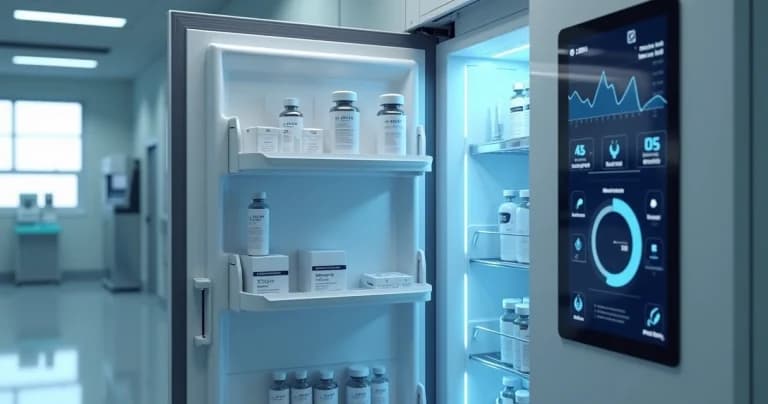
Have you ever stopped to think about the silent journey medications take before reaching our hands?
There is a complex and sensitive pathway, called the cold chain, that keeps these products safe and effective. However, just one small slip in temperature or handling and everything can be lost. In this article, we will cover the five most critical factors in medication management within the cold chain, bringing real examples, day-to-day challenges, and of course, modern solutions like those offered by DROME.
What exactly is the cold chain?
The cold chain is a logistics system that encompasses the storage, transport, and distribution of products that must be maintained at specific temperatures, such as medications, vaccines, blood derivatives, and even sensitive food items. Imagine a continuous line, from the industry to the patient. Any failure in this process can jeopardize the entire safety of the product.
One minute of inattention can compromise an entire shipment of medications.
The good news is that, with innovation and technology, it is possible to greatly reduce these risks. But let's move on to the critical factors.
1. Rigorous temperature control
Temperature control is, without a doubt, the foundation of the cold chain. Medications such as vaccines, insulins, and many antibiotics require well-defined temperature ranges to maintain their efficacy. A variation of just a few degrees can cause degradation of the active ingredient, rendering the product ineffective or even dangerous.
- Manual monitoring is limited and prone to human error, whether through distraction, forgetfulness, or failure to record values correctly.
- Traditional systems often do not alert immediately in case of failure, which can delay team response.
Here, automated solutions like DROME transform the scenario. By integrating IoT sensors with predictive analytics, notifications are issued at the slightest sign of abnormality, allowing for quick and safe interventions.
If you want to learn more about how to avoid these common errors, it's worth checking out this article that details the most common errors and how to correct them.
2. Sensor calibration and maintenance
Even the best monitoring system depends on the accuracy of its sensors. Keeping calibration up to date is more than a legal obligation: it is a guarantee that the information provided reflects reality. A miscalibrated sensor can indicate incorrect temperatures, leading to decisions based on faulty data. Preventive maintenance reduces unpleasant surprises and keeps the entire system functioning as it should.
DROME stands out by integrating the calibration routine into the team's workflow, offering scheduled alerts and automatic reports for audits. This greatly facilitates the daily work of managers.
3. Adequate transport: from laboratory to final destination
The journey between manufacturer and point of use is one of the most delicate moments in the cold chain. Refrigerated vehicles, thermal packaging, and continuous monitoring during transport are essential to ensure that the medication arrives intact at its destination.
Things don't always go as planned. There are reports of products lost due to refrigerated vehicle failure, unexpected delays, or improper handling during loading.
 Companies use their own or competitors' systems for monitoring, but many of these options still fall short in predictive failure analysis or compliance reporting integration. DROME goes further, offering intelligent alerts and full connectivity from product departure to final storage, plus the advantage of artificial intelligence to predict and anticipate problems, which is lacking in many other solutions.
4. Storage conditions: far beyond the thermometer
Controlling temperature is fundamental, but it is not everything. Humidity, light, ventilation, and hygiene are equally relevant factors in ensuring medication safety.
- Environments with sudden humidity variations can compromise packaging and active ingredients.
- Poorly lit areas or those with excess direct light can accelerate degradation of certain products.
- Lack of ventilation favors microorganism growth and can pose public health risks.
In DROME, monitoring encompasses multiple environmental variables, cross-referencing data to identify risk patterns before they materialize. By automatically recording everything, the system eliminates gaps that can arise when supervision is only visual or sporadic.
This topic can be explored further in the humidity control and its impact on sensitive products.
5. Integration with audits and reporting
Anyone who has gone through an audit knows how complex it can be to gather reports, calibration records, temperature data, and good practice documentation. Documenting everything manually, storing, and updating files is a process prone to risks and rework.
Disorganized documentation can put a company in a difficult position before health authorities.
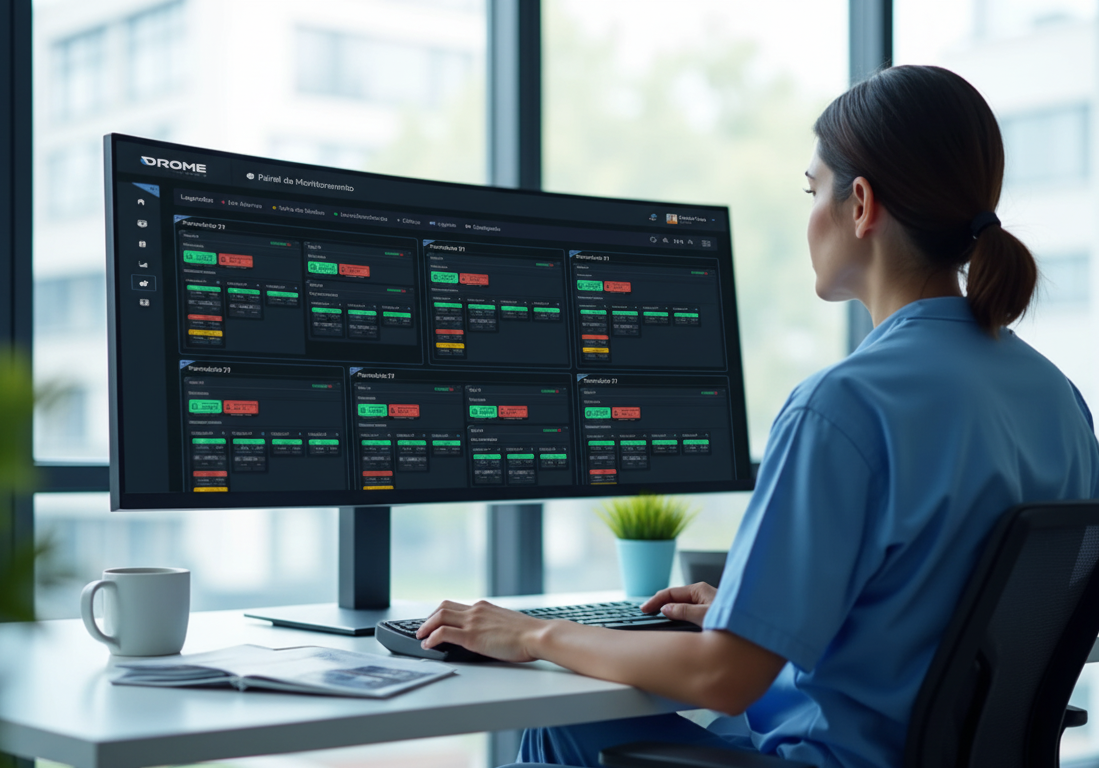
Tools like the DROME sensor optimize this workflow, unifying information in one place, with accessible, customizable reports ready for audits. This adds operational value, reduces stress, and provides confidence in the face of inspections and certifications.
The future of the cold chain: innovation first
Seeking more modern and secure ways to address cold chain challenges is a commitment to public health and sustainability. The losses caused by failures in this chain are enormous, affecting hospitals, laboratories, and food industries alike.
In Brazil, innovative monitoring solutions have been fundamental in ensuring quality not only in medications, but also in food and blood products, as shown in detailed case studies on IoT application in blood derivatives and meat quality control.
Regarding trends, the so-called Logistics 4.0 is impacting the entire cold chain, driving SaaS solutions like DROME, which already go far beyond simple monitoring, reaching real failure prediction and near real-time decision-making.
Conclusion: small choices, big consequences
If the cold chain was once seen as a highly technical and closed sector, today it is clear that innovative solutions are already part of the daily routine of companies that do not want to take risks or lose resources due to preventable failures. Failing in any of these five factors can lead to irreversible losses. Investing in monitoring, automation, and intelligent analysis can, in the long run, save lives and prevent losses.
Taking care of the cold chain is, above all, respecting those who depend on each medication.
If you are looking for reliability, agility, and differentiation, the DROME sensor emerges as the most comprehensive solution on the market for cold chain monitoring. Discover our platform, understand how we can help in your routine, and prevent small details from becoming big problems. Your next step can be now!