Introduction to Clean Room Trends
Have you ever stopped to think about how clean rooms manage to keep the air so controlled? What are the daily challenges to ensure that air in hospitals and other critical environments remains pure? Does air pressure need to be checked all the time? These are questions that arise when we realize how essential clean rooms are to protect procedures and products sensitive to contamination.
In this article, you'll discover everything about the latest trends in clean rooms. We'll explore how they've evolved from the early days in medicine to today's complex technological environments. You'll understand the importance of continuous monitoring of pressure and air quality, and how innovative solutions, such as pressure transmitters, are fundamental. We'll also discuss how this is crucial for complying with standards and ensuring safety in controlled environments. The DROME platform can be the key to providing accurate data and continuous support in maintaining these vital conditions.
Why is Pressure Control Critical?
Maintaining correct pressure in hospital environments, especially in clean rooms, is critical for patient safety and health. Imagine being in surgery and knowing that the air around you is free of contaminants. The pressure difference between the inside and outside of the room prevents unwanted particles, such as dust and microorganisms, from entering.
Think of it as an invisible shield, protecting everything inside the room. When the pressure inside is greater than outside, air only flows outward, preventing contaminants from entering. It's like having a door always closed to dirt. This is vital in medical procedures, where any failure can lead to infections.
Beyond maintaining pressure, it's important to ensure that air circulates well. A good ventilation system, combined with accurate pressure monitors, helps keep the environment safe. Modern equipment, such as differential pressure transmitters, provides real-time data to detect problems before they occur.
For professionals working in these environments, knowing that the air is being monitored constantly is a relief. The DROME platform is a tool that not only monitors but also provides detailed reports and helps keep sensors calibrated. This way, everything is integrated and air quality control becomes even more effective.
How is Air Quality Maintained?
Maintaining air quality in clean rooms is crucial to ensure the safety of products and processes. Air purity standards establish limits for the amount of particles and contaminants allowed in these environments. It may seem complicated, but it's essential for the safety and effectiveness of work performed there.
Why is this important? Imagine a surgical room or research laboratory. In these places, the presence of particles can compromise the quality and safety of procedures and products. That's why clean rooms are classified according to the maximum number of particles per cubic meter of air.
- Class 1: Allows only 1 particle of 0.5 micrometer or larger per cubic meter.
- Class 10: Allows up to 10 particles of 0.5 micrometer or larger per cubic meter.
- Class 100: Allows up to 100 particles of 0.5 micrometer or larger per cubic meter.
To achieve these classifications, effective filtration systems are implemented. They are responsible for removing harmful particles from the air.
- HEPA Filters: Remove up to 99.97% of particles 0.3 micrometers or larger. They are essential for maintaining air purity.
- ULPA Filters: With greater efficiency, they filter up to 99.999% of particles, ensuring an even higher level of contamination control.
- Ventilation Systems: Distribute filtered air uniformly, avoiding areas where particles can accumulate.
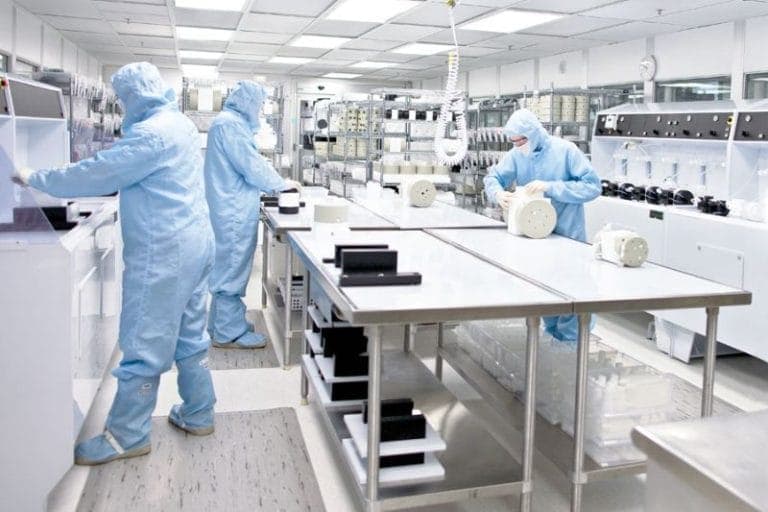
Another important aspect is the use of special clothing, such as coveralls, caps, and masks, which help prevent contamination. These garments are designed to reduce the release of particles from the human body.
- Special Footwear: Prevents dirt and soil particles from entering the controlled environment.
- Gloves: Protect against the transfer of contaminants when handling sensitive materials.
- Decontamination: Rigorous protocols ensure that workers are free of contaminants before entering clean rooms.
Furniture also plays a role in maintaining cleanliness. It should be designed to minimize dirt accumulation and be easy to clean.
- Stainless Steel Furniture: Corrosion-resistant and easy to clean, they are ideal for these environments.
- Smooth Surfaces: Prevent dust accumulation and are easy to sanitize.
- Modular Design: Allows efficient reorganization while maintaining air circulation and accessibility.
Technology can help greatly in this process. Platforms like DROME can continuously monitor environmental conditions and alert about potential failures, ensuring that all standards are rigorously followed.
What Advanced Solutions Are Available?
Let's talk about technology that is changing the way we control critical environments: the differential pressure transmitter. This small device offers features that make a big difference in clean rooms and other environments where precision is crucial.
One of the most interesting features of the transmitter is that it allows you to configure pressure ranges using software. It's like having an adjustable thermostat, just for pressure. Imagine being able to adapt pressure control according to your environment's needs, all with a few clicks. This not only keeps conditions within standards but also prevents future problems.
- Advanced Connectivity: The transmitter offers analog and digital outputs, which means it can easily communicate with other systems. Think of it as a translator that facilitates conversation between different equipment, making monitoring much more efficient.
- Auto Zero Adjustment: This function facilitates device calibration, ensuring readings are always accurate. It's like having an automatic level that adjusts itself, avoiding any errors that could compromise environment safety.
- Fast Response: It quickly adapts to changes in pressure conditions, which is essential in environments where every second counts. This ensures that any change is corrected before it becomes a problem.
Additionally, the transmitter monitors filter saturation, helping to maintain air quality. It's like an alarm that tells you when it's time to change filters, preventing contamination.
Although it doesn't have local indication, support on the Novos website is excellent. You can obtain firmware updates and provide feedback, helping to continuously improve the product.
In summary, DROME is a valuable tool for anyone who needs rigorous control in critical environments. Combined with continuous monitoring platforms, it ensures that air quality is always under control effectively and reliably.
Conclusion and Connection with DROME
With the information from this article, you now better understand clean room trends and the importance of maintaining pressure control and air quality. These conditions are crucial for ensuring safety and effectiveness in critical environments, which is indispensable for optimizing your operations and avoiding unnecessary risks.
The DROME project stands out in this context, as it offers a platform for continuous monitoring of environmental conditions. This allows problems to be identified quickly, ensuring that clean rooms maintain required standards and preventing possible waste and health risks.
Now that you have this knowledge, think about how you can use it in your daily work. What changes can you implement to improve air quality and pressure control in your space? Don't waste time and start applying the solutions discussed here to ensure excellence in your operation. Keep exploring and stay alert to innovations that can transform the way you work!