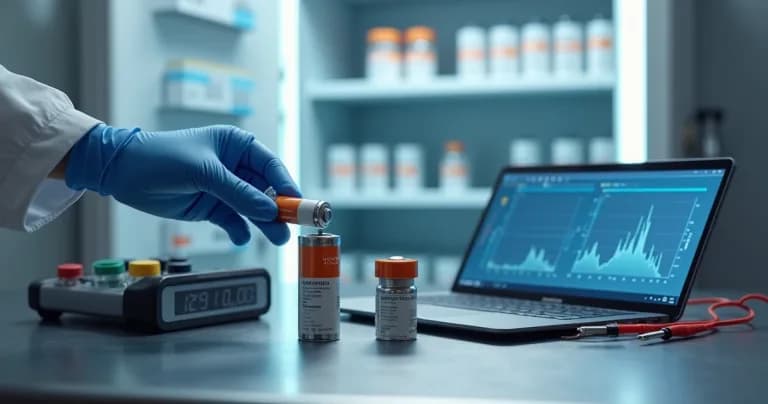
When I started working with critical temperature monitoring, I realized that many good ideas can simply fail on the simplest detail: choosing the right battery. IoT sensors in the cold chain, protecting vaccines, supplies, and food, need to work all the time. That's why the central question is: how do you choose and test batteries to ensure the continuity of this silent and vital work?
The impact of batteries on the cold chain
I often say that the best IoT technology is worthless if the power fails. In the cold chain, where any sensor failure can generate valuable losses, the battery is much more than an accessory: it's the link that connects information to action.
When I decided to dive deeper into this topic, I realized that:
- Errors in battery selection are one of the main causes of unexpected failures in temperature and humidity sensors.
- This not only compromises the quality of supplies, but can create public health risks.
- Even the best sensors on the market, such as those integrated into the DROME ecosystem, require full attention to battery selection and testing.
What factors influence battery selection?
In my daily work, before any recommendation, I carefully evaluate several points:
- Voltage and battery type (lithium, alkaline, rechargeable, etc.)
- Estimated duration against typical sensor consumption
- Performance at low temperature, since some batteries lose efficiency in the cold
- Size and format, fitting the sensor without taking up unnecessary space
- Compatibility with monitoring systems like DROME, which offers intelligent alerts about battery life
I've witnessed sensors go offline because of a cheap battery choice. The bargain, in the end, came at a high cost: lost products, time, and even fines for non-compliance.
Never underestimate the power behind the data: it's what keeps everything running.
The main types of batteries for IoT sensors
When I compare options, I see that the most common choices are:
- Lithium (Li-SOCl2): Wide thermal range, long duration, low self-discharge rate.
- Alkaline: Good option for less demanding use, shorter duration.
- Rechargeable (NiMH, Li-ion): For applications with easy access to charging, useful for sensors that require more current.
I've faced cases where equipment stopped in extreme cold environments when using simple alkaline batteries. After testing, it became clear that only lithium batteries would withstand drops below 0°C without drastically reducing runtime.
In DROME systems, I always recommend high-quality lithium batteries, as continuous monitoring demands stability even under sharp temperature variations.
How to predict battery duration?
There's a practical step I never skip: realistic autonomy estimation, combining all aspects of sensor consumption and considering the worst-case scenario. It's not enough to look at just the idle consumption: you need to include the peaks when the sensor transmits data, activates LEDs, or integrates other sensors.
I calculate estimated runtime based on:
- Consumption in continuous operation and standby
- Frequency of transmissions (more frequent, less autonomy)
- Average operating temperature
- Nominal battery capacity (in mAh or Ah)
With DROME, I created a preventive alert routine: the system analyzes consumption history and predicts the end of charge before the sensor stops. This avoids surprises during audits and eliminates that anxiety of not knowing if everything is working as it should.
Steps to test batteries in IoT sensors
After choosing the battery, practical testing is mandatory. In my experience, a well-made checklist saves many sensors from failure:
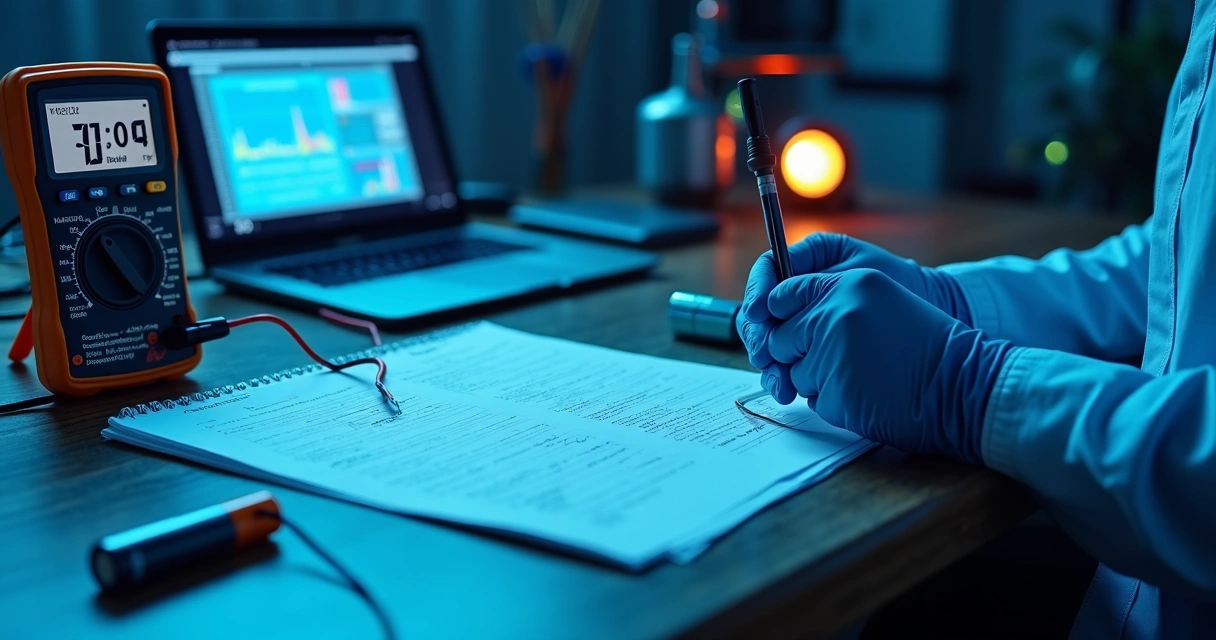
- Initial voltage test: Before installing, I check with a multimeter that all batteries are within the nominal range.
- Install in the sensor and monitor voltage under load, with the sensor in normal operation.
- Simulate the worst-case scenario (low temperature, frequent transmissions).
- Monitor behavior over a typical operating cycle (for example, 7 days), noting voltage drops and system response.
- Check communication with the SaaS platform (like DROME), to ensure that alerts and reports are working perfectly.
There's no point in saving time here. A poorly tested battery can generate a difficult-to-recover loss, especially in cold rooms in hospitals, vaccine centers, or food distribution.
Precautions with battery storage
I store batteries in cool, dry places, away from magnetic fields and out of direct sunlight. I've seen entire lots of "new" batteries lose 30% of their charge just because they were stored poorly in warehouse heat.
I prefer to purchase small lots with quick turnover, and I always check the manufacturing date. Lithium batteries, even at rest, can lose up to 1% of charge per month.
Management and calibration are differentiators in modern platforms
While some competing services focus only on hardware, DROME integrates everything into a complete solution: monitoring, intelligent alerts, and battery status tracking. I've heard stories of problems caused by platforms that only alert when the battery is almost dead, with no time to react. I don't recommend them.
In DROME, everything is designed to facilitate calibration processes, clear reporting, and sensor management in controlled rooms. Not by chance, I make a point of remembering that our system also simplifies audits, reinforcing the commitment to safety and compliance.
For those who want to dive deeper into the topic, I recommend the article Practical guide to sensor calibration in controlled environments, which details how to align sensors and batteries for maximum performance.
How to know if the sensor is at risk because of the battery?
When talking with technical managers, I always notice that the main fear is the "silent blackout." To avoid this, I recommend systems with multi-stage alerts, automatic reports, and simulations in different scenarios, like the one offered by DROME.
Trust, but monitor. Automation only makes sense if it's transparent.
If you're evaluating options, some competitors may promise low cost, but ignore this aspect of continuous battery monitoring. My experience shows that investing in a well-designed system pays for itself with peace of mind and real results over the years.
Quick checklist before deployment
- Review the actual consumption of installed sensors
- Always choose batteries with a track record of good performance at low temperature
- Configure clear and periodic alerts on the monitoring platform
- Perform tests under different scenarios before releasing any sensor for real-world use
- Document results and integrate them into your audit plan
- Consult references and support materials like this one about IoT sensor failures in the cold chain

If you need comparisons on secure communication technologies for sensors, I suggest the article Dataloggers LoRaWAN vs WiFi. I also recommend learning about options for integrated temperature and humidity monitoring in environments with vaccines and medications.
My final recommendation
In the end, learning from mistakes and successes, I always come back to affirm: well-powered sensors are reliable sensors. Choosing the right battery is the result of technical analysis, real testing, and integration with a platform that prioritizes transparency and security, like DROME.
If you want to take your cold chain monitoring to the next level, learn about our solution and discover how controlling all variables, including battery health, can be simple, reliable, and secure. Take the next step to protect supplies, people, and reputation. Contact us and see DROME in action.