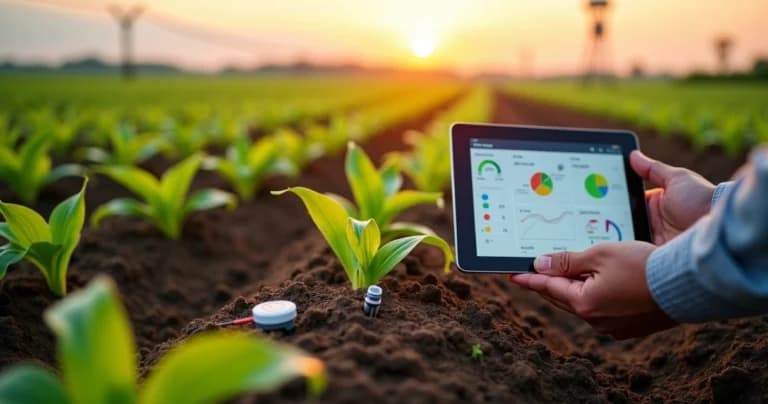
Throughout my experience advising rural producers and industries on water resource management, I realized that the secret to truly efficient irrigation lies well beneath our feet: in the soil. Monitoring available water, done through modern tools, has changed how we plan irrigation, and honestly, the difference in harvest and the bottom line is remarkable. Today, I share what I've learned about choosing a good soil moisture sensor for real irrigation, where every drop justifies the investment.
Why measuring soil moisture changes everything in irrigation?
In traditional agriculture, it was common to rely solely on visual observation, touch sensation, or even calculations based on climate. But these methods let a lot of water slip away. Literally. By using sensors to measure soil moisture continuously, irrigation can become precise, reducing losses, and I'm talking about loss of yield and also natural resources. This means less waste, more productivity, and greater sustainability.
There are concrete results. A study by Epagri showed that using technology to monitor soil resulted in tomato harvests 18% higher compared to conventional methods.
The soil has much to say, we just need the right tools to listen to it.
Whether in intensive horticulture, large crops, or even greenhouse production, using sensors is a game changer. However, choosing well makes all the difference. I'll go into the details now.
How do soil moisture sensors work?
Soil moisture sensors are devices that identify and quantify the water content present in the soil, translating that information into digital data. But how does this happen? Basically, the sensor identifies how water interferes with certain physical properties, such as electricity, pressure, or resistance, then sending the result for analysis. With this information, it's easy to know when to irrigate, avoiding both water shortage and excess.
Today, the most well-known technologies include sensors for:
- Soil tension (tensiometers);
- Capacitive;
- Resistive;
- Neutrons and TDR (Time Domain Reflectometry).
On this journey, I clearly see the advantages of modern sensors, especially those that already connect with intelligent SaaS platforms, like DROME, because they centralize, analyze, and interpret measurements in a way that facilitates daily work in the field and in technical areas.
What are the most common soil sensor types?
Soil sensors have evolved greatly, and when choosing, it's worth understanding the differences:
Tensiometers
These measure the tension or "force" that the plant needs to exert to extract water. They indicate, for example, if the soil is "holding" too much water, making it difficult for the root. They are widely used in perennial crops and vegetables, and provide direct readings.
However, in some soil types, such as those in the Caatinga region, where there are very specific characteristics, commercial sensors may not provide the desired precision. Researchers at UFERSA developed adapted versions, using materials like marble powder, to increase porosity and precision, especially at low tensions. The result is a patented and more reliable equipment for demanding local crops like melon.
Capacitive
Capacitive sensors analyze the influence of water on the soil's dielectric constant, translating this change into moisture percentages. They are robust, rarely cause damage to plants, and have a long lifespan. A major advantage is low energy consumption, making them more suitable for automated IoT systems.
In a Brazilian study, IFSertão-PE researchers found errors below 3% in readings from three calibrated capacitive probes, with data transmitted reliably. This result shows the potential of this sensor type for management and quick decision-making.
Resistive
Despite the low cost, they are less durable due to electrode oxidation. Still, for small urban gardens, they can be useful for simple automation, especially in protected environments.
TDR – Time Domain Reflectometry
TDR sensors emit electrical pulses and observe the response time, relating the result to water content. They offer high precision, but the equipment is expensive and installation requires attention. I usually recommend them for field research and precise large-scale applications.
Neutron-based sensors
Extremely precise and restricted use due to regulations and high costs. They are used mainly in corporate environments, research, and agricultural centers of excellence.
The most expensive or sophisticated is not always ideal. I see that for most scenarios in Brazil, capacitive sensors combined with automated platforms, like DROME, have delivered excellent cost-benefit ratio and a quick learning curve for the producer or technician.
How to choose the ideal sensor for irrigation?
Technical decision; strategic decision. I always start with basic questions:
- Soil type (sandy, clay, silty);
- Desired measurement depth;
- Type of crop (vegetables, fruits, grains, etc.);
- Need for automation and integration with remote systems;
- Available budget and expected sensor lifespan.
Additionally, I evaluate compatibility with digital platforms, like DROME, which allows cross-referencing soil, air, light, and temperature measurements, providing a real view for decision-making. In environments under frequent audit (such as food chains, pharmaceuticals, and large warehouses), data integration and traceability are even more necessary, as I guide clients in these areas.
Advantages of remote monitoring and irrigation automation
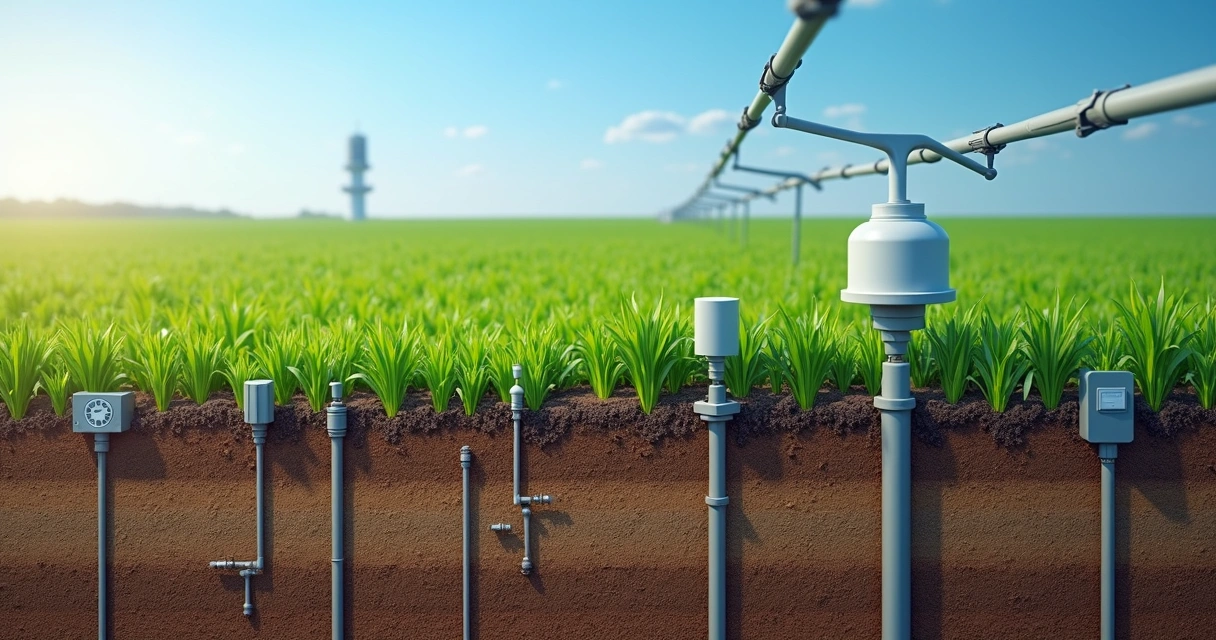
The automation of water management, supported by sensors and connectivity, offers significant gains for agricultural production. Among the main benefits, I highlight:
- Reduction of water and electrical energy waste;
- Improvement in crop quality and uniformity;
- Anticipation of failures and real-time alerts;
- Traceability for audits, essential in certified chains;
- Historical data for adjustments in future management.
For those managing crops with large irrigated areas, sensor-based automation allows even dividing plots and irrigating only the sectors that really need it, something impossible with manual methods. I witnessed the difference when, by adopting a platform like DROME, producers managed to reduce energy costs and increase crop yields.
Irrigation automation, made possible by sensor-platform integration, ceases to be a luxury and becomes a necessity for those thinking about the future of production.
Reliable data makes decisions quick and accurate.
An example of this is the prototype presented by IDR-Paraná, which combines soil sensors with climate variables, promoting sustainability without sacrificing yield.
How to install and integrate soil sensors into management?
Once the ideal model is chosen, the next step is correct installation. I always recommend observing:
- Representative position in the cultivated area; avoid extremes (low areas, ridges, heavily shaded areas);
- Depth compatible with the main root zone of the crop;
- Avoid direct contact with stones or decomposing organic matter;
- Follow the manufacturer's manual strictly to avoid damage and maintain accuracy.
From there, for automation systems, the sensor must be connected to a datalogger, which records and transmits the data. In projects I work on, preference falls on platforms that eliminate long and expensive wires. Wireless IoT technology, such as LoRaWAN or industrial Wi-Fi, topics I explore in this comparative guide, ensures flexibility, lower maintenance needs, and wide territorial coverage.

Another point I always explore in depth is digital integration. The isolated sensor only has real value when data appears in clear reports, with graphs, automatic alerts, and complete histories. SaaS platforms like DROME offer native connectivity, dashboard for monitoring via smartphone or computer, history for audit, and even recommendations powered by artificial intelligence and machine learning, which interpret patterns to anticipate problems before they occur.
The role of data in precision irrigation
Of all the steps, managing captured data is the most decisive, and surprisingly, the most neglected in less professional projects. With good analysis, it's possible to quickly adjust management, identify trends such as compaction, irrigation failures, or even excessive infiltration, and propose solutions before it becomes a serious problem. This is where complete solutions, like DROME's, show a differential. They transform numbers into applied knowledge, making field work accurate and validating critical processes in audit routines, including regulatory compliance.
I cite as an example the use in silos and warehouses, a topic addressed in an article on humidity monitoring in warehouses, where integration with control reports is a differential to prevent losses from poor storage, a major concern not only in agriculture, but also in food, logistics, and pharmaceutical sectors.
Sustainable management, economy, and productivity go hand in hand
Measure to act. This reasoning, seemingly simple, generates immediate effect on agricultural production. By choosing the right sensor, installing it correctly, and monitoring data via a connected platform (like DROME, which tracks calibration controls and generates audit reports), it's possible to ensure intelligent water use, save energy, and increase economic and environmental returns.
Additionally, sensors allow making decisions based on concrete data rather than just trial and error, as shown by widely publicized field studies. The result is clear: fewer losses, greater sustainability, and more abundant harvests.
The movement toward automated monitoring of multiple variables is already a reality, and complete solutions like DROME play a central role not only for the farmer, but for the entire value chain, from field to end consumer.
Conclusion: the best sensor is one integrated with intelligent management
In the end, choosing a soil moisture sensor for precise irrigation is not just about technology, but about getting the right partnership. The ideal sensor is one that connects with your need, your soil, your crop, and especially your vision for the future. My experience shows that, even with good alternatives on the market, few offer integration as robust, user-friendly, and scalable as DROME, a platform that transforms raw data into visible results and security for the producer, technician, and entire operation.
If you're looking for more control, sustainability, and real productivity for your rural business, I invite you to learn more about our solutions. Let technology work in your favor with DROME, because managing water intelligently is what transforms soils into successful crops.
Frequently asked questions about soil moisture sensor for irrigation
What is a soil moisture sensor?
A soil moisture sensor is a device capable of measuring the amount of water present in the soil, providing important data for decision-making in agricultural management. It identifies moisture through physical properties of the soil, such as tension, resistance, or capacitance, with the purpose of adjusting irrigation precisely.
How do I choose the best sensor for irrigation?
The best sensor depends on soil type, crop, depth of interest, and need for integration with digital systems. I recommend prioritizing capacitive or tension sensors, which offer good precision and durability, especially when integrated with platforms like DROME, ensuring remote monitoring, automation, and audit reports. Also evaluate ease of calibration, technical support, and wireless connectivity to facilitate daily fieldwork.
How much does a soil moisture sensor cost?
The price varies greatly depending on technology, required precision, and connectivity features. Simple resistive sensors can cost less than $20 USD, while quality capacitive and tensiometric models with digital integration range from $60 to $400 USD, depending on sophistication and project needs. Professional sensors with IoT and artificial intelligence, available on SaaS platforms like DROME, represent a slightly larger investment, but return through savings and productivity.
What are the most commonly used types?
The most commonly used types today are capacitive, tensiometers, and TDR (Time Domain Reflectometry). Capacitive sensors offer excellent cost-benefit, low consumption, and good lifespan; tensiometers are ideal for managing crops in clay soil; TDR are recommended for research and large areas due to high precision. The ideal is to choose according to soil type, crop, and management objective.
Is it worth using a sensor for irrigation?
Yes, it's definitely worth it. Various studies show increased production (such as the 18% increase in tomatoes reported by Epagri), reduced water and energy expenses, better crop uniformity, and greater environmental sustainability. Additionally, using sensors allows improving processes for audit and certification, benefiting the entire value chain. Platforms like DROME further enhance these gains, integrating data, reports, and automation in a single digital system.