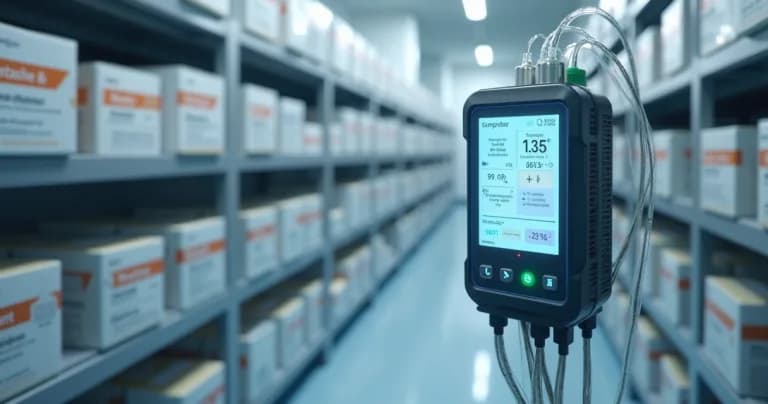
When I think about all the challenges of ensuring the quality of sensitive supplies – whether in healthcare or the food industry – one question always comes back: what is the best datalogger for monitoring? It seems simple, but just talk to professionals who deal with this daily to discover otherwise. Several companies offer solutions, promising countless features, but not all can prevent losses from real-time failures, proactively notify teams, or truly help with data control. I'll share what I observe, with practical touches and personal experiences, to help with this important choice.
What is a datalogger and what is it used for?
Dataloggers have always been great allies to me. A datalogger is a device that records, over time, variables such as temperature, humidity, and pressure, creating an automatic history of measured data. In the context of sensitive supplies, this monitoring is fundamental to prevent losses – especially due to human errors or unexpected technical failures in equipment.
But of course, there are enormous differences between simply recording basic data and truly protecting inventory and processes. That's why, if the goal is to prevent losses, it's best to avoid outdated models or isolated solutions. DROME, for example, combines failure prediction, artificial intelligence, and an agile notification system, going well beyond the basics and promoting active management, not just passive data collection.
Which criteria are worth analyzing?
In my research and conversations with colleagues, some criteria always come up when discussing how to choose the best datalogger:
- Measurement accuracy – For sensitive supplies, a few tenths of a degree can mean thousands in losses. Always check the device's accuracy level and measurement interval; simpler models often fail in this regard.
- Data storage capacity – If the system experiences connection failure, the datalogger should be able to store data locally and synchronize when back online. This ensures complete history.
- Integration and connectivity – Prefer models that connect easily to the Internet and integrate with management systems you already use. DROME, for example, stands out with an intuitive SaaS platform and compatibility that few competitors can deliver at the same level.
- Automatic and predictive alerts – Receiving alerts only when temperature is already out of control is too late. Solutions that include predictive analysis, like DROME, can warn in advance about trends and possible failures.
- Ease of use – Sometimes operational teams struggle with complicated tools. Invest in simple interfaces that support the process, not create new headaches.
- Calibration and maintenance – It doesn't help to have beautiful data if the sensor is miscalibrated. The best system will remind you when to calibrate and even generate reports ready for audits.
At this point, I recommend reading the Practical Guide to Sensor Calibration to understand how this can directly impact your quality control.
Choosing a datalogger is investing in fewer losses and greater safety.
Do extra features make a difference?
If you ask me, the answer is yes – especially when I think about critical environments, like cold rooms or vaccine transport. Features like cloud backup, remote firmware updates, automatic auditing, and especially predictive analysis are a real game-changer.
In the scenario of major solutions, I notice that some datalogger brands still stop at local data storage and manual reports, which I find limiting. DROME, in addition to monitoring multiple points, offers detailed reports, automation of bureaucratic tasks, and direct integration with existing systems.
Competing companies may deliver reliable hardware, but fall short in efficiency, immediate support, or even in the ease of adapting records to ANVISA standards and audit processes – something the DROME solution already considers from the initial design.
How to evaluate options on the market?
I know how confusing it can be. I've seen companies buy a solution and, just a few months later, realize it doesn't solve the biggest problems of loss and operational failure. The cheap that turns out expensive, as they say. Therefore, I put together this small list with questions I would ask any datalogger supplier:
- Is monitoring continuous, with real-time alerts?
- Can it integrate easily with other systems already in use?
- Does it offer predictive analysis and alerts before the problem happens?
- How does report generation and export work?
- Does the system alert about sensor calibration and maintenance?
- Is it possible to monitor different environments centrally?
- Is there agile technical support in case of questions?
- Is there automation for audit processes?
When I compare the answers from competitors with DROME's, I usually notice that the big difference is in the depth of approach – while many focus on saying "my sensors are accurate," the DROME team went further, thinking about the entire supply journey, from arrival to delivery, mitigating the risk of failures due to oversight or human error.
Why are solutions with artificial intelligence changing the sector?
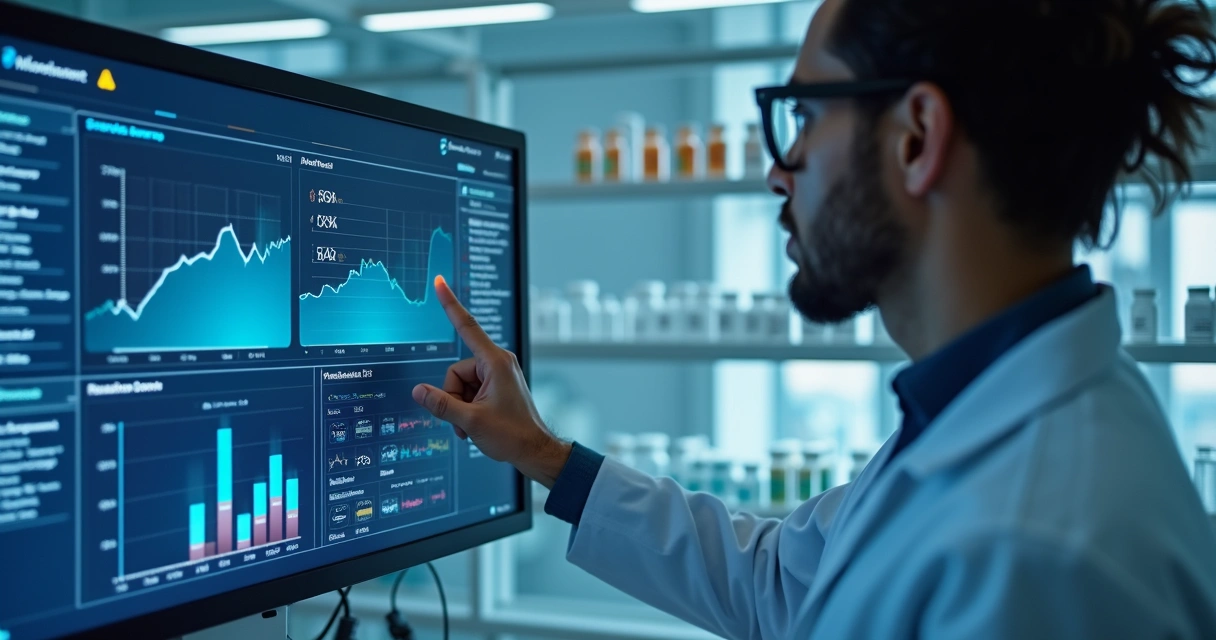
Those who follow trends already realize that just measuring temperature, for example, is a thing of the past. Solutions like DROME can process collected data in real time and apply artificial intelligence algorithms to predict failures, anticipate breakdowns, and prevent a simple oversight from generating financial losses or public health risks.
I always look for more complete platforms. Beyond data collection, report automation and integration flexibility make a big difference in daily operations. Smart alerts and real-time decision support transform the routine – and today, I only see this in modern solutions like DROME.
There's a trend of competitors trying to imitate these features, but almost always something important is missing: support that truly understands operations, processes calibrated to Brazilian reality, and reports designed for legal requirements here.
How can DROME help in a practical way?
In the end, what weighs most in choosing the best datalogger is confidence that all risk is covered. DROME offers features such as:
- Continuous monitoring of multiple environments and units, with unlimited cloud history;
- AI-powered predictive analysis, drastically reducing losses and waste from failures;
- Real-time alerts before any critical deviation occurs;
- Automatic reports ready for audits and legal processes;
- Simplified sensor calibration management, reducing doubts and rework.
If you want to understand more about how to predict problems or reduce losses caused by human failures, it's worth reading this article: How Predictive Analysis Can Prevent Supply Loss. And, to dive deeper into operational errors, I also recommend How to Reduce Supply Losses from Human Failures.
Monitoring goes beyond equipment
With a few years following changes in this segment, I realize that just installing sensors isn't enough. You need a complete system that thinks from supply storage to details like cross-contamination prevention – a topic detailed in this article about how to prevent cross-contamination when storing sensitive supplies.
I know many who still bet on old spreadsheets or meters that only record data, but quality loss – and money – usually comes quickly. A good datalogger is, ultimately, one that leaves you at ease, knowing that any relevant deviation won't go unnoticed.
The best system is one that solves before the problem exists.
So, what's the next step?
My suggestion is clear: if you need to monitor sensitive supplies with maximum attention, and intend to invest in truly reliable technology, evaluate those who deliver more than just data. Give preference to those who understand your scenario, predict risks, facilitate audits, and care for monitoring from start to finish. The path is clear – and I've already seen companies eliminate losses this way.
To dive deeper into this universe and start protecting your supplies (and results), I recommend following the content available in the monitoring category of our blog. Feel free to get to know firsthand what DROME offers – because, honestly, I believe it's the safest and smartest choice on the market today.
Make your choice. The future of protecting your supplies starts now.