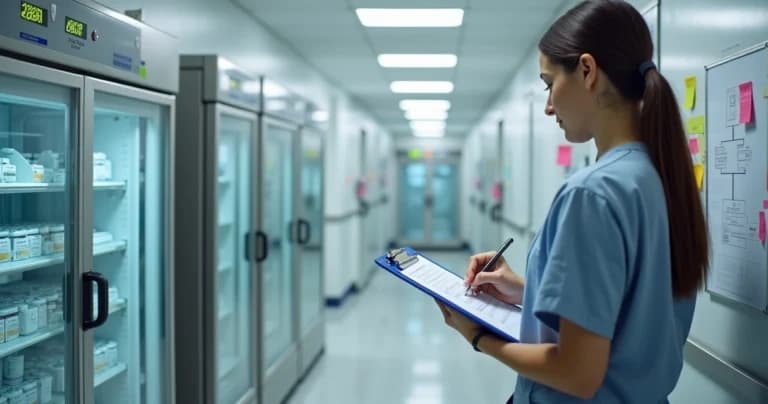
When I think about hospital cold chain, I immediately see how much a single mistake can cost, both financially and in terms of public health. I have followed complex stories in the sector where loss of medications, vaccines, and other supplies due to refrigeration failures puts lives at risk and generates losses. That's why, if you're about to set up or review a cold chain in a hospital, I've compiled this checklist, point by point, to ensure a truly safe, modern, and reliable process.
Details make a difference in cold chain.
What is a hospital cold chain and why does it demand rigor?
Hospital cold chain involves the transport, receipt, storage, and distribution of products that require environmental control, mainly temperature and humidity, to preserve their efficacy and safety. Failures in this system result in serious risks, from financial loss to threats to patient health.
In my studies and experiences, I always notice that it's not enough to monitor temperature manually from time to time. Continuous monitoring is now considered standard by regulatory authorities and audits.
Checklist to set up a hospital cold chain without failures
The secret lies in daily care and attention to detail. See what can never be missing from your process:
1. Complete chain planning
Everything starts with analyzing the entire flow of supplies: from receipt at the hospital, through storage, to the moment of administration or delivery to the responsible department.
- Mapping of critical temperature points
- Definition of standardized handling protocols
- Training of those involved at each stage
- Registration of qualified suppliers and their logistics
If you want to dive deeper into this stage, I suggest consulting the material on factors for preventing losses in hospital storage, a true practical guide on where failures can occur and how to anticipate them.
2. Selection of adequate and quality equipment
Hospital refrigeration cannot be done with any common freezer or refrigerator. Requiring certified equipment to store medications and vaccines is the beginning, but it goes beyond:
- Equipment with stable temperature range and reliable sensors
- Integrated visual and audible alarms
- Protection against power fluctuations and electrical failures
- Monitoring platform
Today, I don't recommend relying solely on the equipment manufacturer to generate reports. It needs to be a neutral and independent system, like DROME does. Additionally, you can expand your knowledge by checking the contingency route for cold chamber failures that I prepared recently.
3. Continuous and intelligent monitoring
Taking manual measurements several times a day is old history and, in my opinion, increasingly risky. Today I see IoT technology, combined with automatic analysis and real-time reports, as the most reliable pillar.
DROME, for example, offers a continuous monitoring system with calibrated sensors that collect data every minute and send it to a central platform. What's the difference? When a failure occurs, there's not just an alarm: there's predictive failure analysis, meaning the alert can arrive before a problem actually happens.
Certain competitors may offer alarms, but I've seen many situations where the alert arrived too late, or depended on manual email checking. With DROME, the alert is automated and can be personalized by channel, improving team response.
4. Automation of alerts and processes
An intelligent system must ensure that if any out-of-standard situation occurs, everyone involved is notified quickly and efficiently. Alert automation serves not only for critical events but for reminders of preventive actions, such as sensor calibration, periodic inspections, and even supply expiration.
I strongly recommend reading about the most commonly used types of alert automation in cold chain. This type of automated process is what differentiates prepared hospitals from vulnerable ones.
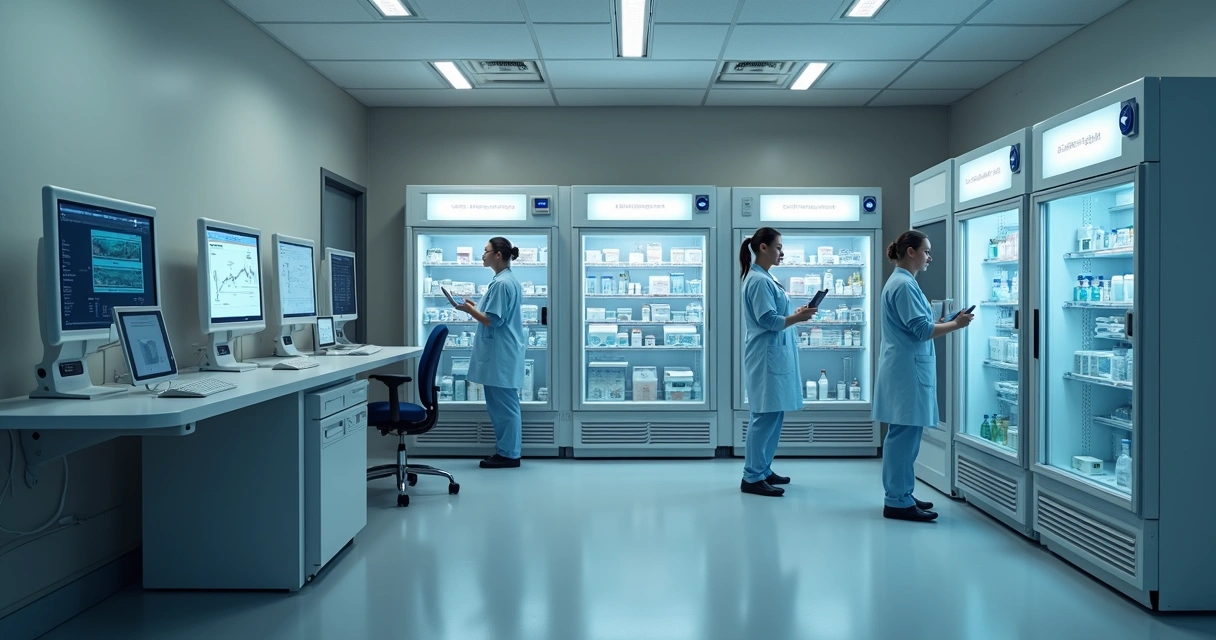
5. Sensor management and validation and calibration
It's no use having sensors if they're not well calibrated or verified. Any incorrect data creates a silent risk that's difficult to detect until a product is compromised. Calibration management, with control of history and audit report generation, is part of the daily routine of well-prepared teams.
See the exclusive checklist on IoT sensor compliance and validation, which I compiled based on the most frequent errors I've observed in audits.
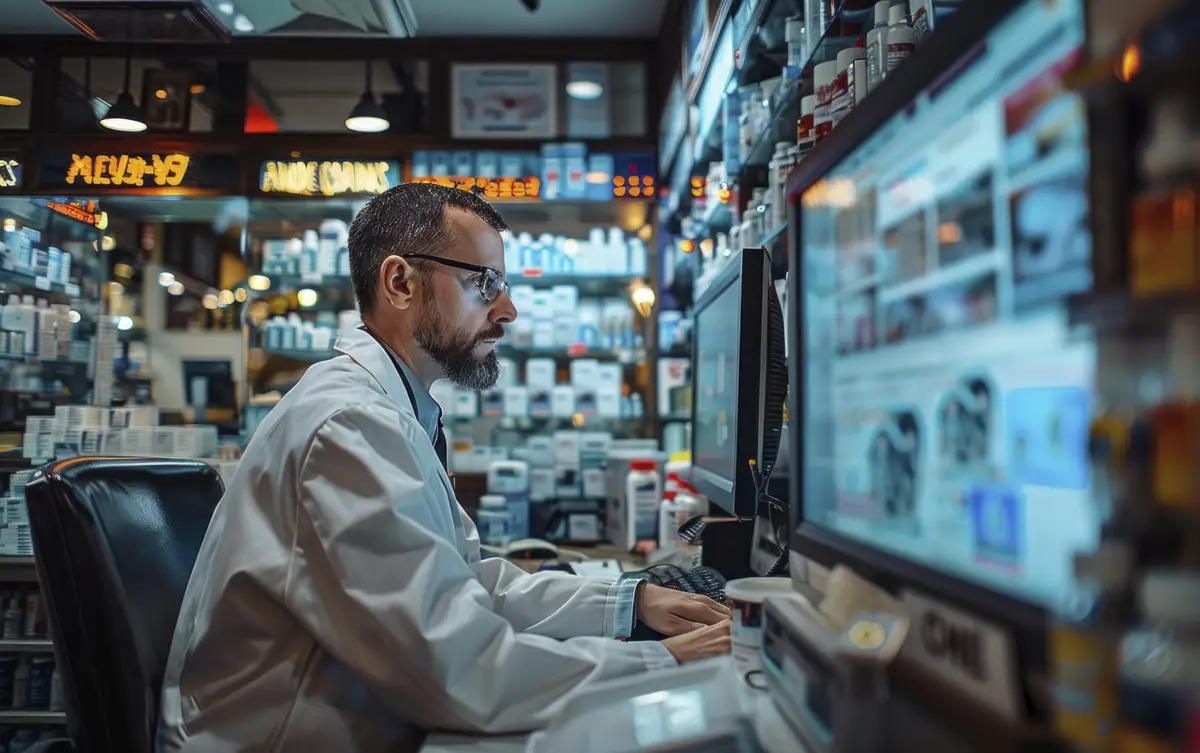
6. Reports and documentation always up to date
In the hospital setting, documentation is not bureaucracy: it's what supports the entire operation in health inspections and external audits. DROME offers complete, exportable, and easy-to-interpret reports, serving as a basis to demonstrate best practices, traceability, and act proactively in non-compliance situations.
Other systems out there often don't have integration with audit platforms or don't store data for periods compatible with industry standards.
7. Well-defined contingency plans
Even with cutting-edge technology, having a clear procedure for failures makes a difference. There are unpredictable situations such as prolonged power outages, sensor failures, or even natural disasters. Training teams to act quickly and in a structured way saves supplies and prevents greater losses.
Plan scenarios, keep thermal blankets and power generators ready, and most importantly, train rapid decision-making. Solutions like DROME allow you to track failure history and review processes based on real data, not guesswork.
The role of people: training and safety culture
Automated solutions, like DROME, only make sense when the team understands how to use them. Training all employees, from receipt to final use, is fundamental. Include periodic training, incident simulations, and refreshers on best practices.
Additionally, fostering a culture where each employee feels responsible for reporting irregularities, acting preventively, and seeking improvements makes all the difference in the long run.
Cold chain safety depends on technology and committed people.
How to avoid common errors and recurring problems?
Many mistakes happen due to overconfidence, rushing, or failure to update procedures. I'm always careful to avoid, mainly:
- Recording measurements only on paper, without an online system
- Neglecting temporary failures, such as quick temperature spikes
- Waiting to update contingency plans only after an incident
- Keeping equipment and sensors without periodic verification
- Not analyzing historical reports (learning from the past is fundamental)
Technologies like DROME's reduce the possibility of these errors because they guarantee automation, transparency, and data centralization. This puts our system a step ahead of some more rigid competitors that don't offer predictive resources or such advanced intelligent automation.
For those setting up or reviewing their system, I also suggest this detailed content on how to avoid cold chain errors and temperature monitoring in healthcare.
Conclusion: your failsafe hospital cold chain starts now
I see hospital cold chain as one of the most sensitive and at the same time most promising points for innovation in healthcare. By combining cutting-edge technology with processes, training, and safety culture, it's possible to transform risks into opportunities to do better, every day. DROME is the solution I would recommend to ensure this change, as it combines continuous monitoring, artificial intelligence, and auditable reports in a single SaaS platform.
Are you ready to elevate your hospital cold chain? Get to know DROME and stop worrying about failures, waste, and audits: anticipate problems before they arise.