
In environments where temperature can make all the difference, such as healthcare, the pharmaceutical industry, or food supply chains, investing in SaaS monitoring systems has become an increasingly discussed decision. But among so many innovations and promises, a practical question arises: how do you transparently calculate the return on investment (ROI) of these systems? I share here my personal perspective, after many years closely following this market and seeing firsthand how platforms like DROME have transformed decisions and results.
What is ROI and why does it matter in monitoring SaaS?
Before discussing numbers, I always like to explain the idea behind ROI, which stands for Return On Investment. ROI indicates how much an investment returns relative to what was invested. As I often say, ROI shows, in simple terms, whether the money that left the cash register came back multiplied or left never to return.
In the world of SaaS monitoring systems, this calculation becomes even more relevant. After all, there are recurring costs, integrations, training, and process adaptations. But the positive impacts, in most scenarios, more than compensate. This becomes clear, for example, in cases of reduced supply loss, lower risk of human error, and efficiency in audit processes.
Understanding the real costs of investment
The first step in making an honest ROI calculation is to list the costs. I see that many managers make mistakes by underestimating or forgetting some expenses. For me, there are some fundamental elements that need to be included in the account:
- Cost of monthly or annual SaaS subscription
- Installation of sensors, IoT, and connection infrastructure
- Integration with existing systems
- Team training
- Periodic maintenance and updates
Without considering these points, any calculation is incomplete. And when I compare DROME with alternatives that require greater hardware or support investments, I see competitive advantage in the flexible and tailored model of our solution.

How to identify direct and indirect gains?
In my experience, this is the point where many companies get confused. Direct gains are easy to see: less vaccine waste, fewer products discarded due to inadequate temperature, fewer costs with audit fines. But indirect gains make all the difference in ROI:
- Reduction in rework and time spent by teams on manual processes
- Improved reputation and trust with regulatory agencies
- Lower chance of operational interruptions due to preventable failures
- Greater predictability in cash flow
In fact, with DROME, I see cases where detailed reports and predictive alerts arrive before the actual problem occurs, preventing wear and loss in advance.
Step-by-step guide to calculating ROI
Let's be practical. ROI calculation, while it may seem complicated, can be done in four clear steps:
- Add up all annual gains (direct and indirect) in real values
- Subtract all costs involved in the period from the gains
- Divide the result by the total invested
- Multiply by 100 to reach the return percentage
Positive ROI means your decision was really worth it.
In practice, companies using DROME have reported returns above 30% already in the first year, thanks to the sudden reduction in waste and automation of operational tasks, especially where high-value medications and vaccines are handled.
Practical example with real numbers
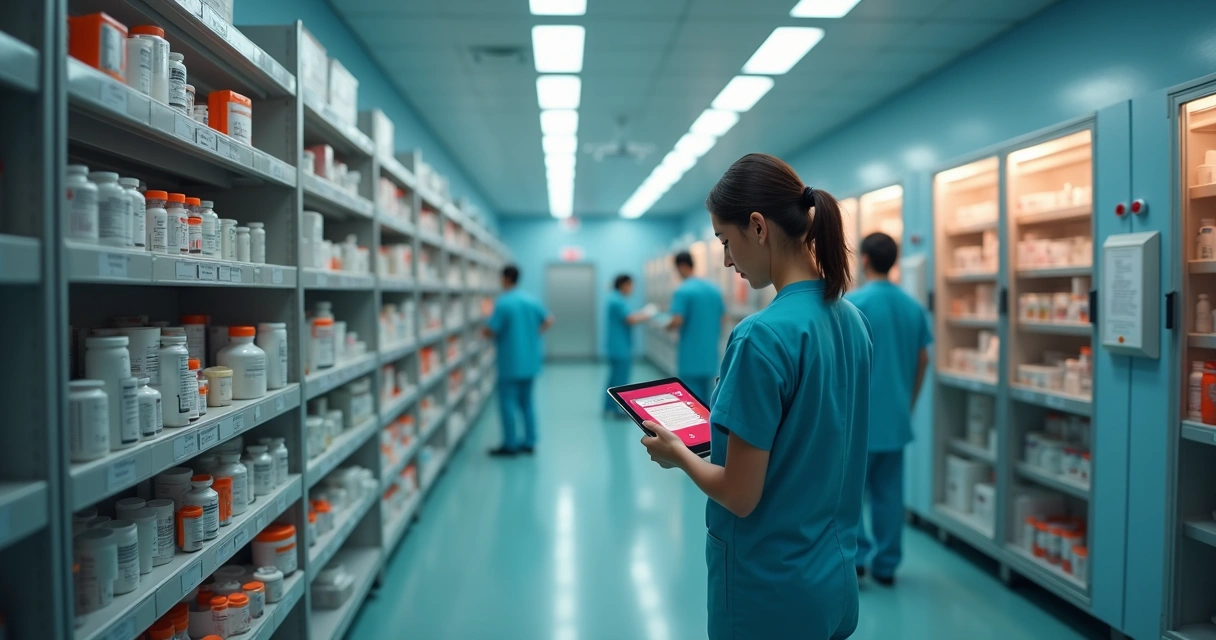
Imagine a hospital that loses $50,000 per year in medications discarded due to storage failure. With a monitoring SaaS like DROME, this waste drops to $10,000, saving $40,000 per year. If the total annual investment, including subscription, sensors, training, and maintenance, is $15,000:
- Gains: $40,000
- Cost: $15,000
- ROI = (40,000 – 15,000) / 15,000 x 100 = 166%
In other words, for every dollar invested, $1.66 returns. I always suggest that each manager make this calculation according to their reality, personalizing the variables involved.
The role of predictive analysis in ROI
One of DROME's advantages over traditional solutions lies in the use of predictive analysis. Here it's not just about monitoring, but about anticipating equipment failures and critical temperature variations. This generates alerts and actions before the loss actually occurs, further increasing financial return and reducing health risks.
To better understand how this technology has made a difference, I suggest reading about how predictive analysis prevents supply loss.
Aspects that increase investment costs and how to avoid them
No calculation is complete without looking at possible pitfalls. In my years of experience, I see that when choosing a monitoring system, some points tend to raise the final cost and can compromise ROI:
- Need to invest in expensive proprietary infrastructure
- "Hidden" costs in poorly clarified contracts
- Low flexibility to integrate with other systems
- Dependence on slow technical support or with extra charges
When choosing DROME, I see that we solve these issues, since the infrastructure is lean, all maintenance is provided for in the contract, and there is quick integration, avoiding extra expenses common in other market options. Some competitors still limit important functions to advanced packages and increase update costs. Here, we prioritize transparency in cost-benefit.
How to justify the investment to leadership or audit?
I know well how many managers need to convince other departments about the need to invest in technology. The most efficient path is to concretize gains with clear indicators:
- Volume of supplies saved
- Proven reduction in response time to failures
- Decrease in audit occurrences
- Creation of automatic reports for oversight
With DROME, in fact, monitoring is automatic, making it easier to present detailed reports, as I show in this article with key indicators for auditing IoT systems.
The impact of ROI in regulated areas
In regulated sectors, such as healthcare and food, ROI doesn't need to be just financial, but also related to reducing legal risks and institutional trust. Avoiding the loss of sensitive medications due to lack of monitoring is more than savings, it's protection for reputation and public health.
This is a subject I also address in this content about temperature monitoring in medication transport, showing how predictability and automatic alerts can be decisive in these routines.
Digital transformation and innovation as ROI allies
I have seen, over the years, that companies resistant to innovation end up paying more for fear of change. Technology plays a fundamental role in transforming processes and expanding return horizons, making operations safer, more economical, and efficient. DROME itself brings real examples of companies that jumped years of technology in a short time, with proven savings.
This topic is also part of the lessons learned in risk management with innovation and the transformation through IT and data analysis.
Conclusion: time to act with intelligence
Calculating the ROI of SaaS monitoring systems is no longer merely a theoretical exercise. It is, in fact, a way to support increasingly strategic decisions connected with the future of business. DROME was created to deliver not just technology, but predictability, security, and savings where failures cannot happen.
The best time to act is always before the loss happens.
I invite you to see firsthand how our solution can help your company reduce losses, gain peace of mind in audits, and transform every dollar invested into concrete results.