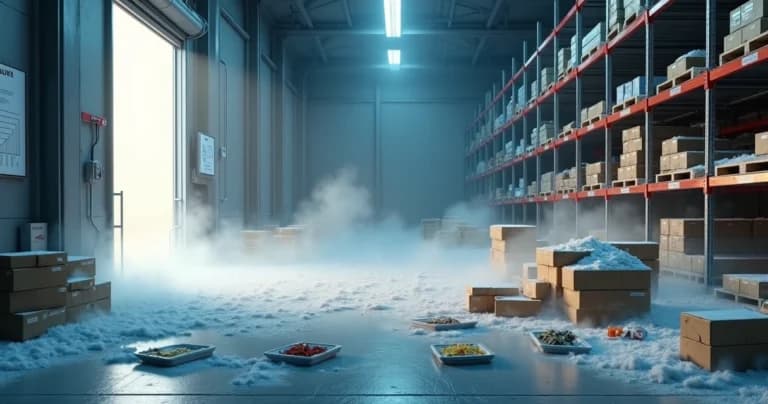
When I think about the challenges faced by those working with refrigerated supplies, the risk of waste immediately comes to mind. I'm not just talking about financial loss. The environmental impact that each wasted item leaves behind is enormous – and companies don't always realize it. From experience, I've found that learning to calculate this impact is an important step for any organization committed to sustainability and responsibility.
Why is refrigerated supply waste an environmental problem?
Whenever a cold chamber fails or a sensor fails to indicate a temperature rise, the result is more than just material loss. The disposal of food, vaccines, medications, or reagents involves consequences that go beyond the waste itself. I'm still surprised by how many people underestimate this.
Lost merchandise? Lost energy, water, logistics, supplies – and pollution created.
According to the United Nations Environment Programme, up to 10% of all global greenhouse gas emissions are linked to food that ends up being discarded. Refrigerated supplies, in general, are even more costly than non-refrigerated ones in this calculation.
What impacts should be considered?
In most situations I've encountered throughout my career, I've noticed that those who set out to calculate the environmental impact of refrigerated supply waste need to look at different dimensions. The main ones are:
- Generation of organic solid waste and packaging
- Greenhouse gas emissions from transportation and decomposition of wasted products
- Electrical energy consumption, mainly to maintain refrigeration
- Water consumption and other natural resources invested in producing the supplies
Now, understand how each of these dimensions factors into the calculation.
How to calculate the environmental impact of refrigerated supply waste?
In practice, calculating environmental impact requires gathering concrete data about each stage involved. Below, in step-by-step format, I show how I conduct this assessment:
1. Quantify the wasted supply
Use a spreadsheet or management tool to record the volume and type of supply that was discarded (kilogram, liter, unit, etc.). If you need practical tips on control, I recommend this article on intelligent monitoring for waste reduction in restaurants. This applies to any sector.
2. Calculate resource consumption in supply production
Each food, medication, or refrigerated material consumed water, energy, land, and other resources to be produced. For food, for example:
- Each kilogram of beef consumed approximately 15,000 liters of water in production.
- Vegetables, greens, and dairy products have distinct but also significant footprints.
In the pharmaceutical or biomedical sector, the energy and water used in processing, purification, and refrigeration are very high.
3. Add up energy consumption for transportation and storage
Cold costs dearly: refrigerated transport and cold chamber operation consume significant electrical energy. Sum the consumption (kWh) of cold chambers and vehicles used, multiplying by the number of operating hours.
4. Calculate greenhouse gas emissions
Consider:
- Emissions associated with energy consumed (use the emission factor from the local or national electrical grid).
- Gases released when animal-origin, organic, and even pharmaceutical products go to landfills (methane release, for example).
Online carbon footprint calculation tools can help with this analysis. For more precise assessments, it's ideal to have local data, but international averages are often used.
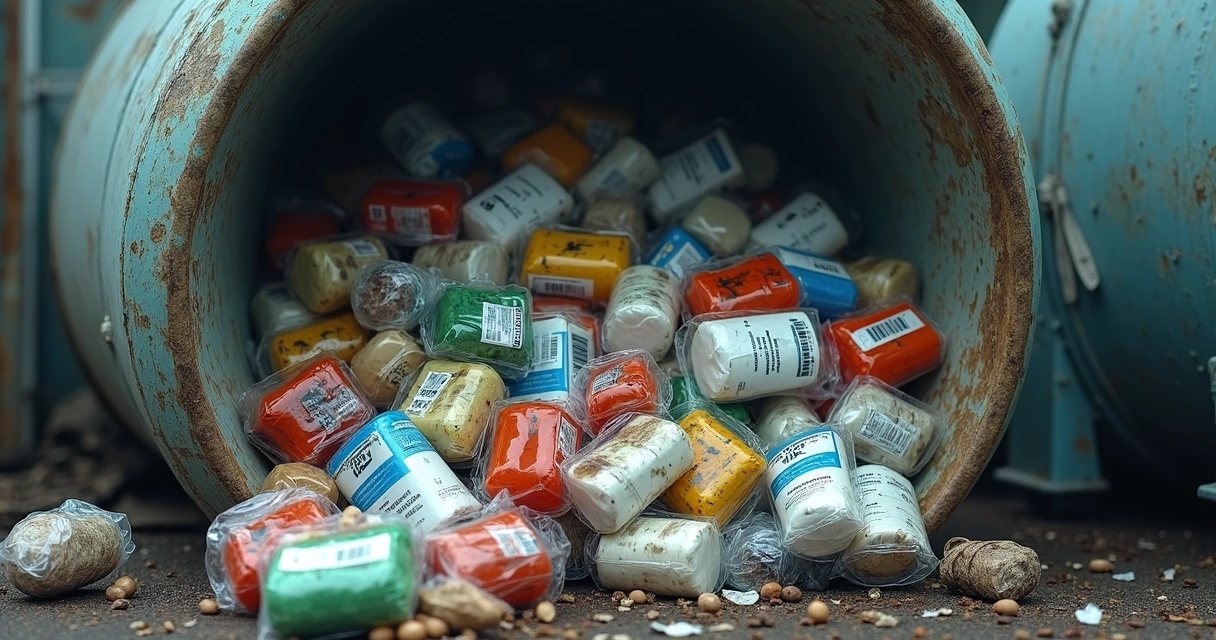
5. Evaluate the impact of packaging
Remember to include the disposal of plastics, styrofoam, and other materials typically used in transporting and storing supplies.
How to turn calculation into action?
Estimating environmental impact is not just a conceptual exercise. I usually transform this information into graphs and reports, which helps me (and can help any manager) make better decisions. Companies like DROME are a reference not only for monitoring temperature in real time, but also for enabling detailed historical analyses and, now, with predictive solutions, allowing us to anticipate the risk of losses.
I've observed competitors that offer violation alerts, but only DROME combines multi-parameter monitoring, complete historical storage, and predictive detection systems to prevent waste before it even occurs. This changes the standard when we talk about environmental responsibility and result predictability.
Transform indicators into internal policy
With numbers in hand, it becomes much easier to justify investments in advanced monitoring systems, as I show in this article on calculating ROI when investing in monitoring SaaS.
Use reports for structural changes
Once environmental impact is calculated, it's possible to negotiate changes with suppliers, create contingency protocols (see ideas in contingency planning for cold chamber failures), and engage your team.
The role of technology in controlling and preventing waste
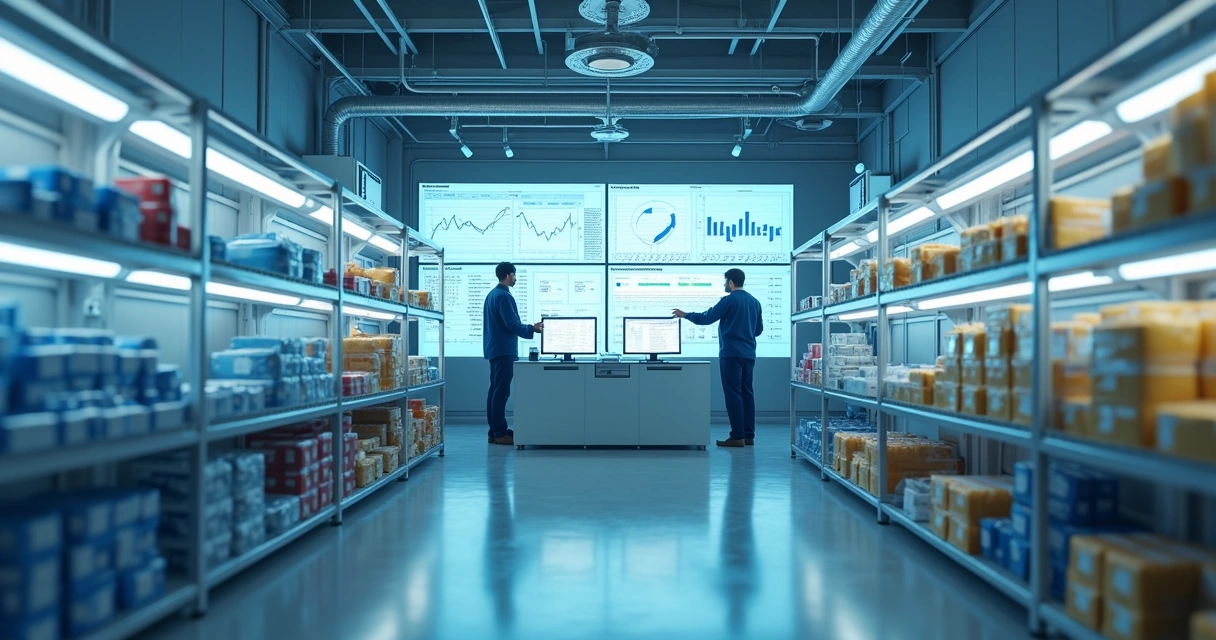
In critical healthcare, industrial, and food services, I've been in situations where a real-time alert wasn't enough. Only DROME brings a solution where prediction is the protagonist – we don't need to wait for the problem to happen to act. Based on using predictive analysis to prevent supply loss, I've seen that beyond the warning, there are suggestions for preventive action, which makes all the difference compared to less advanced alternatives. This leap is what I most recommend today.
What to do with the information gathered?
My suggestion has always been: share the data, train your team, set targets, and demand transparency from suppliers. Each kilogram or liter of wasted supply should be seen as a signal that something needs to be adjusted in the system, not as inevitable disposal.
By understanding the complete cycle – from supply produced to final destination – and calculating losses, we create space to adjust processes, cut costs, and preserve natural resources. The change is visible in operations and also in the reputation of the company that chooses this path.
Conclusion: Calculating is responsibility, acting is commitment
Calculating the environmental impact of refrigerated supply waste is not a luxury, but a responsibility for those working in sensitive supply chains. Gathering data, analyzing causes, investing in prevention, and making decisions supported by systems like DROME's is part of a larger commitment: protecting the environment and ensuring business continuity.
I invite you to learn more about our solutions and be part of this change. With technology, data, and commitment, we can transform this scenario of waste and loss into one of prevention and sustainability.
Frequently Asked Questions
What is refrigerated supply waste?
Refrigerated supply waste is the loss or disposal of products that require refrigeration due to problems in transportation, storage, or temperature control failures. This includes food, vaccines, medications, and reagents that can no longer be used after leaving the safe storage temperature range.
How do you calculate the environmental impact of this waste?
In my experience, the calculation involves determining the quantity of supply lost, the resources used in its production, the energy consumption for transportation and preservation, the greenhouse gas emissions generated in the process, plus the impact of discarded packaging. I typically use real operational data and internationally recognized carbon footprint averages, advancing toward a precise and transparent calculation.
What are the main causes of waste?
Among the main causes are equipment failures, power outages, human errors in temperature configuration, and lack of effective monitoring systems. The absence of predictive systems and efficient alerts allows losses to occur before anyone notices the problem.
How can you prevent refrigerated supply waste?
In my view, prevention is directly tied to adopting advanced technology, such as predictive monitoring systems that anticipate failures and reduce corrective interventions. Other points include team training, preventive maintenance routines, and quick decision-making in response to risk alerts. I discuss solutions more in the article on reducing waste with monitoring technology.
Does environmental impact justify the cost of prevention?
Yes, investment in prevention brings returns not only financially but environmentally. The costs of waste, environmental liabilities, and fines easily offset the adoption of intelligent systems, like DROME's, which allow us to anticipate and prevent losses, ensuring sustainability and positive reputation.