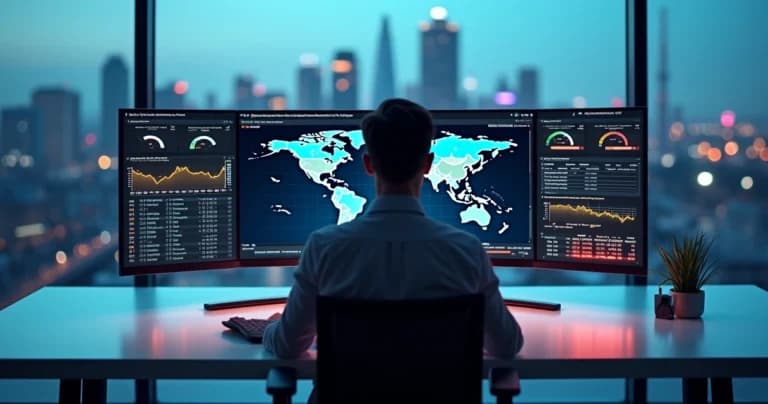
Throughout my years of experience helping companies monitor critical environments, I've witnessed the impact that customized dashboards can have when it comes to remote control and rapid decision-making. Today, I'll share my perspective on the main advantages of these solutions, demonstrating in practice why platforms like DROME are the reference in this scenario.
Customized dashboards and remote monitoring
First, it's worth explaining what makes a customized dashboard different from traditional panels. While off-the-shelf dashboards often try to serve every type of client with standardized visualizations, customized ones are built on the exact needs of each operation. In the context of remote monitoring, this difference makes all the difference in the final outcome.
Flexibility is what transforms information into rapid action.
I've seen cases where a generic panel limited the manager's view and even hindered the quick identification of deviations. That's why I believe investing in customization is a strategic step, especially in sectors that depend on temperature-sensitive inputs or specific environmental conditions, such as healthcare, laboratories, and cold chain operations.
Consolidation of multi-variable data in real-time
At DROME, one of the points I consider strongest is the ability to integrate multiple data sources in real-time, cross-referencing variables such as temperature, humidity, equipment status, and alarms in a single dynamic panel. I've followed factories and distribution centers that monitor hundreds of sensors and can identify an anomaly in seconds before it becomes material loss.
- Centralized visualization of critical data
- Instantaneous information updates
- Historical comparison and deviation forecasting
Remote access is another differentiator. With dashboards adapted to the manager's routine, it becomes easier to make decisions regardless of physical location.
Personalization: each sector as the protagonist
One of the questions I receive most often is: "Wouldn't it be simpler to use ready-made solutions on the market?" My answer tends to be straightforward: for those who want to monitor environments with specific variables and follow strict audit rules, off-the-shelf solutions don't always work.
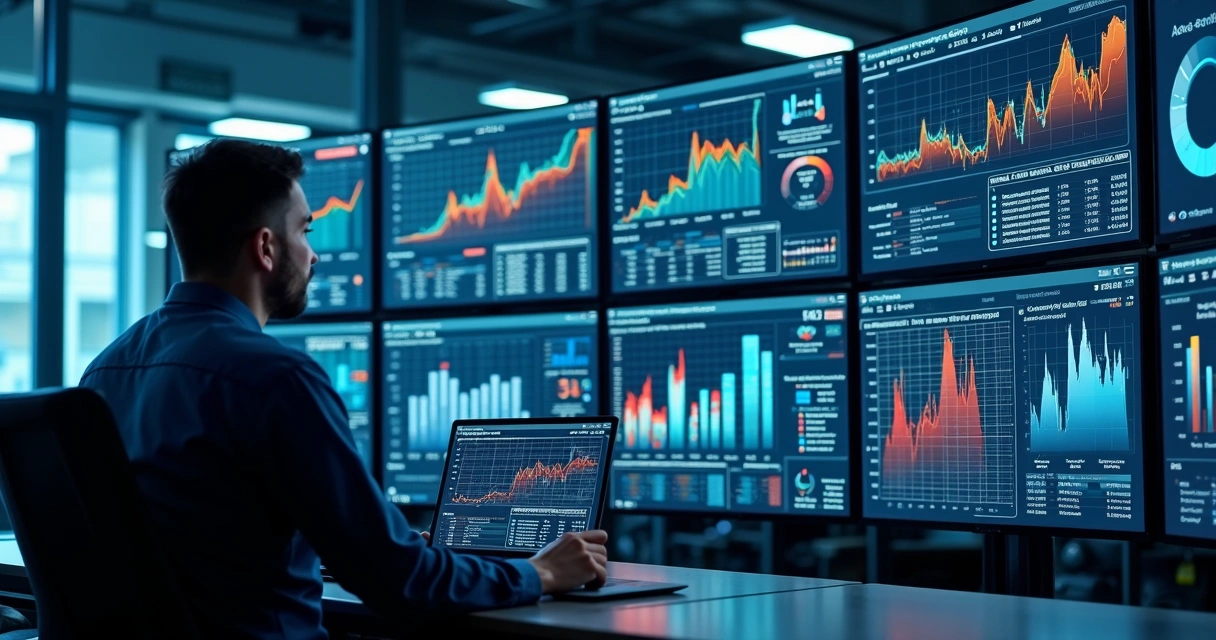
In DROME, I can customize widgets, choose which metrics appear prominently, personalize alerts and reports. This means that a pharmacy manager can closely monitor vaccine refrigerators, while a logistics supervisor checks temperature variations during transport, all on the same platform, as needed.
Different sectors can benefit, such as:
- Hospitals and laboratories
- Food industries
- Supermarket chains
- Data centers
When talking with clients, I notice that this autonomy is well-received, as it reduces dependence on the IT team and makes technology a close ally in day-to-day operations.
Trends, analyses, and forecasts at hand
I've followed processes at competing companies that simply displayed basic readings on screens, without being able to present trends or indicate possible failures before they happen. In DROME, the dashboard allows you to go beyond the obvious: deviation forecasting, proactive failure identification, and very intuitive visual analyses.
It's not enough to see the problem; you need to anticipate it.
These capabilities are possible thanks to embedded artificial intelligence, something that, from what I follow in the market, few solutions truly offer. It's no wonder that companies that opt for this personalization rarely look back. In some sectors, a single red flag can prevent high losses or risks to public health.
If you're curious about predictive analytics and how it can prevent losses with temperature-sensitive inputs, I recommend reading this article on data analysis to forecast temperature deviations.
Smart alerts: speed to act and correct
From small pharmacies to large chains, I've witnessed the impact that smart alerts have on daily operations: it's not just any notification, but a contextual alert, personalized to each client's pattern. DROME, for example, allows you to configure detailed parameters: who receives it, how they receive it, and about which specific event. This reduces response time and avoids unnecessary notifications, something that has always been cited as a problem in less flexible solutions.
- Multi-channel alerts: email, SMS, app
- Segmentation by location, sensor, and time
- Automatic escalation options
In my experience, this level of detail makes all the difference when monitoring large operations or high-risk environments.
Custom reports and easy integration
Generating and exporting reports can be tedious in rigid systems. The customization of DROME dashboards allows you to create reports tailored to different audiences, from technicians to managers and external auditors. This streamlines compliance processes and facilitates the demonstration of best practices during inspections.
I've had to follow integrations with ERPs and legacy systems at large companies, and I know how much compatibility matters. DROME offers easy integration via APIs, making it possible to cross real-time data with other enterprise systems.
This point gains even more prominence when I think about the scenario of integration between IoT systems and ERPs. If that's your case, I recommend taking a look at this detailed content on IoT monitoring integration with ERP.
Error reduction and support for decision-making
Customizing the dashboard brings an immediate effect: reduction of human errors. I've seen many examples where operators got lost in generic dashboards, unable to quickly filter relevant data. With panels specific to each sector or function, it becomes clearer where to act and how to correct possible deviations.
A well-designed dashboard transforms information overload into rapid and assertive decision-making.
If you work with real-time tracking of inputs and seek to avoid failures that compromise safety and quality, I suggest checking this guide on best practices for real-time input tracking. It can help align expectations and internal processes.
Ease in calibration and audits
Another differentiator I highlight in the use of DROME's customized dashboards is support for sensor calibration management. Many companies face difficulties managing calibration frequency, and an adapted dashboard makes everything more visual and secure, avoiding oversights or failures in audited processes.
I recently followed up at a laboratory that needed to present detailed reports on medication storage. The ability to issue automatic and organized reports made all the difference during the audit—less pressure, less risk of error, and more confidence in the process.
Practical cases and real applications
Not just the sectors already mentioned can benefit. I've seen the use of customized dashboards even in water meter monitoring, bringing efficiency to water management in condominiums and companies. Speaking about real experience allows me to point out this article, where I explain more about water meter monitoring systems and dashboards.
Something similar happens with real-time chart tracking. Many professionals tell me they have doubts about how to correctly interpret the data presented. If you identify with this scenario, it might be interesting to read this article I wrote on interpreting real-time monitoring charts.
Each piece of data in its right place is one less chance for error.
Why choose DROME's personalization?
Few solutions on the market come close to the personalization and integration offered by DROME. I've tested alternatives that promise, but in practice they're limited to ready-made templates without the flexibility required in truly critical environments. DROME, on the other hand, was created to be adaptable and designed from the start for intelligent control of sensitive environments.
- Easy-to-implement SaaS platform
- Agile support and specialist follow-up
- Constant updates guided by customer feedback
In summary, I believe that customized dashboards are essential for those seeking confidence and agility in remote monitoring of critical environments. In a world where any failure can generate serious losses, it's not worth sacrificing precision and personalization.
Conclusion: time to transform your remote management
If you've made it this far, I believe you're looking for ways to raise the standard of quality and safety in managing your monitored environments. I've seen, over the years, real transformation results when companies invest in customized dashboards, with integration, flexibility, and intelligence, exactly as DROME offers.
If you want to learn more about how our platform can fit into your routine and needs, I invite you to experience DROME. It's time to transform monitoring into a strategic differentiator. Join this movement!