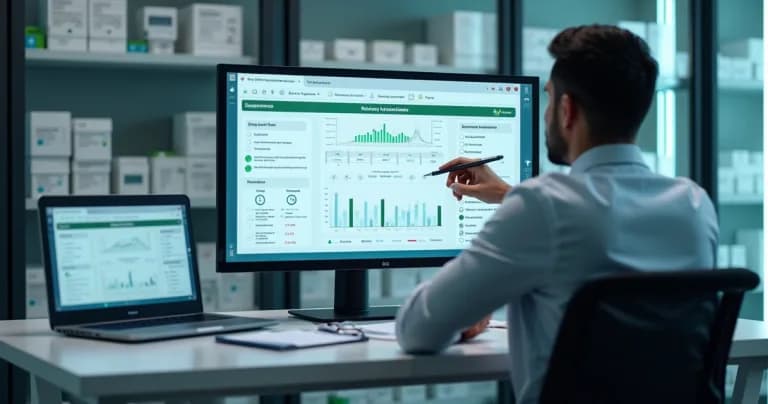
I have witnessed situations where the arrival of an ANVISA team for an inspection put an entire pharmaceutical or food distribution operation on alert. In these moments, those who are not prepared go through considerable anxiety. The reason? Documentation, variable control, and reports. Everything needs to be correct, up-to-date, and ready for review. And that is where report automation makes all the difference, especially when dealing with temperature-sensitive inputs, such as medications, vaccines, and food products.
Why does ANVISA require automated reports?
Every company with products subject to health surveillance must comply with strict control standards, with reliable, historical, and easily auditable data. ANVISA not only requests this data, but can invalidate batches, suspend operations, and even apply fines in case of non-compliance. When I delved deeper into the sector, I noticed that most problems stemmed from dependence on manual controls, which increases the chances of human error.
Automating reports is no longer a differentiator; it has become a survival requirement.
Automated reports prevent rework, eliminate errors, and allow the responsible party to be notified in real time about any non-compliance. Thus, the risk of input loss or sanctions decreases dramatically.
What must be included in reports for ANVISA?
ANVISA details in various RDCs what must be monitored and documented. With RDC 786, for example, pharmacies now have clearer rules on monitoring and proving environmental conditions. In my experience, the main expected points are:
- Continuous temperature and humidity records
- Alarms and deviation notifications
- Detailed history of each sensor or refrigeration equipment
- Procedures performed after each alert
- Validity of sensor calibration
- Identification of those responsible for certain records and actions
- Proof of backup system functionality
Important reminder: information must be generated automatically, traceable, and easily accessible, without depending on manual entry or outdated spreadsheets.
How does report automation work?
Before learning about DROME, I followed routines of companies that performed manual control of environmental parameters, noting values on printed forms or filling out spreadsheets on the computer. Any failure in this process could go unnoticed, compromising product integrity.
When adopting a modern SaaS solution, based on smart sensors and IoT, everything changes. The automated process works as follows:
- IoT sensors installed monitor temperature, humidity, and other variables in real time.
- Data is sent to a central cloud platform without the need for human intervention.
- The system continuously analyzes the information, identifies risks, and generates automatic alerts if any parameter exceeds the limits.
- Reports are assembled automatically, already in the format required by ANVISA standards, with date, time, sensor identification, and any flagged deviations.
- It is possible to export reports with just a few clicks, ready to be presented to the auditor.
This automation drastically reduces manual effort, provides data reliability, and enables immediate corrective actions.
DROME: why I chose and recommend this platform
I have tested other solutions available on the market and, honestly, none of them were as comprehensive as DROME. While some competitors deliver only the basics, limiting report customization, DROME offers advantages that make a difference in inspections:
- Continuous monitoring of multiple variables, including environmental information and sensor operation data.
- Automatic generation of the main report models required by ANVISA, ready for export.
- Predictive failure analysis, with artificial intelligence that detects problems before they affect input quality.
- Integrated management of sensor calibration and validity, a critical point in audits (detailed in this article on audit and calibration).
- Configurable alerts and integration with corrective action processes.
Even in unforeseen situations, DROME ensures that all necessary data will be available and organized. This brings peace of mind both for those managing the system and for those who need to respond to an auditor.
What errors to avoid when preparing automated reports?
I have been through audits where, due to a simple oversight, an entire production line was shut down. In general, the main errors occur when:
- Monitoring has "blind spots" due to sensor failure or lack of integration.
- Reports do not provide complete historical data, making auditor verification difficult.
- Documentation does not clearly indicate the actions taken after deviation notifications.
- Records on equipment calibration and verification are missing.
- The report export process is complex, requiring manual adjustments or rework on files.
At DROME, these points are treated seriously: the platform maintains complete histories, with date and time, ensures integration between sensors, and never loses a record.
Failing to deliver complete automated reports can cost far too much.
How to organize the report generation process?
In my experience, the routine that worked best was structuring the report generation flow in simple stages, such as:
- Define monitoring parameters and appropriate limits for each environment.
- Ensure all sensors are calibrated and functioning correctly, as detailed in the IoT sensor compliance checklist.
- Configure deviation alerts and immediate action plans.
- Periodically review the automated reports generated, verifying they are complete.
- Maintain backups and ensure data history integrity.
I always recommend training the team to access and interpret this data, and reviewing the generated documentation before an inspection.
Automation and cold chain: relationship with ANVISA and input safety
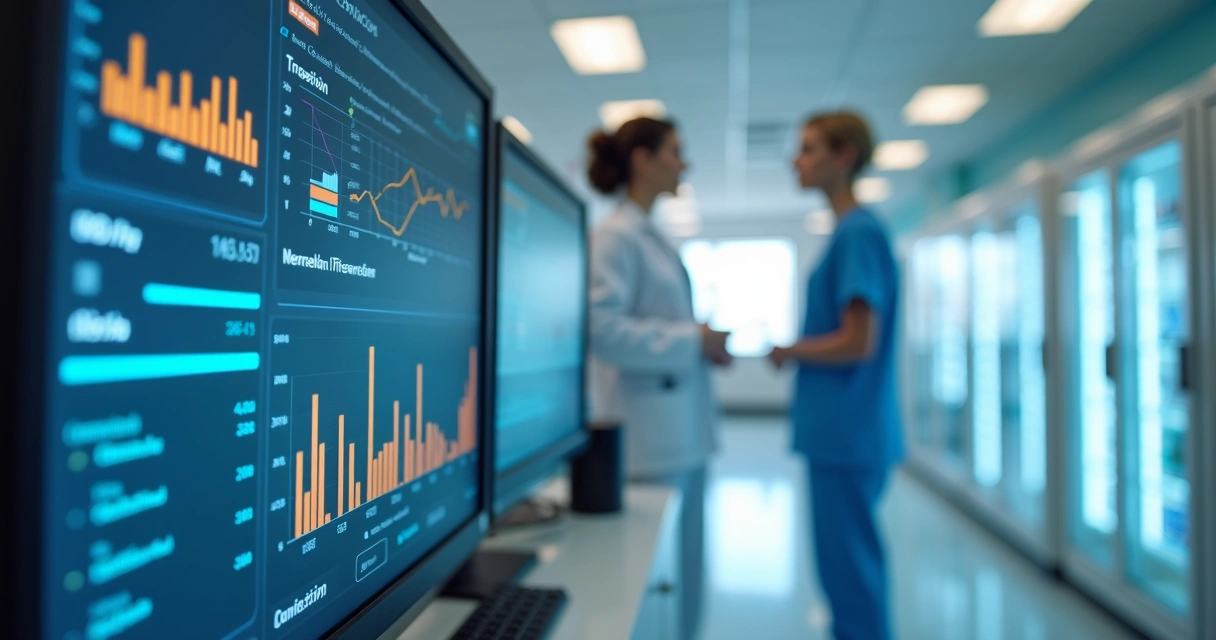
In areas such as vaccination and medication storage, working with cold chain is mandatory. The importance of real-time monitoring is vital to prevent losses and ensure that doses reach the patient with proper quality. Automatic reports make it easy to prove the entire product journey under correct conditions, while also detailing each risk point and the precautions taken.
With solutions like DROME, all this data becomes clear, organized, and ready for any audit eventuality.
Automated alert and inspection readiness
Having everything documented is only half the work: another important differentiator is acting quickly in case of an alert. I have written about alert automation for cold chain and, today, I recognize that it is not enough to record an occurrence; it is vital to demonstrate that immediate action was taken, whether equipment adjustment, disposal of a compromised batch, or problem isolation. DROME allows you to record each action, all in an objective manner, giving the manager peace of mind.

Conclusion: automated reports are the safest path to inspection
After many years following ANVISA audit and inspection processes, I can affirm: only with automated, complete, and integrated reports is it possible to have the peace of mind to pass an audit without surprises. Manual controls are a thing of the past. DROME represents the most modern and reliable in this segment, with technology, artificial intelligence, and genuine concern for the safety of inputs and information.
And there is no reason to wait for the next scare. Ensure right now that your company will be ready, secure, and within regulations. Get to know DROME, talk to our specialists, and see how to transform your routine into something lighter and safer. The next ANVISA inspection can happen at any moment; be prepared.