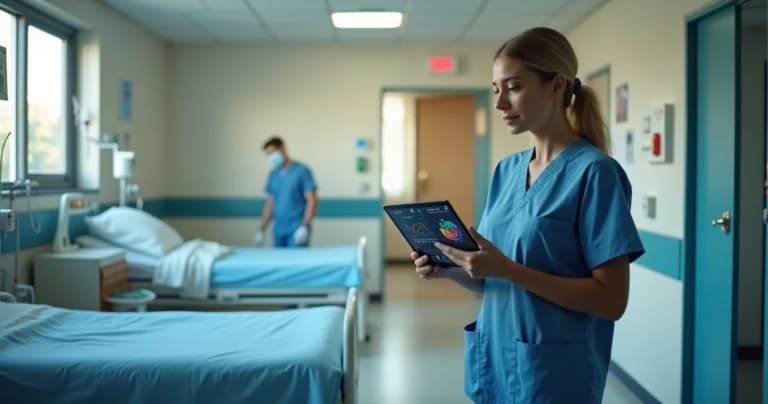
When I think about small hospitals, challenges like budget constraints, lean teams, and infrastructure that needs to reinvent itself daily to serve the community typically come to mind. In 2026, I believe accessible monitoring will be the game-changer for this scenario. It's no exaggeration to say that technology designed to the "right scale" saves lives and protects the already fragile finances of these institutions.
In recent years, I've been impressed by how many of these small hospitals, despite facing limitations, felt the need to rapidly evolve their monitoring processes. It's no accident: the risks of losing medications, food, or equipment failures can jeopardize everything in minutes.
Monitoring before failure occurs is the safest and least costly path.
Seeing this firsthand and analyzing solutions like DROME, I realize that accessibility here doesn't mean "simple," but rather "possible for everyone," without compromising safety and problem anticipation. This is the new standard expected in 2026.
Why does this matter so much for healthcare?
It's never been a secret that incidents and monitoring delays generate serious consequences. What perhaps not everyone knows is the scope of this impact on hospital outcomes and public health. A concrete example: a study conducted in Brazilian hospitals showed that no less than 30% of medication doses administered were involved in some type of error, often related to timing and administration conditions.
Another statistic that always catches my attention: a recent study directly linked hospital admissions for respiratory diseases to temperature variations in 70 cities. In other words, in a small hospital, maintaining monitoring of environmental variables may be the only resource between a smooth day and an unexpected crisis.
With all this in mind, it becomes urgent that the best tools reach these hospitals in an accessible way.
What changed in monitoring by 2026?
One point I've experienced in recent years is the acceleration of digital transformation in healthcare, culminating in Hospital 4.0 proposals. Now, real-time sensor monitoring has stopped being a differentiator and become a prerequisite. But in small institutions, the leap only truly happened when solutions became adaptable without prohibitive costs. This is where advances like failure prediction come in—exactly the mission of DROME Predict.
Today, systems like DROME's already enable real-time monitoring of temperature, humidity, CO₂, and more in critical areas or storage rooms. But more importantly, they've learned to issue alerts before limit violations occur, using artificial intelligence based on each sensor's history and trends.
Alert at the right time, prevented loss and patient risks.
This changes the game for those who can't rely on 24/7 on-site teams—a common scenario in smaller units.
How does DROME put small hospitals ahead?
What makes me recommend DROME over traditional options? First, the predictive detection model that goes beyond the late alarms of the past. After all, it makes no sense to learn about a risk only after it's already happened and there's nothing left to do.
Additionally, the diversity of connected sensors ensures personalization. In places I've seen, this means being able to monitor everything from vaccine chambers to the hospital generator, creating preventive routines tailored to each institution's needs and volume.
- Continuous monitoring with intelligent historical analysis.
- Quick configuration without need for sophisticated infrastructure.
- Reports for audit and compliance that reduce fine risk and facilitate inspections.
- Cost compatible with restricted budgets, with scalability as the institution grows.
Some offer similar solutions, but what I see is that few deliver a complete offering with proactive support and automation as standard, and truly accessible resources for hospitals of any size. I've written about proactive support strategies in hospitals, and I can affirm: without good technology, isolated efforts don't sustain.
In comparison, competitors tend to focus on large hospitals, offer less flexibility, and typically charge more for predictive modules—or don't offer them without heavy IT investment, which distances small hospitals from the best possible care.
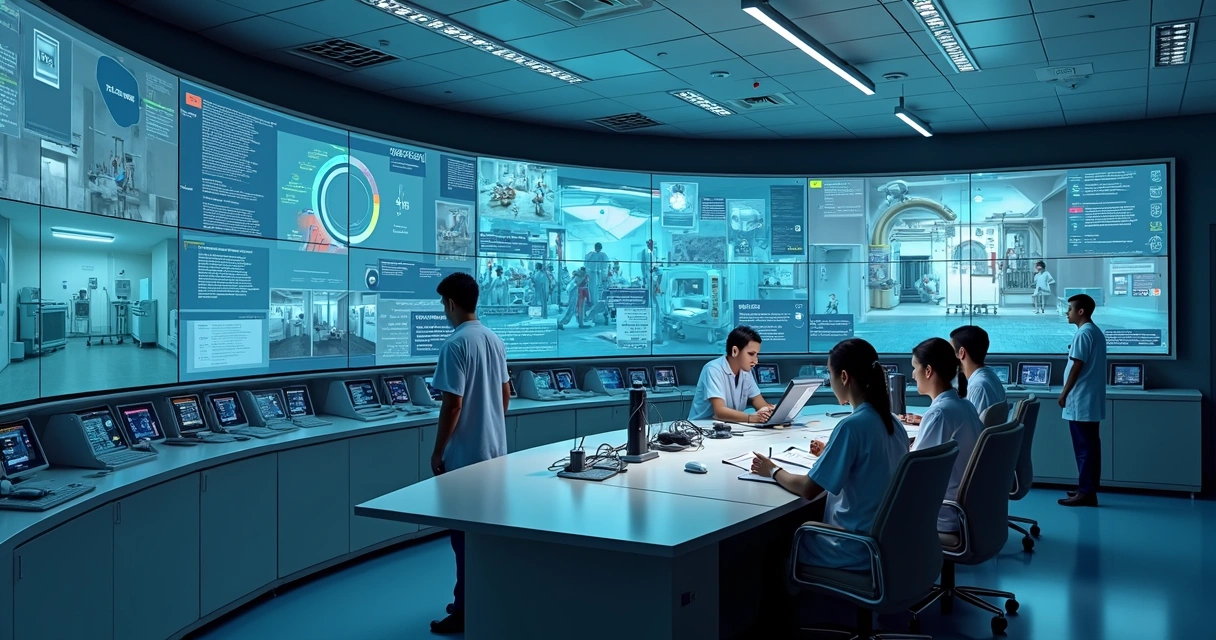
Real challenges of small hospitals
In day-to-day operations, I see some recurring difficulties:
- Lack of dedicated staff for monitoring or maintenance.
- Multiple equipment brands, each requiring different control.
- Constant pressure from regulatory bodies.
- Concern about material losses (vaccines, supplies, food) and patient safety risks.
- Fear of not meeting audit requirements, which can result in heavy fines.
Without a truly predictable and automatic system, the chance of failure increases, and with it, fear of unpleasant surprises like those recorded in surveys about medication administration errors or antibiotic adjustment failures in Brazilian institutions, according to research in 104 hospitals.
How to implement accessible monitoring in practice?
I usually say the secret lies in these steps:
- Mapping of critical environments and equipment.
- Choosing a flexible solution like DROME that accepts multiple sensors and doesn't depend on already saturated hospital networks.
- Basic team training, but honestly, modern systems require far less than imagined, precisely because of embedded automation.
- Definition of automatic reports to facilitate accountability with audit and clinical leadership. Take the opportunity to check improvement strategies in hospital auditing when planning.
After implementation, I suggest periodically reviewing reports and, in DROME's case, testing the predictive function gradually. This way, preventive alerts start appearing and prevent most problems before they cause headaches.
DROME and its transformative role in hospital healthcare
In 2026, I see that healthcare already demands a new approach: don't wait for failure to happen before taking action. Accessible, intelligent, and proactive monitoring has already become a basic safety condition, including for small institutions.
If you want to dive deeper, I also recommend learning about Hospital 4.0 advances and practices to avoid IoT sensor failures—content I've already covered in advances and challenges in the Hospital 4.0 era and avoiding IoT sensor failures in cold chain and also how AI predicts cold chamber failures.
Conclusion: The next step is within reach
In the daily operations of small hospitals, accessible monitoring has already stopped being a promise to become reality. With complete options like DROME, it's never been so simple to prevent losses, ensure compliance, and most importantly, anticipate risks to protect patients and institutions. Don't fall behind: seek to understand more about predictive monitoring and learn how DROME solutions can transform your hospital's management.
Frequently asked questions about accessible monitoring in hospitals
What is accessible monitoring in hospitals?
Accessible monitoring in hospitals is the use of simple, automatic, and low-cost technologies to track, in real time, critical conditions like temperature, humidity, CO₂, and equipment operation. This reduces losses, prevents health risks, and facilitates audits, becoming a solution possible for any hospital size, including the smallest.
How to implement monitoring in small hospitals?
The ideal approach is to map critical environments, choose flexible systems like DROME that are easy to install, and briefly train staff while relying on automatic reports for accountability. No need for high infrastructure investment since automation handles the continuous process with minimal manual intervention.
How much does accessible monitoring cost in 2026?
Costs for accessible monitoring have dropped significantly by 2026, with scalable solutions and subscription models. Systems like DROME's bring investments proportional to hospital size and can be installed without expensive construction, eliminating hidden costs typical of traditional alternatives. The important thing is to always analyze cost relative to the benefit of avoiding major losses or fines.
Is accessible monitoring really worth it?
Yes, it's worth it. By anticipating failures, small institutions save resources, avoid service interruptions, and increase patient safety. Experience shows that gains from prevention and quick auditing offset initial investment rapidly.
What are the best monitoring options?
In my experience, predictive monitoring systems like DROME stand out for flexibility, automation, and fair cost, plus proactive support. Other alternatives exist, but typically lack advanced automatic functions or charge more for them. That's why I recommend learning about DROME solutions firsthand before deciding.