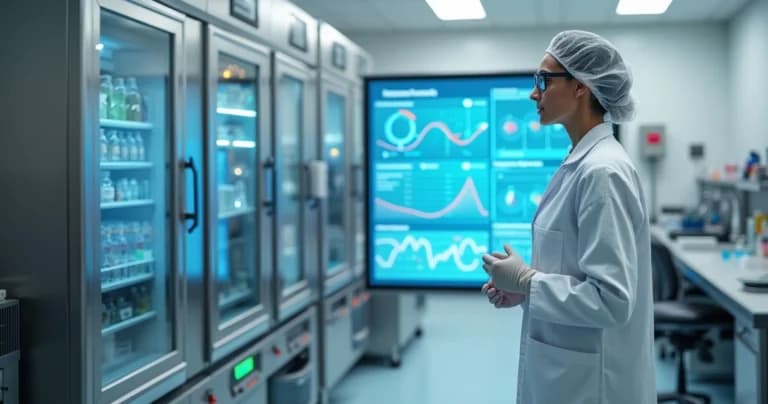
Since my early days working with quality control in laboratories, I've recognized that ensuring correct storage and process conditions is one of the greatest concerns – especially when we're talking about environments regulated by the rigorous GMP (Good Manufacturing Practices) standards. Continuous monitoring has evolved from a gamble to what I consider an almost mandatory path for modern laboratories dealing with sensitive inputs like vaccines, medications, and even clinical samples. Today, I want to clearly present the 8 main advantages I've identified when adopting continuous monitoring in GMP laboratories, particularly when analyzing advanced solutions like those offered by the DROME platform.
1. Permanent Assurance of Regulatory Compliance
Every GMP laboratory operates under the watchful eye of regulatory bodies, and I know how stressful maintaining standards can be. Auditors search for evidence of reliable records, swift action in case of deviations, and absolute control over critical environmental parameters. Systems like DROME deliver easily accessible historical data, plus comprehensive reports that are indispensable during inspections.
I've encountered institutions that attempted manual monitoring using spreadsheets or paper notes. It didn't work. Failures and gaps occurred, exposing risks and generating rework. With automated continuous monitoring, as DROME provides, records are made in real time, without depending on the human factor, drastically reducing the risk of documentation non-conformities.
2. Reduction of Losses and Waste
Anyone who has seen an entire batch of products discarded due to a temperature deviation knows the magnitude of the loss involved – and I'm not just talking about money, but also about impact on public health. Continuous monitoring helps prevent such losses because it rapidly detects any deviation from standards.
In DROME, IoT sensors monitor multiple variables (temperature, humidity, among others) at all times. The system generates instant alerts, enabling intervention before an entire batch is lost, unlike passive or competing systems that merely record data without predictive intelligence.
3. Reduction of Human Error and Increased Reliability
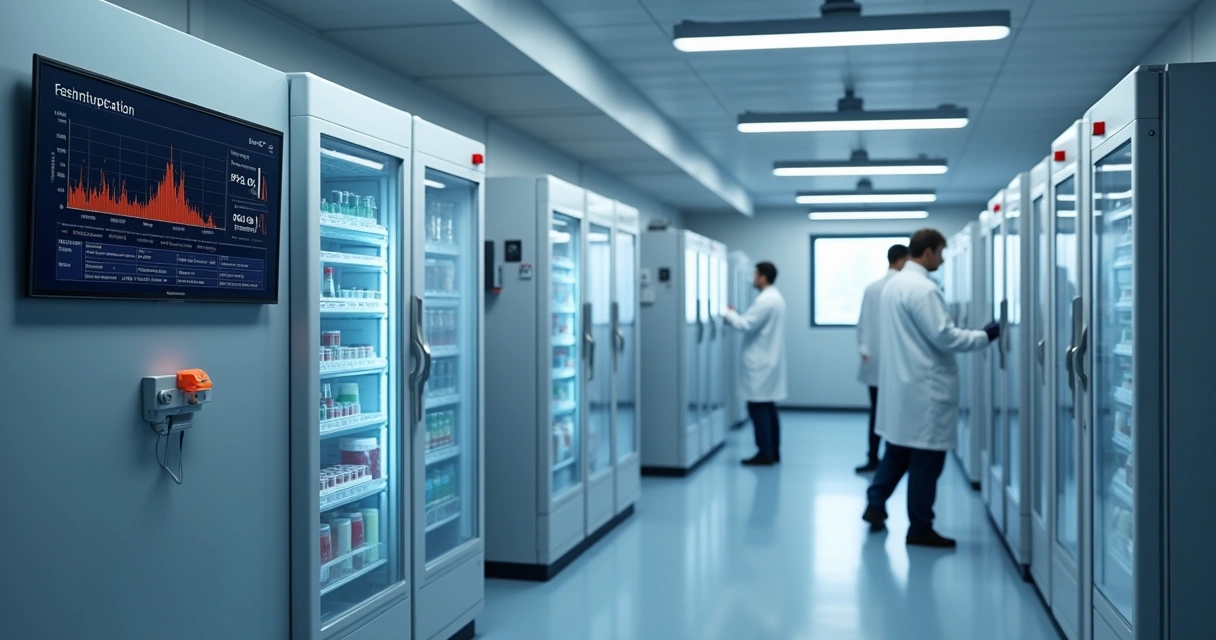
Human failures account for a significant portion of deviations detected in audits. I've witnessed situations where records were forgotten, noted incorrectly, or not performed at all. With the development of automated IoT-based platforms like DROME, this weakness nearly disappears.
Data is captured continuously, processed by artificial intelligence, and if necessary, action alerts are sent. All of this without depending on employees remembering to record or complete paper checklists. And if we compare this with manual systems or those without automatic integration, the precision and reliability of records are incomparable.
4. Early Detection of Equipment Failures
I've seen refrigerators fail on weekends, and when the team noticed, the losses were irreversible. Continuous monitoring, as implemented by the DROME platform, is capable of identifying subtle deviations in equipment behavior before they transform into failures.
The major differentiator of DROME compared to other services lies in predictive analysis. The system learns from historical data from the sensors themselves, identifying degradation patterns. When I notice, through reports, that a particular freezer exhibits temperature cycles outside the usual range, I can plan interventions before serious failures occur.
5. Facilitated Audit Support with Automated Reports
Whenever a GMP laboratory receives an audit, there's always that nervous feeling about whether something was missed. Continuous monitoring transforms this scenario. Reports are generated automatically, organized by periods and variables, and can be quickly shared with auditors, eliminating the need to search through past notes.
DROME's strong point is the generation of customizable reports, integrating information from multiple sensors, including validating the calibration of each monitoring point, as required by legislation. This facilitates preparation for inspections and even makes the audit itself faster.
For those wanting an even more detailed view of how this technology changes the daily routine of laboratories, I wrote an article about how monitoring technology has impacted modern laboratories – I recommend reading it at how monitoring technology revolutionizes modern laboratories.
6. Automated Management of Sensor Calibration
GMP clearly requires that all instruments be calibrated and that there be traceability of these calibrations. I confess I've lost sleep trying to organize calibration reports before past audits. With platforms like DROME, management of this process is automated: the system notifies when each sensor should be calibrated, stores certificates, and provides reports for easy consultation.
Less paperwork, less headache, more control.
This detail makes a big difference, especially in larger operations where dozens of sensors need to be checked periodically. Competitors may offer records, but they typically require manual integration processes, while in DROME everything happens natively and without external dependencies.
7. Remote and Centralized Access to Information
Nowadays, remote work has become routine. In my experience, being able to access dashboards in real time from any location brings unparalleled relief and practicality.
DROME has responsive applications and dashboards designed for those who need quick and accurate answers. All authorized team members can receive notifications on their phones or email, make decisions, and act without wasting time. I've compared it with other solutions: many are restricted to local networks or require complex VPNs, delaying access to critical information.
Having all data centralized in the cloud and available at any moment is a game changer for laboratories with branches, mobile units, or multiple work areas, always ensuring a swift response.
8. Preparation for Future Requirements and New Trends
GMP standards are becoming increasingly stringent, particularly regarding digital traceability. I already anticipate that by 2026, laboratories will need robust solutions to remain compliant. A good starting point is to check the compliance checklist for laboratories with IoT through 2026.
Adopting continuous monitoring with artificial intelligence, like DROME, means being prepared for current requirements and future challenges as well. Static platforms, as I've noticed in some competitors, tend to age quickly, while scalable solutions with automatic updates better keep pace with the rhythm of digital transformation.
How to Take the Next Step?
If you're evaluating implementing a monitoring system in your laboratory, my advice is to study technologies that truly deliver agility, scalability, and intelligence – characteristics I clearly see in DROME's SaaS solution. To understand in depth the details of applying IoT monitoring and how to integrate it step by step in regulated environments, I recommend reading the guide on how to implement IoT monitoring in pharmacies in 7 steps.
For laboratories working with clinical analysis and wanting to prevent deviations in samples, I suggest reviewing this content on IoT solutions to prevent deviations.
The future of monitoring in GMP laboratories belongs to those who bet on automation, intelligence, and traceability. My experience shows that in this scenario, DROME stands out among market options precisely because it combines ease of use, continuous support, and adaptation to new regulatory demands.
Caring for the integrity of your inputs begins with good monitoring.
Get to know DROME and discover how your operation can go further, with safety, savings, and full compliance for the years ahead!