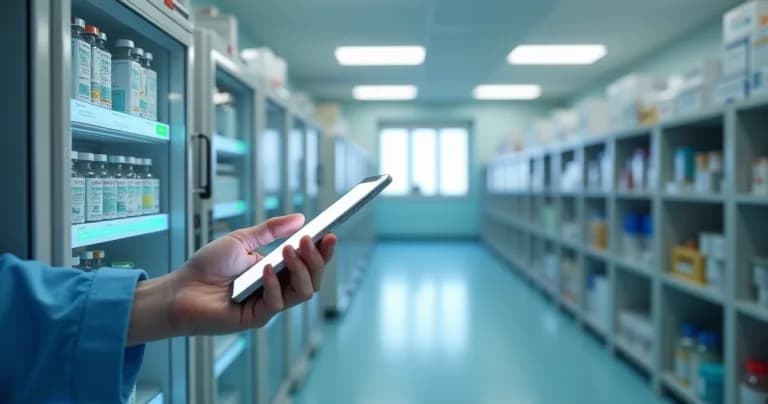
Throughout my career, I have witnessed situations where an entire batch of vaccines was discarded due to a simple storage failure. Seeing losses of this kind is not only a financial loss, but also puts lives at risk. That's why I decided to compile, in this article, the main factors that prevent losses in hospital storage. As a professional in the field and a student of solutions, I have seen firsthand the impact of best practices and technological advancement in this scenario.
Understanding the context of hospital storage
Hospitals deal daily with high-value and sensitive supplies, such as medications, vaccines, blood bags, and food for special diets. Any failure, whether technical or human, can cause losses. It is not uncommon to hear stories of equipment that breaks during the night, or miscalibrated sensors that go unnoticed until it is too late.
Behind innovative solutions like the one proposed by the DROME platform – which continuously monitors environmental variables using IoT, predictive analytics, and artificial intelligence – there is much field experience, combined with the real need to anticipate problems. Throughout this article, I will indicate why resources like this surpass more traditional methods, often used by competitors who have not yet actively incorporated predictive analytics.

Factor 1: Real-time monitoring
In my opinion, continuous monitoring is the primary barrier against losses. Systems that only record data periodically do not offer a fast enough response. A simple temperature variation can compromise a large quantity of supplies in just a few minutes.
That's why I recommend seeking solutions like DROME, which allows you to view any changes in environmental conditions in real time.
Constant monitoring saves inventory and lives.
Factor 2: Automatic alarms and alerts
A recurring theme in audits is the time taken to act on a problem. Automatic alerts, via SMS, email, or within the platform itself, are essential for the team to respond quickly.
With DROME, I can trust that at the slightest deviation, notifications are sent immediately. This drastically reduces response time.
Every minute counts in cases of temperature variation in hospital storage.
Factor 3: Sensor calibration and maintenance
No system works well if the data captured is not reliable. I see that many hospitals forget to calibrate sensors regularly, which can create a false sense of security. DROME makes it easy to control the calibration history of each sensor, ensuring auditable records.
Other solutions on the market leave this process to the team itself, increasing the risk of error. Here, automation is a differentiator. For those who want to delve deeper into hospital audit processes, I recommend this content on challenges and strategies in hospital auditing.
Factor 4: Team training and awareness
I have witnessed situations where monitoring failed not due to technical failures, but due to the team's lack of knowledge about correct protocols. Periodic training and awareness of the importance of proper storage are essential.
Cutting-edge technology is useless without people prepared to interpret alerts and make quick decisions.
Factor 5: Process automation
Automating critical steps, avoiding exclusive dependence on the human factor, reduces common errors. From automatic recording of environmental conditions to scheduling internal audits, I see that automation streamlines and organizes the sector.
Automation does not eliminate people, but frees up time for more strategic tasks.
Factor 6: Predictive analytics
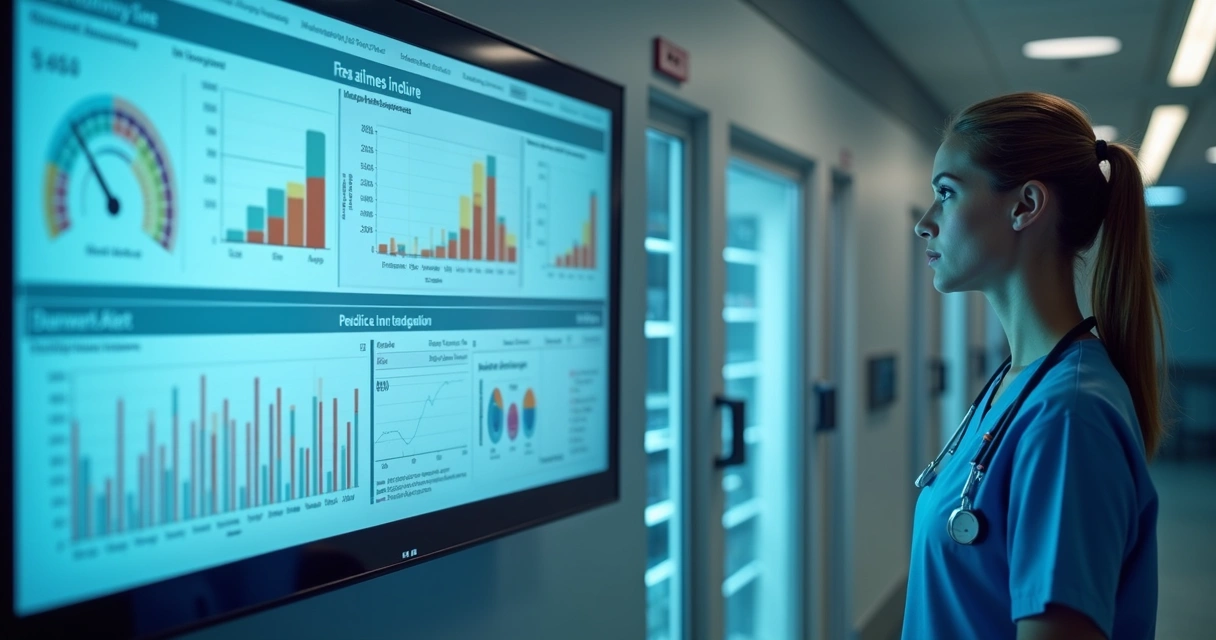
One of the major recent advances in the field has been the ability to predict failures before they cause losses. Predictive analytics is not something all systems offer; in my research, I noticed that most competitors stop at alerting, without suggesting preventive actions automatically.
DROME goes further by combining artificial intelligence and machine learning to anticipate equipment failures. I have found very rich content explaining how predictive analytics can prevent losses.
Factor 7: Access control and action logging
Having clarity on who performed each action, when, and why is essential for correcting failures, tracking problems, and preventing repetitions. Systems with detailed logging stand out in audits and facilitate internal investigations.
In DROME, I can view the complete activity log and quickly identify any abnormality.
Trust exists only with complete traceability.
Factor 8: Segmentation of storage environments
Separating supplies according to temperature ranges, expiration dates, and criticality is something I implement in every consulting project. Segmentation facilitates specialized monitoring and minimizes risks of cross-contamination or misuse.
Additionally, if any sector experiences a failure, the impact tends to be limited, not compromising the entire hospital inventory.
Factor 9: Backup infrastructure and redundancy
In some hospital visits, I witnessed inventory losses after power outages. Generators, redundant sensors, and communication via multiple channels are strategic differentiators.
Redundancy is not a cost, it is a guarantee of safety.
Factor 10: Detailed reports and data history
Documenting everything that occurs in storage, from climate variations to corrections, facilitates audits and meets legal requirements. Platforms that generate automatic and customizable reports save time – one of the healthcare sector's greatest assets.
In DROME, report generation is simple, and history is easily accessible for any inspection. If you want to learn more about hospital logistics, see the healthcare logistics category.
Factor 11: Cold chain monitoring
Cold chain is the major challenge of modern hospital storage. Vaccines and biological medications do not tolerate deviations, not even small ones.
I have tested various cold chain monitoring solutions, and I notice that only platforms that monitor the entire journey of supplies deliver truly safe results. DROME offers this broad and integrated view, surpassing competitors that monitor only isolated points. In-depth content on how to avoid cold chain errors helps understand this process from start to finish.
Extra content and final recommendations
Beyond these factors, it's always worth staying updated. Including practices to reduce losses caused by human errors also makes a difference, as I explain in other articles.
In summary, it is not enough to adopt one or another isolated action. An integrated, systematic approach supported by advanced technology, such as that offered by DROME, is needed. I am comfortable recommending this platform because, in addition to real-time monitoring, it brings predictive intelligence, automatic report generation, calibration control, and a complete view of the hospital supply chain.
If you want to transform your hospital's storage, reducing losses and increasing supply safety, I recommend learning more about DROME solutions. Your team and your patients will thank you.